
Create Detailed Action Plans 查看中文版
第 1 节
Even the best-designed strategy will fail if it isn’t executed well. That’s where you and your team come in.
Teams play an important role in strategy planning because:



To implement your organization’s strategy, you need detailed action plans.
Each plan should include:
-
Priority issues—your unit’s key areas of focus
-
Objectives and performance measures—long-term and intermediate goals with metrics to determine if the objectives are being met
-
High-level tasks—assignments your unit or team needs to complete
-
Resources—people, money, technology, and so forth
-
Roles and responsibilities—individuals and groups who will be responsible for the effort and the work they’ll carry out
-
Internal partners—collaborations with other units needed to complete the plan
-
Estimated impact—anticipated cost and revenue potential of the project
poll
Here, Northwestern University professor Paul Leinwand talks about how one company turned big ideas into everyday actions to execute a new strategy.
第 2 节
Based on your organization’s priority issues, start crafting your action plan by identifying your business unit’s objectives. Objectives may include:
-
Financial gains, such as cost savings or increased sales
-
Increased employee morale
-
Higher customer loyalty
-
Improved process efficiencies
Even if some of your organization’s key objectives are difficult to measure in financial terms—such as improved employee satisfaction—include them.
An airline seeks to reinvent itself
第 3 节
The next step is to determine how you’ll measure success for each objective.
To gauge whether the airline is meeting its objective of “Reduce ground turnaround,” managers decide to measure the amount of time each aircraft spends on the ground between flights and the percentage of flights that depart on time.
With clear metrics in mind to monitor progress, you’ll want to set targets to tell you whether you’re achieving your objectives.
For the objective “Reduce ground turnaround,” managers set the following targets:
Once you’ve defined your objectives and performance measures, you’re ready to identify steps for reaching each of the targets you set.
第 4 节
You and your team will need resources to carry out your action plans. List the ones you require, including:
-
Money
-
People
-
Technology
-
Office space
-
Systems
-
Support from other departments
-
Vendors and strategic partners
-
Time
-
Training
Now assess and estimate your resource needs. Ask questions such as:


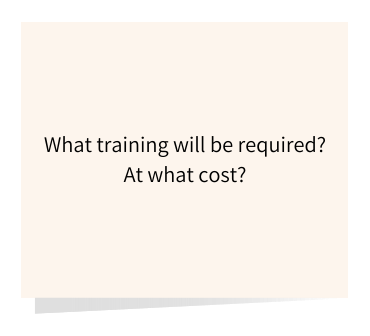

If you overlook this step, you may not be able to keep your commitments.
Make a Connection
第 5 节
Determine who will be responsible for the overall effort and for each of the steps.
Suppose your unit has a priority issue focused on innovation and has created an objective of developing five new products over the next three years. The action plan for this priority issue will contain the four or five critical steps needed to achieve that objective.
The steps might look like this (simplified for purposes of illustration):
Any cross-functional teams involved in carrying out action plans need to determine what their mandate is, who’ll lead their effort, and how they’ll make decisions.
As you establish responsibilities, get input from the team members who are responsible for implementing the tasks. Often, the people who are closest to the action are aware of the logistical concerns that a task may involve.
Be clear about decision making. Clarify how much autonomy people and teams have in carrying out their responsibilities. For example:
-
Do individuals need to consult others before making a decision?
-
If so, for what kinds of decisions and who do they need to consult?
-
Do team members need to arrive at consensus before making a decision?
Communicate who will:
-
Make the final decision.
-
Be accountable for it.
-
Provide input during the process.
-
Execute or be impacted by the decision.
By agreeing on roles ahead of time, you help group members better understand the process as a whole and prepare everyone for implementing the decision when the time comes.
第 6 节
You’ll likely need to collaborate with others—both inside and outside the organization—to achieve your objectives. You and your team may need to receive work from other units to complete your tasks. Likewise, you’ll need to give work to other units so that they can implement their own action plans.
Let’s say your organization has a priority issue that focuses on growing market share by 30% over the next five years.
In developing action plans based on this priority, teams throughout the organization may find that they need to collaborate. For example, if your team is:
You may be part of a cross-functional team that includes representatives from each of the units that have shared responsibilities.
Coordinating with other units can be challenging because you must help and get help from people over whom you have no formal authority. To make certain that things go smoothly and ensure accountability, document all expectations and obligations. To keep action plans on course, immediately address any conflicts that arise during implementation.
第 8 节
Test your understanding and reinforce what you’ve learned.
Try it Out
答案与解析
Identify key objectives and determine how you'll measure success for each objective.(正确)
Start by identifying key objectives and defining success metrics.
Request staff from other business units be allocated to support the strategy.
Resource needs come after identifying objectives and success metrics.
Provide detailed explanations of each step needed to achieve your objectives.
Focus first on objectives and metrics before detailing steps.
第 9 节
Reflecting on your learning helps you apply relevant concepts to your job.