
Prepare to Make Your Case 查看中文版
第 1 节
Have you ever been eager to get approval for a great idea, and rushed right to your boss or another decision maker to get their buy-in? If you’re like many of us, you’ve found yourself in this position—and failed to get the support you needed because you didn’t prepare.
When planning your pitch, start by considering which unique advantages you’ll want to highlight. Ask yourself:



By clearly explaining the problem you’re solving, rather than just sharing a solution, you give potential supporters context for why your idea is relevant. And when you anticipate objections your stakeholders might have, you’ll be ready to address them.
But simply highlighting a problem may not be enough to persuade decision makers. You’ll also want to show why they should act now—and identify the costs of waiting.HA Checklist for More Persuasive Presentations" by Dorie Clark. Harvard Business Review, October 11, 2016. For example, if your organization delays adopting a new technology that your competitors have already implemented, you risk losing market share.
第 2 节
Before pitching an idea—whether through a presentation, a conversation, or in writing—be sure you know who exactly you need to persuade, and then build your case with their interests in mind.
You’ll often have to convince several people about the validity of your proposal, including:
All of these individuals are potential supporters of your idea. By taking time to identify your audience and preparing to win them over, you can boost your chances of success.
Make a Connection
第 3 节
Once you’re clear about whose support you’ll need for your proposal, reflect on what’s most important to them. This will help you determine what you’ll say—and how you’ll say it—to make your case and gain their support.
For each person you’ll need to persuade, consider:
To figure out what your potential supporters’ key priorities are:"How to Increase Your Influence at Work" by Rebecca Knight. Harvard Business Review February 16, 2018.
-
Speak with them about what they want to achieve and what’s making it difficult for them to accomplish their goals.
-
Listen for what they sound most excited by or concerned about.
Once you’ve taken the time to learn more about your audience’s priorities, use what you find out to frame your proposal as a “win-win”—a solution that would benefit you and them. Determine what they’d want to hear from you and what information would capture their attention. Be sure to:"7 Rules for Persuasive Dissent," by Todd B. Kashdan. Harvard Business Review, July 22, 2022.
By applying these tips, you’ll illustrate how backing your idea will benefit your stakeholders and organization.
Sayeeda prepares to make her case
You may be asking yourself: What if I have to persuade a group, not an individual stakeholder? In this case, your tactics will change slightly. While you can customize your pitch based on an individual’s specific interests, you’ll need to build consensus to persuade a team. Take time to consider each person’s concerns and include everyone in the group in finding common ground.
Here, Harvard Business School professor Ranjay Gulati shares how knowing your audience’s perspective and anticipating their concerns can help you prepare to win them over.
三个步骤阐明你的论据 Make Your Case in Three Steps
哈佛教授讲授视频逐字稿
第 4 节
When you’re preparing a compelling pitch, consider how to frame the information in a way that best resonates with your audience. For instance, depending on the individual, they may be more influenced by:


Even though some people are more receptive to one approach than the other, a successful pitch will include both facts and emotion—but the balance between the two will shift depending on the audience’s needs and style.
Here’s how you can gain insight into how your audience absorbs and interprets information:"Want to Win Someone Over? Talk Like They Do" by Maxim Sytch and Yong H. Kim. Harvard Business Review, December 8 2020.
If you don’t interact often with the person you need to win over, seek out opportunities to get to know them better. Consider asking others who do know them for advice on how best to make your case.
The bottom line? Everyone communicates and processes information differently. What works for one person may not work for another. That’s why investing time in getting to know stakeholders and their preferences can help you win support for your pitch.
Take a Moment
Make a Connection
第 5 节
Studies of more than 800 managers show that adapting your message can increase the likelihood of winning their support by 15%-18%.
You’ve identified who you’ll need to persuade, considered what matters most to them, and assessed how they like to receive information. Now it’s time to put all your insights together to customize your message for each possible supporter.
Depending on what you learned about your audience, consider how you might:
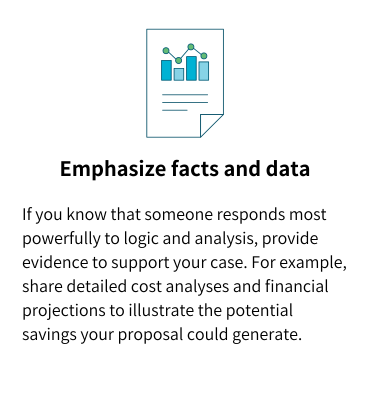

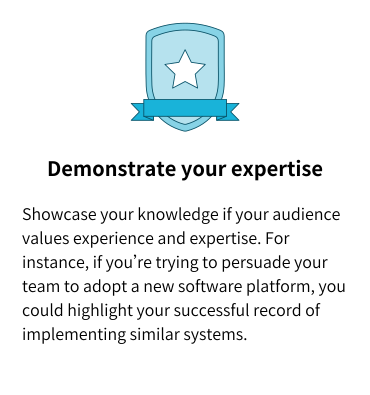
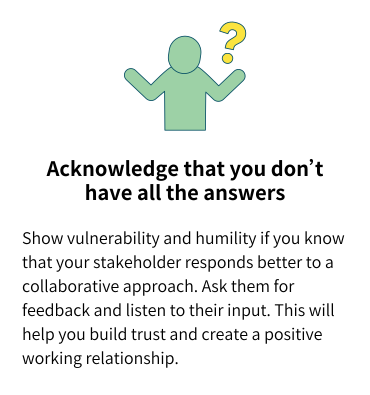
Customize Your Message for Your Audience
When you figure out how you’ll tailor your pitch to each prospective supporter or group of supporters, you’ll go into the conversation ready to convey your message with confidence. However, as Northeastern University professor Laura Huang explains, focus on striking a balance between preparing and staying nimble during the actual encounter. Here’s why.
不要过度准备你的说辞 Don’t Overprepare Your Pitch
哈佛教授讲授视频逐字稿
Preparing to win someone over may seem like a lot of work—especially if you’re eager to approach a potential supporter and present your case right away. But it’s a worthwhile investment. The more prepared you are before you pitch your idea, the more likely you’ll develop messaging that appeals to your audience. And that will boost your chances of convincing others that your idea has merit.
Prepare Before Delivering Your Pitch
第 7 节
Test your understanding and reinforce what you’ve learned.
Try it Out
答案与解析
Your boss’s current stress levels.
While being aware of your boss’s stress level may help you determine the best timing to pitch your idea, knowing your boss’s key priorities and how they prefer to receive information is more effective for tailoring your message to resonate with them.
Your boss’s past experiences with recruitment strategies.
Being aware of your boss’s past experiences with recruitment strategies won’t help you determine how to tailor your message. Determine your boss’s key priorities and how they prefer to receive information to develop a pitch that will resonate with them.
How your boss prefers to absorb and process information.(正确)
By understanding your boss’s key priorities and how they prefer to receive information, you’ll be able to develop a pitch that will resonate with them.
第 8 节
Reflecting on your learning helps you apply relevant concepts to your job.