
Learn What Makes Organizations Thrive 查看中文版
第 1 节
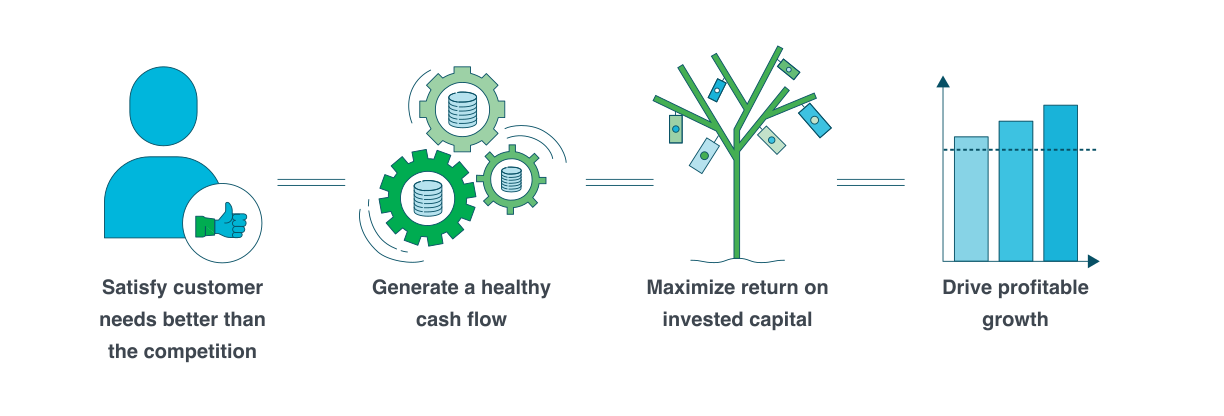
To thrive, your organization—no matter what size, age, industry, or sector—needs to effectively manage four basic priorities:What the CEO Wants You to Know: Using Business Acumen to Understand How Your Company Really Works, by Ram Charan. Crown Business, 2001.
-
Satisfy customer needs better than the competition
-
Generate a healthy cash flow
-
Maximize return on invested capital
-
Drive profitable growth
These four building blocks work together. For instance, when your organization creates solutions your customer really value, cash flows in. By generating enough cash, a company can pay expenses and fund the development of more products or services that customers want.
Here's a quick look at each of these building blocks:
业务成功的四大基石 Building Blocks of Business Success
哈佛教授讲授视频逐字稿
Let’s examine each building block more closely, and consider the role you can play in making your organization thrive.
第 2 节
An analysis of 101 failed startups showed that 42% of the businesses suffered from lack of demand for their offering.
Every organization has customers: individuals or other organizations that buy its products or services. To satisfy those customers’ needs better than competitors do, leaders must understand what customers want, why they want it, and how they like to make their purchases.
To outdo the competition, your business should strive to stand out in customers’ minds. For instance, maybe it could become renowned for the quality of its products, the great value that customers get for the price, its extra-speedy service, or how well it tailors its offerings to meet customers’ needs.
The more your organization stands out as different and better, the more likely customers will want to buy more—and the less likely they’ll be to switch to a competitor.
Often, customers are buying much more than just a product or service. They're also buying something that matters deeply to them, such as a convenient shopping experience or reassurance that the company cares about the environment. These factors affect customers’ willingness to pay (WTP), or the maximum price customers will pay for something. WTP increases when organizations enhance their products or services to give customers more of what they want."Eliminate Strategic Overload," by Felix Oberholzer-Gee, Harvard Business Review, May-June 2021.
As Harvard Business School professor Felix Oberholzer-Gee explains, one way to increase WTP is to offer what he calls a complement: a product or service that is used along with another related product or service—like capsules for coffee machines or apps for phones. Complements can make customers want to pay even more.
通过互补产品创造更多价值 Add Value with Complements
哈佛教授讲授视频逐字稿
How can you understand your customers and what they value? Start by reading reports on your industry and its customers, and how they may be changing. Attend industry conferences if you can. And review customer data provided by your organization’s marketing or sales departments.
Most importantly, engage directly with actual customers.
Shawna gains insights from observing customers
Take a Moment
Learn About Your Customers
第 3 节
Cash is essential for your organization to operate. A healthy, steady cash flow means your organization can pay for its daily and monthly expenses, and has cash left over to fund new projects and make investments.
Cash flows into your organization when customers pay for products and services. These payments can take various forms: actual cash, credit and debit cards, checks, or wire transfers.
Cash flows out of your organization when the organization pays its bills. These expenses include salaries, supplies, office space, taxes, and interest payments.
Two important accounting processes affect the timing of cash flows into and out of your organization:
Your organization needs to carefully manage its accounts receivable and accounts payable to ensure it has enough cash to pay its expenses. Think of cash as your organization’s oxygen supply: If more cash is flowing out than is flowing in, the organization could ultimately suffocate and cease operating—even if it’s growing and generating a profit.
Why do organizations run out of cash?
Understanding where cash in your organization comes from and where it goes is everyone’s job. Why? Virtually every action you take either generates or consumes cash. When you’re cash-wise, you take steps to ensure your organization brings in more cash than it sends out over time.
Consider these cash-wise leaders:
-
Marion, a sales rep, negotiates a 30-day payment from a customer instead of a 45-day payment.
-
Joaquim, a plant manager, schedules production of just enough inventory to fill customer orders so cash doesn’t get locked up in unsold inventory.
-
Aabha, a customer services manager, designs a new gift card program, giving her organization’s most loyal customers discounts for paying the company in advance for products.
Make a Connection
第 4 节
Your organization—like any other—has goals for how to grow and by how much. For instance, maybe leaders want to increase revenues from product sales, expand into new markets, or serve more customers. To grow in these ways, the organization must spend money. It can use its own money (its savings) and potentially someone else's money (bank loans and investor funding).
The organization's own money plus any outside loans or investments constitutes its invested capital.
Your organization uses its invested capital to fund important efforts like:
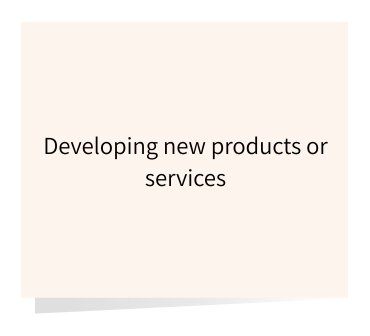
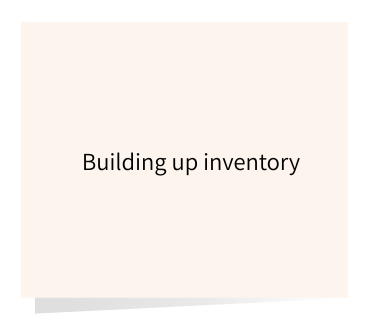
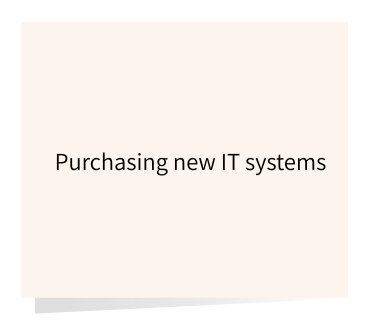

But invested capital can't help your organization reach its growth goals unless it generates a return that's greater than the cost of using the capital, such as interest owed on a bank loan.
This return on invested capital, or ROIC, is expressed as a percentage. It’s calculated by dividing the organization’s net income (revenues minus expenses) by its invested capital:
ROIC = Net Income / Invested Capital
The bigger the ROIC, the more wisely your organization is using its capital. A good ROIC makes investors happy because they earn better returns on the money they’ve given your organization. And people throughout your organization are happy because the company is strong and successful, and has even more money to invest in further growth efforts.
How can your organization maximize its ROIC? It has to excel at two important measures of financial health:
The greater your organization's profit margin and velocity, the greater its ROIC.
Yet many people consider only profit margin when they think of business success or growth. The problem with this perspective is that changes in an organization's external business environment that leaders have little control over can make it hard to increase profit margin. For instance, as competition intensifies, a company may choose to lower its prices to keep its customers. Revenues drop, shrinking the company's profit margin.
For that reason, smart leaders also focus on velocity, which they have a lot more control over. Faster velocity means getting products or services to customers more quickly and having less capital locked up in inventory or business processes. The organization can then invest the freed-up capital in further growth efforts.
And having a higher average velocity than competitors is a metric of success. Velocity can vary by industry—for instance, appliance companies generally have a much lower velocity than grocery stores. But an appliance company with higher velocity than other appliance companies is in a good position.
You and your colleagues can make smart choices to help increase velocity and thus contribute to higher ROIC for your organization. For example:
-
An engineering manager enrolls her software engineers in workshops that teach them how to write code more accurately to avoid time-consuming rework.
-
A warehouse manager designs a new way of sorting inventory that makes it easier for packers to box up products to be shipped to customers.
-
An HR manager designs an onboarding program for new salespeople that helps them immediately start selling a new product.
Take a Moment
第 5 节
Your organization may be growing; for instance, increasing its revenues, bringing in more customers, expanding its market share, or selling its products or services in more geographies. But is that growth profitable? It is if the organization is still bringing in more money than what it's spending to reach its growth goals.
To understand whether your business has profitable growth, look at financial reports, including income statements, balance sheets, and cash flow reports. This data can help you get a sense of your organization's financial picture.
One important way to assess how profitable your organization's growth efforts are is to look at gross profit, which is the amount left when you subtract the expense of providing a product or service from the revenue gained from selling it.
Gross Profit = Revenue - Expenses
This is a financial metric that managers can have a significant impact on, as Harvard Business School senior lecturer Emily McComb explains here.
为什么毛利润很重要 Why Gross Profit Matters
哈佛教授讲授视频逐字稿
Make a Connection
Even if you're not part of the sales or finance team, you should think of helping your organization drive profitable growth as one of your key goals. When everyone pitches in on this task, good things happen. Perhaps most importantly, profitable growth energizes your organization. Think about the differences between an organization that’s growing profitably and one that isn't.
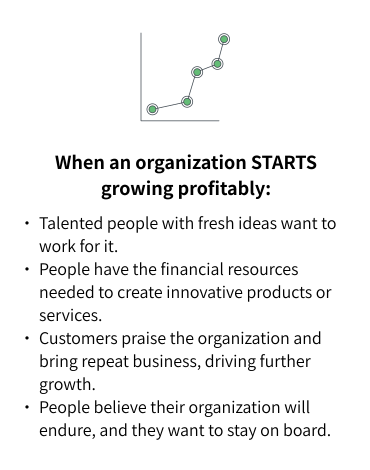
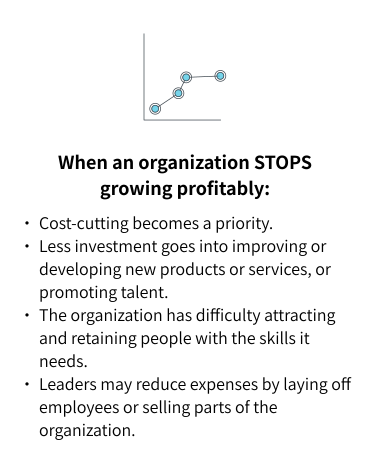
To be profitable, growth can’t come at the expense of the other three building blocks: satisfying customers, generating cash, and maximizing ROIC. Growing in ways that sabotage one or more of those building blocks can backfire on the organization.
Thomas triggers a price war that hurts everyone
There are several ways to uncover opportunities to drive growth based on existing customers and their needs, or looking toward new customers or new needs. Consider these scenarios:
Serve existing customers with existing needs
Serve existing customers with new needs
Serve new customers with existing needs
Serve new customers with new needs
No matter what kind of new growth opportunities exist, leaders also need to think through how to enhance growth profitably. That means assessing growth opportunities in light of the four basic building blocks for success.
Take a Moment
第 6 节
Profitable growth is a key to business success, but there are many reasons why organizations should aim for growth to be responsible as well. Climate change, rising inequality, and soaring health costs have made more and more business leaders realize that their organization can’t survive for long if its employees and customers, as well as the environment and the communities where it operates, aren’t healthy. For instance:
-
Pushing employees to work longer hours to drive growth leads to costly medical problems, burnout, and talent turnover.
-
Selling harmful products to customers can drive them away and spark negative word of mouth and lawsuits, ultimately shrinking a business’s customer base.
-
Operating in ways that increase the organization’s carbon footprint worsens the impacts of climate change on the environment, leading to natural disasters that affect everyone.
-
Operating in communities in ways that trigger conflict among the people living there or that pollute their natural resources causes harm, and it could result in the organization losing its license to operate in those communities.
How can an organization drive growth that enhances the health of all its stakeholders?
Profitable, responsible growth is a sign of success. But to get there, an organization has to manage the four basic building blocks. Keep all four in mind when you assess your organization and how you can help it thrive.
第 7 节
-
Organizations thrive by effectively managing four financial building blocks: satisfying customers better than competitors do, generating a healthy cash flow, maximizing return on invested capital (ROIC), and driving profitable growth.
-
To satisfy customers better than competitors do, businesses must understand what forms of value customers want most and find ways to stand out in customers’ minds as different or better than the alternatives.
-
To generate a healthy cash flow, organizations can strategically manage the timing of their accounts receivable and their accounts payable.
-
To maximize ROIC, organizations must excel at two important measures of financial health: profit margin and velocity.
-
To drive profitable growth, companies can generate a range of new ideas for meeting customers’ needs and then implement those ideas in ways that ensure that the benefits gained outweigh the costs incurred.
第 8 节
Test your understanding and reinforce what you've learned.
Try it Out
答案与解析
How the organization can slash costs in the next fiscal year in order to boost profits and keep the leadership happy.
Not the best choice
It is important to think about how your organization can stay financially healthy, but cutting costs or focusing on short-term profit aren’t always the best ways to help an organization thrive. One key building block of business success is generating a healthy cash flow. This ensures that the organization can continue to operate and may be able to invest for future growth.
Whether the organization generates a healthy cash flow, allowing it to pay its bills and invest for future growth.(正确)
Correct Answer
One building block of business success is the ability to generate a healthy cash flow. This means that the organization can pay its bills and can potentially have money available to pay off debt or invest in new ideas and projects, supporting profitable growth.
What part of the organization’s fiscal year is the best time to ask for a salary increase or a promotion.
Not the best choice
It might be a good idea to consider your organization’s financial state before you ask for a raise, but that’s not a key to overall business success. Whether your organization generates a healthy cash flow is one key building block of business success. A healthy cash flow means your organization can pay its bills and may have enough cash on hand to invest for future growth.
Try it Out
答案与解析
It helps ensure that the organization has enough cash on hand to pay expenses as it waits for the money in its accounts receivable to flow in.(正确)
Correct Answer
Part of business savvy is understanding how your organization manages cash flow. Even if your team isn’t directly impacted by monthly or quarterly cash flow, it’s important to understand the impact of your decisions on accounts payable and receivable.
It reduces the time the payroll team spends on paperwork and reporting, helping to increase their productivity and reducing opportunities for errors.
Not the best choice
While it’s good to consider possible impacts on the payroll team, the benefit of paying monthly rather than weekly is related to your organization’s cash flow. Understanding how the organization as a whole is impacted by cash flow and how the company has to manage accounts payable and receivable is part of business acumen.
It contributes to the organization’s gross profit margin, which is the metric everyone in your organization should focus on most.
Not the best choice
Gross profit margin is definitely important, but it’s not affected by when you pay vendors. It’s also not the only thing those with business acumen focus on. Understanding how cash flow affects your organization as a whole is part of business savvy.
第 9 节
Reflecting on your learning helps you apply relevant concepts to your job.