Pocket Leadership口袋领导力

Sharpening Your Business Acumen

Why You Need Business Acumen 查看中文版

第 1 节

Has this ever happened to you?

  • You’re in a meeting where people are discussing your organization’s financial performance, and you’re struggling to understand “the numbers.”

  • You’re frustrated that a project you’re passionate about isn’t getting support from decision makers because it “doesn’t fit the company’s strategy.”

  • You’re trying—and failing—to explain to a friend what your organization actually does.

If any of these scenarios feel familiar to you, you’re not alone. Many managers have strong job-related skills with only a basic understanding of their business and how it makes money.

But having sharp business sense isn’t just for top leaders and finance executives. Everyone can and should develop business acumen—an understanding of the big picture of how organizations operate and succeed.

By increasing your business acumen, you’re better able to contribute to your organization’s success and advance in your career.

So, what is business acumen? In a nutshell, when you have business acumen, you understand:

  • How your organization serves customers, makes money, invests capital, and drives growth.

  • How your organization gets the resources it needs, creates the products or services it offers, and delivers them to customers.

  • What your organization’s financial big picture looks like, and how you can contribute to its financial health.

  • What’s happening in your organization’s external environment—including what competitors are doing, how customer expectations are evolving, and how regulations might be changing.

You can draw on your understanding of all these things to help your organization thrive. And when you bring this understanding into your decisions, proposals, and collaborations with others, you’ll boost your own performance too.

Developing your business acumen helps you rise to challenges—and that drives business success. Listen to entrepreneur Monisha Misra describe how learning about all the different parts of a business helped her stand out in her sales role and grow as an employee. 

通过全面了解业务来推动个人成长 Know About Business to Grow in Business

哈佛教授讲授视频逐字稿
So I think it's important no matter where you work or what your role is to really take it upon yourself to fully understand the scope of the business, and put yourself in your customers' shoes. What is important for them, what do they see as valuable. And you learn that by really understanding your company and the value prop that they have to offer. So I have always worked in a sales capacity. And when I got my position at HubSpot in mid-market sales, I thought it was going to be so similar. I was so surprised to figure out that on day one during new hire training, they told us that every customer facing employee actually had to do a new hire project. And what that meant was we had to create a fictitious company and we needed to create a website. We had to set up email marketing, marketing automation, social media, using it as you would if you were a customer. And I did not come from a software background. I knew how to sell, but that was about it. So I was actually very nervous. I was not going to pass that new hire project, especially because we had to present to like our leadership team. So I'm in front of the VP and directors. It was extremely nerve wracking. But the next two weeks, were filled with product training, and like hand-in-hand training through all of the experts at HubSpot. And I actually ended up building out this website and creating this business online, presenting to the leadership team. And luckily, I passed the project. But it was so important to learn the product this way, because that is exactly how I sold it to my customers later on. And that information was so invaluable to me. But then also for people on other teams who are interacting with the customer in a different way. No matter what company you work for or what role you get hired for, it is really important to arm yourself with the information to present to your customer. So you want to learn all of the facets of the business. You want to understand the value proposition, and you want to put yourself in your customer's shoes. Not only does it make your customers feel more faith and more trust in the business itself, but it turns you into a better employee and it really helps propel your own career as well, because you've really embodied the vision of the company. And that's what you're selling to your customer.

Make a Connection

1. What’s one way that you could draw on your understanding of basic business principles to support your organization’s success?

第 2 节

To build your business acumen, learn how to answer four key questions about your organization.
Question 1: What makes my organization thrive?

Whether your organization is a big corporation, startup, small business, nonprofit, or government agency, it thrives by effectively managing four building blocks to business success:

  • Satisfying customers’ needs better than competitors do

  • Generating enough cash to operate and to fund important projects

  • Maximizing returns from investments in the organization

  • Driving profitable growth

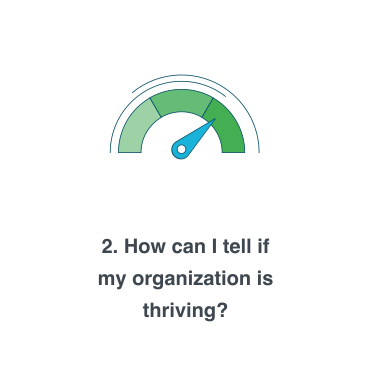
Question 2: How can I tell if my organization is thriving?

To determine if your organization is thriving, you need to read and interpret a few basic financial statements:

Income statement The profit or loss your organization has generated over a period of time (a month, a quarter, annually). Balance sheet A snapshot of your organization’s assets, liabilities, and equity (shareholders’ stake in the company) at a specific point in time. Cash flow statement The net amount of cash your organization generated in a given period of time and a view of where the money is coming from (for instance, sales) and where it’s going (for example, spending on supplies).

Question 3: What’s my organization’s business model?

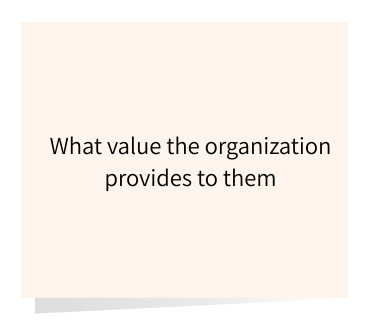
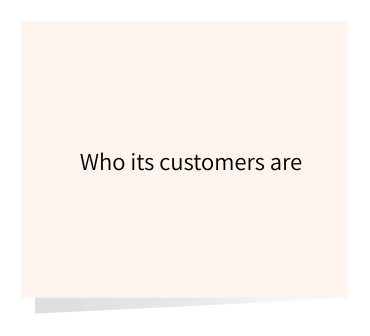
Your organization’s business model is the story of how the enterprise works. It describes:
Question 4: What’s my organization’s business strategy?

Your organization’s business strategy is its plan for how to perform more successfully than its competitors. It involves choices the organization makes. These are based on:

  • What makes customers willing to pay

  • What makes employees and suppliers willing to work with an organization

What if I work for a government agency or a not-for-profit organization?

If you work for a government agency or a not-for-profit organization, you need business acumen just as much as someone who works for a corporation. That’s because everyone in your organization still needs to understand how it operates and how it manages its resources. But in government agencies and not-for-profits, leaders will likely place more emphasis on issues such as how funds are coming into the organization and how they’re being spent than on how much profit the organization is generating. What if I work for a government agency or a not-for-profit organization?

To gain insights into the nature of business acumen, business expert Ram Charan encourages thinking back to your earliest experiences with business, such as babysitting, mowing lawns, or helping at a family store. If you didn’t run your own little business, think back to a farm stand or local shop you may have visited as a customer.

Try it Out

Answer these questions to see how much business acumen you possessed back then.
1. What was the business you ran or visited, who were its customers, and what value did the business provide to them?
2. How good was the business at generating cash? What investments were made in the business, and how well did those investments pay off?
3. Did the business grow? For instance, did it gain more customers? Increase its sales?
4. If the business had competitors, how was it differentiated from them?

第 3 节

By strengthening your business acumen, you win on multiple fronts:

  • You make more informed decisions every day in your role.

  • You exert more influence and can “sell” your ideas to decision makers by being able to articulate how they will help the organization.

  • You can contribute meaningfully to multiple aspects of the business.

  • You feel more satisfied by your work, because you know how your decisions are helping the business grow.

Your business acumen is important to your organization too. With a better understanding of the big picture, you can help drive process improvements, make smarter use of resources, and improve productivity. All this makes you even more valuable to your organization, which can help you advance in your career.

Why is it important for everyone in an organization to build their business acumen? Graphic designer Isabella Diaz wondered the same thing—and interviewed Harvard Business School senior lecturer Emily McComb to find out more. 

提升工作表现:了解公司大局 Level Up at Work: Understand Your Organization’s Big Picture

哈佛教授讲授视频逐字稿
Hey there, it's Isa. I don't know about you, but when those Monday morning meetings roll around and senior leadership starts talking about financial performance and strategy, my eyes glaze over, and I'm in dire need of a caramel macchiato. That's why I'm super excited to be meeting with Emily McComb, who's in the finance department at Harvard Business School. Isa: Emily, I'm so excited to talk to you today. Just to give you a little bit of background, we have our Monday morning meeting stand up every week, and it's called the new business development meeting, where we show projections and all of these graphs and numbers. And why is this important for me to understand? Emily: First of all, if you're invited to this Monday morning meeting then you're important to the firm. And I suspect that they do want you to absolutely understand what's going on in the Monday morning meetings. And so I'd say everything in there is absolutely understandable. And so I'd say absolutely dig in and make sure that you understand why those are the important metrics that the firm is being led by. Isa: How do I start having those conversations? How do I dig in? Emily: First thing I'd say is I bet most people would be really happy if you reached out and asked them what their jobs were and what they're actually getting done, and what the different divisions are doing. It's sort of something that people welcome to talk about their work and are glad that other people are interested in what they're doing. I think that depends on the organization as to whether that has to be a more formal structured meeting or just getting 15, 30 minutes in the calendar. But sometimes those sort of ad hoc little interactions can be really important. Isa: How will understanding all of this business jargon make me a better designer? I mean, I don't look at financial statements from day to day. So why do they matter? Emily: So I don't think it's going to do much for the design side of things. Isa: Probably not. Emily: But in terms of being a real important part of the firm, I think it's sort of vital to understand what's going on. And you can look at those, P&L or income statement and the cash flow and balance sheet, and from that, you can just understand a lot about the firm. Are we growing? Have we been growing? What sort of profitability do we have? If there are investments that need to be made, do we have the capacity to make those investments? Is this a sustainable enterprise and something that's going to be here for the long haul? Isa: How do I prepare myself for the long haul? I want to be part of senior leadership one day. Emily: From my experience working, a lot of the best leaders that I've worked with and for have been people who have a pretty good understanding of a lot of different divisions of the firm and what's going on and understanding how they all come together. And you can sort of demonstrate that you know more than your own little silo in a firm that sets you up for leadership. That's when people will look at Isa and say like I think that she is a potential leader. She has all these other skills that we need and can sort of bring them to bear even if her core focus and her core expertise is on the graphic design side. Isa: Emily, thank you so much. Emily: It's been a pleasure talking to you. Thanks for asking. Here's my takeaway. Understand how my organization operates, so I can work better cross-functionally. Dig into financial statements so I can know how my business is doing. Develop a whole business mindset, so I can work smarter and boost my career.

No matter what your role is in your organization, you can use your business acumen to supercharge your on-the-job performance and solve important business problems. Consider how you could apply business acumen in different roles:

Human resources Bring deep understanding of what the organization’s customers value into your strategies for hiring and training employees. Product development Look for ways to streamline the features of new products so they can be produced for a lower cost. Customer service Track the most common complaints customers have and use these insights to suggest improvements. Procurement Keep in mind how the organization creates value for its customers and how contracts impact overall finances as you negotiate with suppliers.

When you make decisions, propose ideas, or look for ways to solve problems, you have an opportunity to think about your organization as a whole. And this helps you make substantial contributions and have a positive impact on your company.

Juanita uses her business acumen to help solve a problem

Juanita uses her business acumen to help solve a problem Juanita manages a product development group at an automotive manufacturer that wants to reduce costs on several vehicle models in development. Juanita helps her team generate ideas for supporting the company’s goal. She and her team explore questions such as: Do the selected models have features that customers don’t care much about? If so, can we eliminate them to help reduce costs? Are there any customer needs that our product line isn’t meeting? If so, how could we modify our offering to meet those needs? And could we raise our pricing because we’re providing more value? How would such changes affect our manufacturing volumes, use of our production capacity, and our relationships with auto dealers? As a result of this thoughtful exploration, Juanita and her team make valuable recommendations to senior leaders, who decides to include many of the ideas in the product plans for the next fiscal year. Juanita uses her business acumen to help solve a problem

Make a Connection

1. Identify an important objective that top leaders in your organization have defined. What’s one thing you and your team could do to help the organization achieve that objective?

You’ve learned a lot about what business acumen is and why it’s so important for you and your organization. That puts you in a strong position to delve more deeply into key elements of business acumen, such as the four building blocks that enable an organization to thrive: satisfying customers better than rivals can, generating sufficient cash, maximizing returns from investments, and driving profitable growth.

第 4 节

  • Business acumen means having a broad understanding of how your organization operates and how it can grow profitably.

  • You can build your business acumen by exploring four key questions: What makes an organization thrive? How can you tell whether your organization is thriving? What’s your organization’s business model? What’s its business strategy?

  • Building your business acumen benefits you in multiple ways. It can help you operate more effectively in your role, win support for your ideas, and make decisions that help your organization thrive. And this means you’ll be better positioned to advance in your career.

第 5 节

Test your understanding and reinforce what you’ve learned.

Try it Out

1. You’re great at your job and know how to hash out ideas and accomplish goals with your team. But in larger meetings you don’t always understand what your colleagues in other divisions are discussing, or why they think it’s important. Which of the following will best help you boost your overall business savvy?
答案与解析

Make a short list of concepts or concerns you’ve heard discussed. Reach out to coworkers on other teams and ask them to give you a quick explanation of an issue and how it impacts their job.(正确)
You can learn a lot by reaching out to colleagues who perform different functions in your organization. This can help you build your understanding of your organization as a whole—an important element of business acumen.

Start a small business of your own so you can learn the basics. Keep a journal with notes about lessons learned.
While starting a business would be a major learning experience, it’s not necessary. Reaching out to coworkers for brief conversations about their roles will help you understand more about how your organization functions and the responsibilities and priorities of different teams. Those are important parts of business acumen.

During your annual review, tell your manager that you feel lost and would like some resources to learn more about your organization and your industry as a whole.
Your annual review is a good time to ask for resources to learn more, but you don’t need to wait until review time to take action. Reaching out to coworkers on different teams for a brief chat to learn about their work, concerns, and priorities is a good way to learn more about your organization and boost your overall business acumen.

第 6 节

Reflecting on your learning helps you apply relevant concepts to your job.

Take a Moment

1. 1. What new insights do you have that could benefit you or others in your workplace?
2. 2. What are your biggest opportunities for applying concepts from this Lesson in your workplace?

Further reading

实体店并未消亡——真正消亡的是传统的商户经营模式
许多零售商的衰落,并不意味着实体门店的终结,而是传统商户模式的失败。传统模式要求零售商预测需求、拥有存货,并在日益动荡的…
在部署生成式 AI 时,寻找新的价值创造方式
生成式 AI 正在带来实实在在的效能提升,但在各行各业,这些效能提升正在被竞争消耗,利润空间因此被侵蚀而非扩大。一项对 …
能让你更强大的成本优化法
经济不确定性很高的时候,许多领导者会用上老办法:削减成本。世界上有太多的事情无法控制,而成本在很大程度上是可控的。可是,…

Top 3 in the source platform's original order