Pocket Leadership口袋领导力

Change Management

Address Resistance to Change 查看中文版

第 1 节
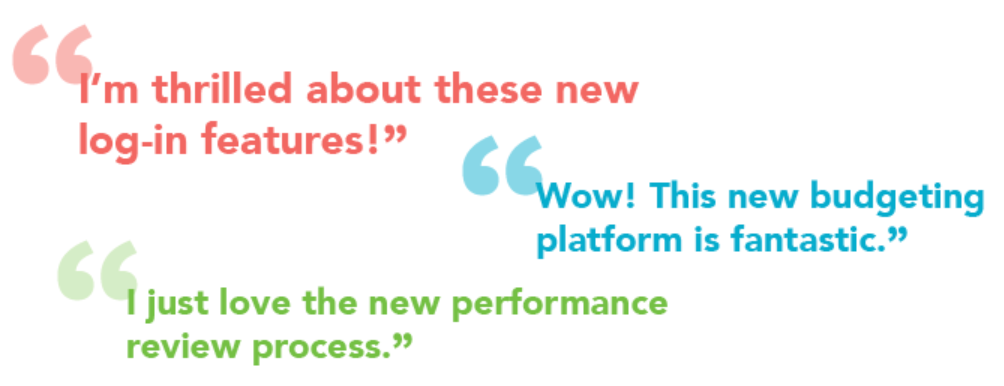
Sound like your team? Maybe not. People don’t always accept change so easily.

That’s because the biggest hurdle to organizational change isn’t designing the right interventions or having the right technology…

It’s overcoming people’s natural inclination to keep things as they are.

The human brain is conditioned to resist change.

Even so, team members’ reactions to a change initiative are likely to vary. Some will welcome the opportunities the change brings. Others might fear the impact it’ll have on their jobs, work relationships, and routines.

Make a Connection

Make a Connection What responses to change have you seen in your organization?
Roughly half of leaders planning to launch or currently conducting a change effort fail to consider their team’s feelings toward the change."The Secret to Leading Organization Change Is Empathy" by Patti Sanchez. Harvard Business Review, December 20, 2018.

As a manager, it’s your job to motivate your team to make change happen. The good news: When you understand the range of responses to change and why they happen, you can anticipate them—and even use them to your advantage.

What causes members on your team to struggle with change—and what can you do to help them move past their concerns?

When you notice a lack of confidence in the change initiation: Help your team believe in the change by pointing out the benefits. If you see a preference for existing processes: Involve team members in planning how to implement the change. If you sense distrust in those leading the change: Help build relationships between team members and the people leading the effort. When a team member expresses a fear of personal loss (job security, status, stability): Show your team how the change will result in new opportunities.

When you anticipate and address your team’s fear of change, you lessen the chances that those feelings will stand in the way of progress.

第 2 节

Change is challenging for your brain. When you’re learning something new, your brain uses 25% of your total energy—causing your prefrontal cortex to work overtime.

Change is challenging for your brain. When you’re learning something new, your brain uses 25% of your total energy—causing your prefrontal cortex to work overtime. Change is challenging for your brain. When you’re learning something new, your brain uses 25% of your total energy—causing your prefrontal cortex to work overtime.

In any change effort, you’ll run into at least some resistance. Most people—even those who thrive on novelty and challenge—find shifts in their routines stressful.

At times, you’ll have a team member who really struggles to accept or adapt to change.

Think of this kind of resistance as an opportunity, not an obstacle.

Instead of viewing resisters as hurdles, see their opposition as a kind of energy you may be able to redirect in a positive way.

The most vocal resisters may be expressing discomfort that others feel but are reluctant to say out loud. In this way, resisters serve an important role.

To make good use of resistance:

Uncover what's motivating the resistance Is it lack of understanding, fear ofjob loss. Or change overload? Address valid concerns How can you use these fears to improve the change process or outcome? Make resisters part of the solution How can you engage them in planning and implementing the change?

Entrepreneur and consultant Mark Bonchek shares a three-part approach for getting your team aligned in seeing the problem that needs to be addressed, the solution your change offers, and the path for getting there.

如何攻略变革中的隐性阻力? Help People Shift Their Thinking About a Change

哈佛教授讲授视频逐字稿
Shift thinking is really useful when it comes to getting something done in the organization, particularly when you have an initiative that you're trying to bring people along with where you want to go. And as a mental model for that process, you can think about a trapeze. So imagine that you're hanging from a bar of the trapeze, and the rope is fraying above you. So it's going to give way at some point, and you look down, and there's no net below, but there's nothing around you. You're just hanging from this bar. The rope's fraying. There's no net below. What do you do? Well, you're going to hang on as long as you can. That's just the rational thing to do. So the process of shifting thinking is in effect inventing a new bar that you can jump to to get off of this fraying rope. Now that's a difficult challenge, because you have to,one, get people to see that the rope is fraying to understand the problem. You have to get them to see that this new bar really is viable as something to jump to, that there is a solution to this problem. Then there's a third part which is that the bar is close enough that they can get to it, and this is the reason why a lot of things don't happen. And there are two things that you might recognize. One is where you feel like you have the buy in, and then it kind of evaporates. And the other is where you get resistance, but you don't know why, because you know that this would be a good solution for them. And the reason for that is because oftentimes, you'll present the solution to a problem, and they'll agree with you. You get a lot of head nodding. But they don't believe that you have that problem, or that they have that problem. And so you have to take the time to really spell that out and make sure that they see the problem, too, because you've been working on this so long, that the problem is obvious to you. But it's often not obvious to them. So take the step back, and make sure that they see the problem that you see as well. The other side of it is that they may see that this is the right solution to the problem, but they don't think that it's feasible or possible, and this is where you get push back around we don't have the time, we don't have the budget, we can't get the support. Make sure that there is the right mental model of the road map to the solution and not just the solution itself, so that they can see that not only is it the right bar to jump to, but it's close enough for them to reach it, too, or for the organization to reach it. And so when you've got them aligned with you on seeing the problem, seeing the solution and seeing how to get there, then you can get people on board, on your side, and get things to happen.

Make a Plan

Think of a change you want to initiate or are involved in.
1. To help my team see the problem, I plan to
2. I’ll involve them in implementing the change by
3. The path for getting us to the solution will include

第 3 节

Two years ago, your company merged with another organization. Earlier this year, your team received new performance objectives. Last month, IT rolled out new software.

If this story isn’t 100% on target, you’ve still probably experienced a similar pattern.

Change is the status quo for most people in most companies today.

But too much change can cause burnout and stress.

Make a Connection

Make a Connection On your team, have you seen symptoms of change overload?

If people on your team are at risk of change overload, weigh their existing tasks. Decide which ones continue to add value, and do away with ones that don’t.

Other steps you can take:

  • Bring on temporary help

  • Reassign some tasks

  • Postpone certain steps

  • Scale back the initiative

Prepare to make the case to senior leaders for dropping or postponing lower-priority items.

Be sure team members feel comfortable speaking up if they feel overwhelmed. If they don’t, they may not follow through on their part of the desired change.

Make a Plan

1. How will you lighten your team’s load during change?

第 4 节

Sometimes a team member seems to be on board with a new activity or process but struggles to put it into practice. You meet with them regularly to address their questions or concerns, but they still don’t make progress."The Real Reason People Won’t Change" by Robert Kegan and Lisa Lahey. Harvard Business Review. November 2001.

Why do people act against their own—and their team’s—best interests?

It’s usually not because of a lack of willpower or discipline.

Hidden fears can keep people from making changes—even ones they know are for the best.

Here’s how this struggle plays out.

找到抵触变革的根源 Are You Sabotaging Your Team’s Change Efforts?

哈佛教授讲授视频逐字稿
I've been in web development for a pretty long time now. My team gets along well. We do excellent work. We always get great feedback. So when we set an improvement goal--faster delivery--everyone was surprised to see a senior team member working against that goal. He put up unnecessary roadblocks. He made last-minute critiques. He second guessed everything. And the thing that surprised me the most? That person was me. I was actively working against our improvement goal, and I didn't even realize it. I had competing commitments. It was as if change was the enemy. I put on a suit of armor to protect myself against it, and added a layer, and another layer, and another. I didn't see what was going on until my manager came to me. She noticed my team wasn't hitting its targets. We had an open, honest conversation that wasn't about pointing fingers. It was about solving problems. I told her I was worried about bugs. I was afraid of negative customer feedback. I was sure everything that could go wrong would go wrong, and I would be blamed. Together, we identified my competing commitments. I wanted faster delivery but was also striving for an unrealistic goal of perfection. This was sabotaging the team's efforts. Figuring out the root cause--my fear of failure and fear of blame--was the key. I was then able to drop my shield and stop holding up my team. If you and your team members are running into barriers, dig beneath the surface to find the hidden causes. You may find individual assumptions, expectations, and past experiences standing in the way of success. When you understand these competing commitments, you can break down hidden obstacles and get back on track.

To help team members see their internal barriers and get unstuck:

State the improvement goal A commitment to make a specific change or the desired state after the change has been implemented Recognize the behaviors that prevent them from reaching the goal The actions they actually take that interfere with their ability to implement the change Dig for any hidden competing commitments Beliefs that sabotage their efforts to reach their improvement goal List their big assumptions The scary outcomes they subconsciously assume will happen if they make the change

Once the team member has identified the factors keeping them mired in the status quo:

Challenge any assumptions Ask, “If you could change one belief, which would make the biggest difference for making this change stick?” Design bite-sized experiments Encourage them to test what would happen if they shifted that assumption. Watch what happens over time If the experiment doesn’t work, support them in looking for other ways to shift their beliefs and actions.

Try it Out

Try this approach yourself first so you can walk others through it.
1. My improvement goal:
2. Behaviors that prevent me from reaching my goal:
3. My hidden competing commitments:
4. My big assumptions:
5. Ways to challenge my big assumptions:

See how Caroline, a frazzled sales representative, overcomes her internal barriers to change.

Caroline’s improvement goal: I am committed to preparing more thorough and organized sales proposals. Behaviors that get in Caroline’s way: I rush through tasks and don’t always take time to prepare for work assignments. Caroline’s hidden competing commitments: I’m concerned about completing projects on time because I feel like getting something done quickly is more important than quality. Caroline’s big assumption: If I don’t get proposals out quickly, I’ll lose key sales and ultimately lose my job. Caroline’s reframed assumption: If I spend the time I need on proposals rather than rushing through them, I can complete them on schedule while improving their quality. I’ll continue to win key sales—and maybe improve my performance. Caroline experiments with a new approach. For the next three weeks, when she receives a request for a proposal, she makes a plan for how she will complete the work before the deadline. She even takes the time to have her supervisor review her work before she submits the proposal to the client. The experiment works! Caroline produces more detailed and organized proposals, leading to successful sales with three clients. See how Caroline, a frazzled sales representative, overcomes her internal barriers to change.

If you’re guiding a team member through this practice, reassure them that the goal is learning and improvement, not criticism or judgment.

Overcome Internal Barriers to Change

附件:worksheet_Internal_barriers_to_change1697018882704.docx(docx · 1225 KB,本地副本)

第 5 节

  • Help your team embrace change by understanding and addressing their reactions.

  • Make resisters part of the solution by engaging them in the planning and implementation processes.

  • Reduce change overload by evaluating tasks that don’t provide value and breaking initiatives into manageable chunks.

  • Support team members in identifying improvement goals and any competing commitments that might prevent them from achieving those goals.

第 6 节

Reflecting on your learning helps you apply relevant concepts to your job.

Take a Moment

1. 1. What new insights do you have that could benefit you or others in your workplace?
2. 2. What are your biggest opportunities for applying concepts from this Lesson in your workplace?

Further reading

HCLTech 首席执行官谈企业如何在 AI 时代实现战略转向
生成式 AI 出现后,HCLTech 意识到,这项技术将从根本上重塑 IT 服务的经济逻辑,打破收入增长与员工规模扩张之…
中层管理者将决定 AI 采用的成败
生成式 AI 项目之所以常常陷入停滞,原因往往不在于董事会、供应商或培训,而在于中层管理者决定了 AI 应该如何真正落地…
AI 转型需要对工作进行重新设计,而不是裁减岗位
AI 开始重塑企业的人员决策,但许多公司的行动速度已经超出了现有证据能够支持的程度。早期因 AI 而进行的裁员往往未能带…

Top 3 in the source platform's original order