Coaching and feedback are different—but equally useful—approaches to fostering growth and learning.
Coaching is an ongoing relationship in which you help others continually reflect on and improve their performance.
Feedback is simply the sharing of observations about work-related behaviors. Sometimes you will give feedback during a coaching conversation, and sometimes you won’t.
To many people, feedback means judgment or criticism, but really, it's neither.
If done well, feedback can help team members build on their strengths and address their weaknesses.
Try it Out
1. How much feedback do you usually give during a coaching session?
答案与解析
A lot(正确) Well done! Your team members will benefit from the focus on their development.
A good amount Good start! Keep it going!
A small amount Hmm … you may want to incorporate a bit more into your coaching conversations.
None Red flag! But you’re not alone. Start small and it will get easier!
第 2 节
DID YOU KNOW?
DID YOU KNOW? Research found that 70% of individuals who did not receive feedback or coaching performed below average when compared with individuals who did receive it."Strengths-Based Coaching Can Actually Weaken You," by Tomas Chamorro-Premuzic. Harvard Business Review, January 4, 2016.
Let’s get it out of the way—people don’t like giving or receiving feedback. But why?
Managers hesitate to give feedback because...
They worry the other person won’t like them
They’re anxious the receiver will become upset or hostile
They believe the recipient won’t change
Managers hesitate to give feedback because...
Employees fear receiving feedback because...
It can feel like an attack on their character
It’s frustrating when it’s inaccurate or biased
Sometimes it’s too vague to be helpful
Employees fear receiving feedback because...
When you’re open about these fears and misconceptions about feedback, you and the person you’re coaching can move past them to have a meaningful conversation.
Watch as Joanne Chang talks about her discomfort with giving feedback—and what happened when she didn’t offer it to an employee who could have benefited.
请直接反馈,不要害怕破坏人际关系 I’m Afraid to Damage the Relationship
哈佛教授讲授视频逐字稿
Among my managers and my staff, I think I'm pretty well known for being really direct with my feedback. This has not always been the case. When I was a young manager, I was not very direct. I am naturally a pretty shy person, and I don't like conflict. Most people don't. And so I often avoided it by not giving feedback when I should have.
So when I first started the bakery, I worked with a manager who I liked very much. And I thought he was a really great person who worked really hard, and he cared a lot. Unfortunately, he wasn't a very good manager. And he wasn't very good at what he did. He was just a nice guy, and because he was so nice, I had a hard time directing him.
Every day I would come in, I would see 10 things that were wrong, and so sometimes I would just change the things that he was doing incorrectly. In fact, now when I look back at all of the annual reviews I gave this manager, I can see how I would give him lots of positive feedback, and then I would bring up some of the things that I was unhappy with. But then I would feel so badly that I'd brought those things up that I would put lots more positive feedback.
And in reading these reviews today, I can now see why he didn't really flourish as a manager because I never really taught him. And so he was with us for several years. And he didn't end up growing and developing. And in the end, he ended up leaving the company, in part because I hadn't done a great job of teaching him how to be a better manager.
So again, today, I'm very direct as a manager because every time there's something that I need to address, I ask myself, is this subject matter something that is going to help the manager be stronger? And if the answer is yes, then I get over that discomfort that I feel about telling somebody something that they might not like to hear, and I say to myself, I owe it to them and their professional development to help them grow. So I'm going to talk to them about this head on. And in being so direct, I feel really proud that I'm able to directly improve and help my team become better leaders and better managers.
Poll
Poll
Poll
Poll
Make a Connection
1. For both giving and receiving feedback, why do you feel that way?
第 3 节
DID YOU KNOW?
DID YOU KNOW? During project reviews, teams at Pixar Animation Studios focus on areas for improvement so that filmmakers see critiques as ways to enhance a movie, not as attacks on their creativity."The Scientifically Proven Ways to Deliver Bad News," by Vanessa Van Edwards. Entrepreneur, November 9, 2017.
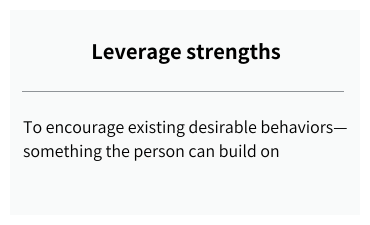
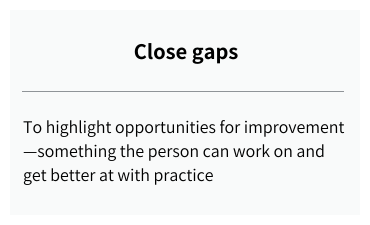
Feedback typically has one of two goals:
"People are often quick to notice what's wrong, but it's equally important to pay attention to and provide input on what is working.""What Good Feedback Really Looks Like" by Craig Chappelow and Cindy McCauley. Harvard Business Review, May 13, 2019.
Focusing on strengths is important, but focusing only on strengths can hinder an employee’s success. When you give constructive feedback to help someone close performance gaps, you help them reach their goals.
In this example, Sangeeta is someone Raul relies on for coaching. She notices an opportunity to help him improve his skills in speaking persuasively in meetings.
桑吉塔辅导劳尔如何说服他人(1)Raul and Sangeeta at the meeting
哈佛教授讲授视频逐字稿
SANGEETA: I know I'm really excited. Of all the options we have looked at, this suite of tools best suits our market. But, Raul, it's your work, so I’ll let you wrap up.
RAUL: Yeah, you can see here, this is a much more robust tool compared to others we've offered--bundled in a lot of bells and whistles along with several new apps. There is a learning curve for our staff but it's not--
PERSON 1: Well, this is a platform with a lot more features. Maybe too many. I think it could be more than what we need.
RAUL: Why wouldn't we want more functionality? Don't you think our customers want to be wowed?
PERSON 1: Well, I'm not sure we know.
Sangeeta follows up with Raul after the meeting to:
Share her observations about how he can improve his communication skills.
Make sure he is aware of where he went wrong with his summary.
Encourage his strengths and knowledge about the suite of tools.
Help him reach his goal of gaining the team’s buy-in on the suite of tools.
Be sure you know whyyou’re giving feedback. Never do it as a way to punish a team member or to express frustration or disappointment.Always offer feedback with the goal of helping someone get better by shaping their behavior and allowing room for growth.
第 4 节
Give specific, behavior-focused feedback to help others reach a coaching goal or recognize progress they’ve made.
To give feedback confidently and with ease:
DID YOU KNOW?
DID YOU KNOW? People remember negative statements more easily than positive ones. It takes a larger number of positive statements to create a memorable impact.
图表
〔图表类内容,图片原件见线上原文〕
Khulus’s feedback
Khulus’s feedback
Khulus is coaching his employee, Sarif, on how to develop a budget. At a recent planning meeting, Sarif presented an incomplete spreadsheet, which meant the team couldn’t make necessary decisions.
Khulus’s feedback
Try it Out
1. What feedback should Khulus give Sarif?
答案与解析
“You’re not delivering the data correctly to the team. You’re someone who tends to rush. In the future, you need to make more of an effort to be thorough.” This feedback is not effective, because it’s judgmental and overgeneralizing. It makes it sound as if Sarif has never presented correct data—and implies that he was careless.
“Last week in the budget meeting, I noticed you were missing some data about past expenditures. The team wasn’t able to prioritize how it should allocate funds because they didn’t have that information. What prevented you from providing that data?”(正确) This feedback is effective. It is specific, behavior-focused, and on target for Sarif’s coaching goal of developing a budget. Khulus also includes a question at the end to encourage Sarif to respond. From there, Khulus may learn any number of useful things that will inform possible next steps.
Make a Plan
How might you craft feedback for someone you are coaching?
1. What are the facts (what happened and what were the outcomes)?
2. What are their goals?
3. What are the behaviors you should highlight?
第 5 节
DID YOU KNOW?
DID YOU KNOW? Research shows that in high-performing organizations, employees make five times as many positive statements as negative ones. "The Ideal Praise-to-Criticism Ratio," by Jack Zenger and Joseph Folkman. Harvard Business Review, March 15, 2013.
Feedback is about more than just words—it requires thinking about the person and how they’ll receive your input.
Provide feedback:
In a timely manner
Try to give feedback as close to the event as possible. Focus on what’s immediately relevant, not things that happened in the distant past.
After you’ve listened
Allow the person you’re coaching time to air their own thoughts. Your comments will be more relevant after you’ve listened.
With permission
Make sure they are receptive and ready to listen. Say, “I have some thoughts. Would you like to hear them now?” or “Are you interested in feedback?”
In small doses
Too much feedback can be overwhelming. Make your comments and then check in: “What’s your reaction to this?” or “Do you have any questions for me?”
Watch as Sangeeta begins a coaching conversation with Raul.
桑吉塔辅导劳尔如何说服他人(2)Sangeeta Starts a Coaching Conversation
哈佛教授讲授视频逐字稿
SANGEETA: So, Raul, I would love your thoughts on today's meeting.
RAUL: Yeah, I just can't believe they didn't approve full functionality. I mean, maybe I shouldn't be surprised--they were never going to be open to change. They never are.
SANGEETA: So, you would think they couldn't have been convinced.
RAUL: I just didn't see a reason why they wouldn't go for the full suite.
SANGEETA: I walked away with a different perspective on that meeting. Do you mind if I share my feedback?
RAUL: No, of course not.
Take a Moment
1. What are two or three things Sangeeta does to show she is sensitive to how Raul might receive her feedback?
Who isn't receiving feedback?
To improve performance and develop skills, everyone needs a clear a picture of where their strengths and weaknesses lie.
But research shows that women tend to receive less and lower-quality feedback throughout their careers than men do. This puts them at a significant disadvantage.
Women are more likely to:
Receive vague messages.
Be critiqued on communication styles, such as “too aggressive” or “not assertive enough”.
Women are less likely to:
Be told how their actions affected business outcomes
Be given feedback about their technical skills
Receive training in business, finance, and strategy“The Career Advice You Probably Didn’t Get,” TED Talk by Susan Colantuono. September 2014.
As you coach, make sure you deliver clear, actionable feedback tied to business outcomes to everyone.
Who isn't receiving feedback?
As a manager, feedback isn’t the only type of input you’ll give members of your team. You may want to share other types of information that they may benefit from, including:
Observations
Business information
Advice, perspective, or encouragement
Relevant personal experiences
Sharing a relevant story, information, or piece of advice can help others apply those concepts and ideas as they seek to achieve their goals.
Here, Sangeeta shares a personal story with Raul.
桑吉塔辅导劳尔如何说服他人(3)Sangeeta Shares Input
哈佛教授讲授视频逐字稿
SANGEETA: They weren't an easy audience, Raul. But to persuade someone, you have to be sure to engage them.
RAUL: I thought I had.
SANGEETA: Did you look in their eyes? Their faces? There are signals that tell you if they're with you. So, I had to face a really tough crowd when I was early in my career. May I share?
RAUL: I'd love to hear.
SANGEETA: So, I had both the CEO and the CIO in the same room, and I had to present them with a new idea. I was really anxious.
Sharing input and giving feedback confidently and with ease takes practice. Done well, it strengthens rapport and helps others gain valuable insight.
第 8 节
Test your understanding and reinforce what you’ve learned.
Try it Out
1. 1. Rebecca is a seasoned member of your team. During her presentations at project meetings, you notice that she presents her ideas with excitement but doesn’t offer much time for questions or input. Which is the best way for you to offer constructive feedback?
答案与解析
“Being proactive and rallying the team around ideas is a strength of yours, but you didn’t allow the team to react to your suggestions. You’ve done this in other situations too, like when we met with the managing director about your ideas for the new onboarding program. You should give folks more time to process your ideas.” This feedback brings in unrelated issues and doesn’t tie feedback to Rebecca’s goals.
“Your ideas in this morning’s meeting really got the team energized for the next phase. Based on what I observed, you may want to give people more time to process what you’ve presented so they can ask questions and give input. That will help you gain the team’s buy-in, which I know is your goal. What are your thoughts?”(正确) This feedback is specific, focuses on strengths, and encourages Rebecca to respond.
“I’ve noticed you’re overly zealous. You always seem to want to offer your best ideas—which is a strength of yours—but you never ask the team for input or to ask questions. Just be sure you’re collaborating with the team.” Avoid making judgments about personality traits or using “always” or “never” statements.
Try it Out
1. 2. You are coaching Brody on how to run efficient meetings. As you sit in on a budgeting meeting to observe, you notice that the meeting gets sidetracked when an employee complains about parking passes. What feedback should you give Brody afterward?
答案与解析
“You’re too nice. Next time, don’t be afraid to take control.” Avoid vague judgments like “You’re too nice.” Focus on specific behaviors instead.
“When the parking issue came up, several people got into a side conversation. If something off-topic comes up, break in and tell the group you’ll address the issue at another time.”(正确) This feedback is specific and focuses on Brody’s goal of running better meetings.
“I noticed a lot of people concerned about parking passes. That might become a big productivity distraction. You can talk to the security desk about the situation.” Brody’s goal is to learn how to run better meetings, not solve parking issues.
第 9 节
Reflecting on your learning helps you apply relevant concepts to your job.
Take a Moment
1. 1. What new insights do you have that could benefit you or others in your workplace?
2. 2. What are your biggest opportunities for applying concepts from this Lesson in your workplace?