Pocket Leadership口袋领导力

Career Management

Your Career Path 查看中文版

第 1 节

Own your career

Want a fulfilling career path? It’s up to you to make it happen.

Too often, people assume that if they simply work hard, their work journey will unfold the way they hope. Or that their organizations will take responsibility for their professional development.

But that’s not necessarily true.

“We are now in the era of do-it-yourself career development.”

Think of your professional advancement as a shared responsibility between you and your organization.

90% vs. 10% responsibility
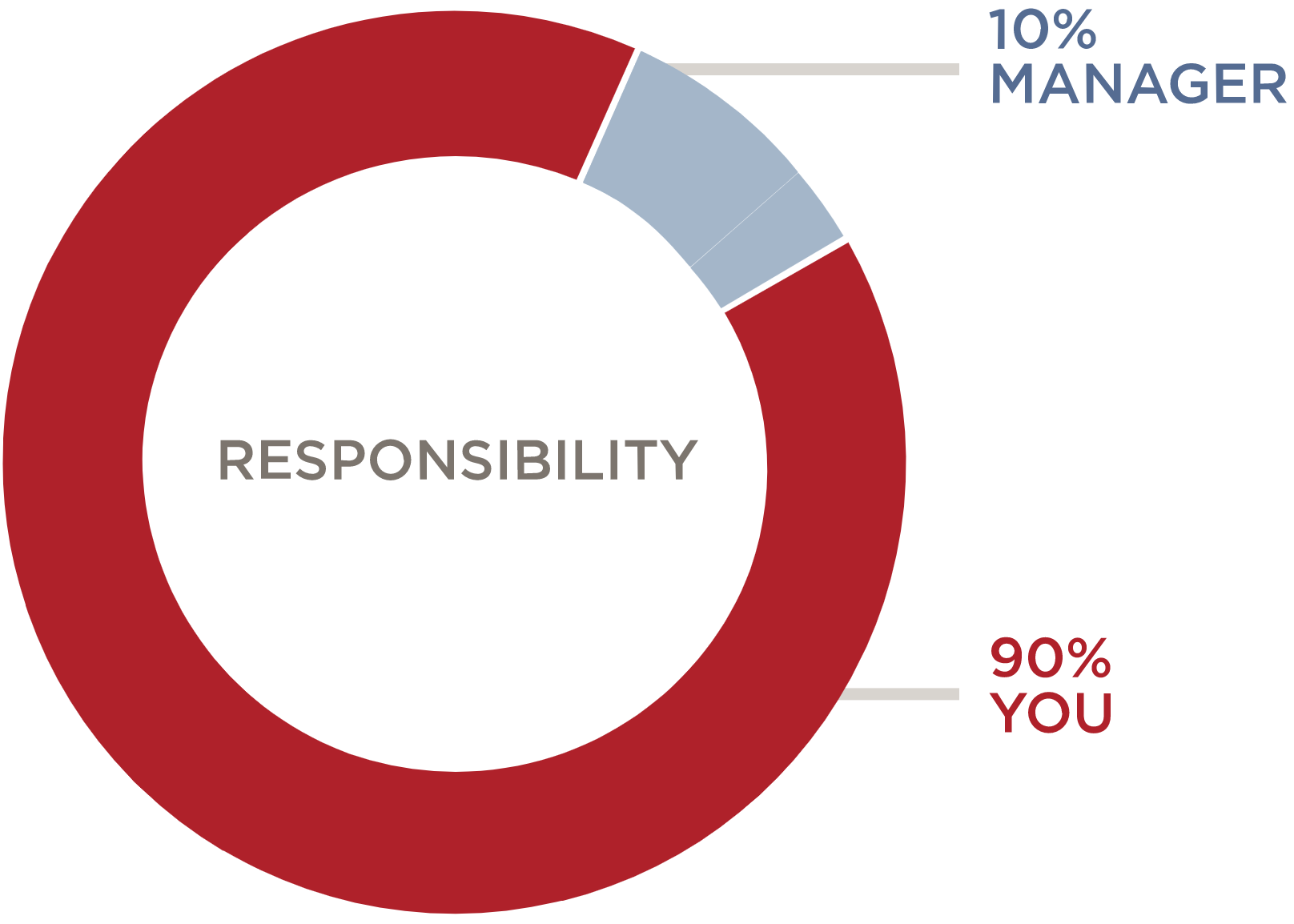
Sound daunting? It doesn’t have to be. Here, organizational behavior professor Gianpiero Petriglieri suggests thinking of your career as a work of art—one that you create.

像艺术家一样思考自己的职业发展 The Art of Career Development

哈佛教授讲授视频逐字稿
What am I really good at? What's the purpose of my work? I'm sure you ask yourself those kind of questions from time to time. We all do. Except that three or four decades ago, we used to struggle with those questions once or twice in our life—when we chose our line of work, when we decided to break away from the expectations of our family. Today we encounter them again and again and again. Not just when we're struggling but, paradoxically, when we're succeeding. That's because the better you do, the broader the range of opportunities you have. You no longer just get to move up, you get to move around. You get to look for work that feeds your passion, that allows you to express yourself, to serve a broader cause. Today’s careers are less like ladders, they're more like works of art. This is why in my research and in my work helping leaders develop, I advise people to think of their careers very much like that. Like artists. First, artists build on a foundation of expertise. You cannot be Picasso if you're not handy with brushes. You don't need to be the expert in your field. But you need knowledge of your function, of the industry you're trying to get into. You need the ability to communicate, to motivate your team, to build a network of supporters around your initiative. Skills are necessary, but they're not enough. Artists use their skills to express something that's both deeply personal and resonates with an audience. They don't really make pictures, or sculptures, or music. They make meaning. In business, that means being able to know and show why what you do matters to you-—what difference it makes. And of course, putting yourself out there can be scary. This is why, like every artist, you need courage. Expertise, meaning, and courage are things that are a lot harder to build and hold onto on your own. This is why artists congregate: to teach and inspire and support each other. And that's the last thing you can learn about career management from artists: the importance of having what I call an “identity workspace”—that is, a community which helps you bring what you do closer together with what you are. It may be a community within an established institution, like your company, or a profession, like medicine or the law. But it might be a less formal community, like a volunteer group, an event you attend regularly, a group of classmates you stay connected to as you move around. And if you're a manager, ask yourself, is your team or your organization an identity workspace for the people who work there? Do you encourage people to find their voice and defy convention? Because if you do, they won't just be more satisfied and creative and productive. They will also think twice before leaving, because they will know that they can't grow as fast and express themselves as fully elsewhere.

Take a Moment

1. According to Petriglieri, one lesson we all can learn from artists is building a foundation of expertise. Now think about yourself. What are the top three skills you currently bring to your job?

第 2 节

Climb the lattice?

Keep in mind that the job landscape is changing.

Traditionally, career ladders were the rule. Employees relied on their company to provide specialized training and to promote them upward.

Today, career lattices have replaced career ladders.
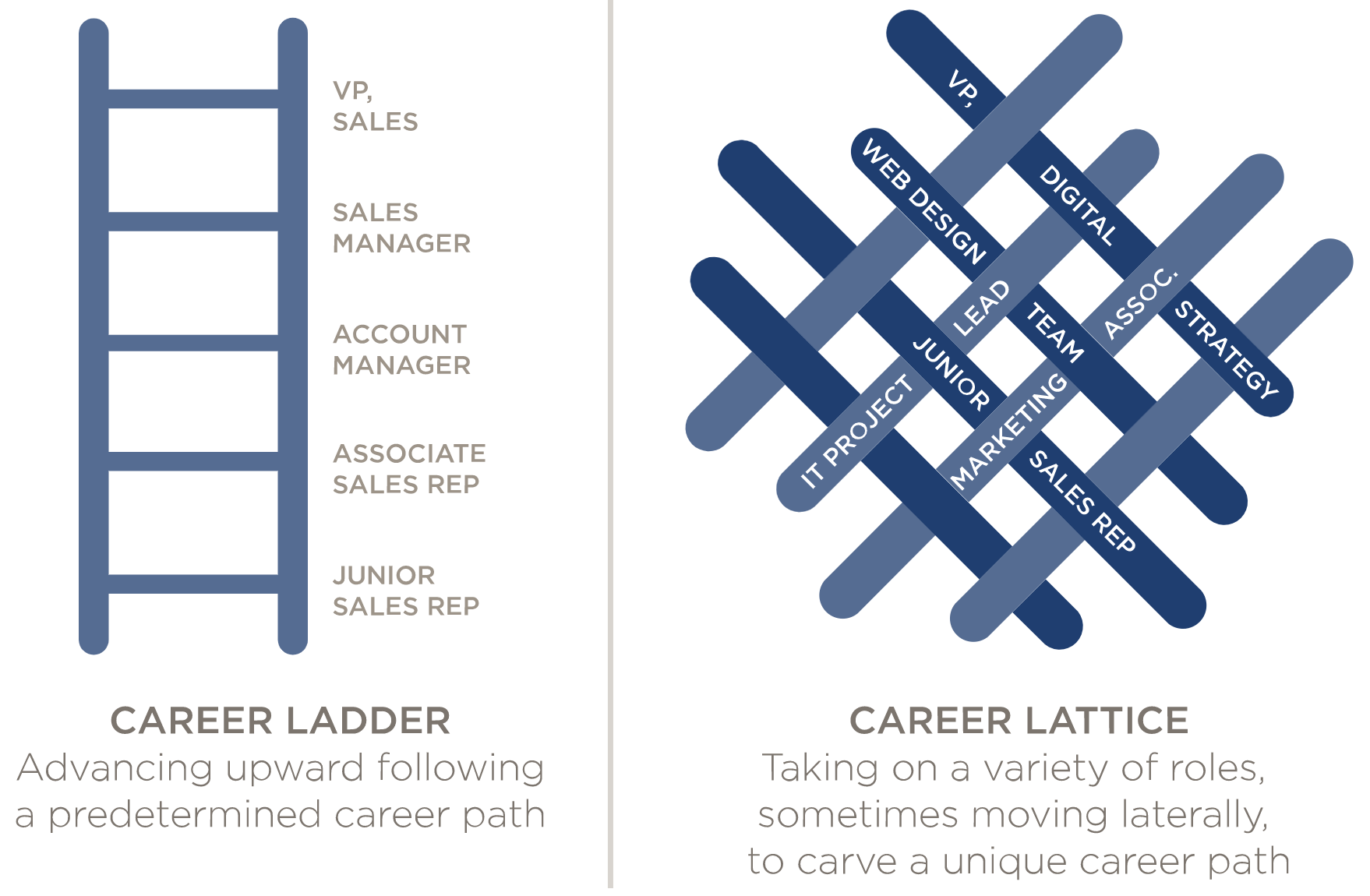
In a career lattice, there are no fixed career paths. Instead, there are many possible ways to advance. You might move upward or laterally—or even take a few steps back—as you continously broaden and renew your skills.

Thinking of your career in terms of a lattice rather than a ladder gives you greater flexibility to explore job options.

And in a competitive and ever-changing market, continually building your skills so you can easily move across that lattice is key.

第 3 节

Beyond a job search

A study of Harvard MBA recipients found that career satisfaction is tied to meaningful work, professional accomplishments, opportunities for growth, and compatibility of work and personal life.

A study of Harvard MBA recipients found that career satisfaction is tied to meaningful work, professional accomplishments, opportunities for growth, and compatibility of work and personal life. A study of Harvard MBA recipients found that career satisfaction is tied to meaningful work, professional accomplishments, opportunities for growth, and compatibility of work and personal life.“Rethink What you Know about High-Achieving Women," by Robin.J.Ely, Pamela Stone, and ColleenAmmermon. Harvard Business Review, December 2014.

In this topic, you’ll learn that career management differs from a job search. You might look for new jobs at different points in your life, but career management is an ongoing process in which you take time to:

Know yourself Explore your core interests, strengths, and values to guide your work journey. Seek career support Nurture your network to support your career development. Become an agile learner Maintain your value in the workplace by keeping your skills fresh. Overcome career hurdles Use career hurdles to gain clarity and momentum in your career.

We live in an age of personalization. Everything from marketing messages to our morning coffee are personalized to our taste and specific interests.

Our definition of success should be no different.

Take a Moment

1. How do you define success?

Your career doesn’t exist in isolation from the rest of your life. And while some people think success means financial reward, others have a broader view.

Make a Connection

Make a Connection

Being proactive in managing your career can help you make decisions that meet your definition of success—whatever that may be.

第 4 节

REFLECT

Reflecting on your learning helps you apply relevant concepts to your job.

Take a Moment

1. 1. What new insights do you have that could benefit you or others in your workplace?
2. 2. What are your biggest opportunities for applying concepts from this Lesson in your workplace?

Further reading

传奇歌手迪翁·沃里克:做自己,享受过程
传奇唱片艺术家迪翁·沃里克谈从伴唱歌手到独唱明星的经历、与音乐界传奇人物合作、应对种族歧视及其他职业障碍、投身艾滋病防治…
研究:随着职业生涯变得更长,职业中期的工作方式也需要随之改变
随着职业生涯延长到 70 多岁甚至更久,许多组织发现,他们最有经验的职业中期员工,恰好在步入最关键的领导岗位阶段时,却出…
在每个人都不堪重负时,支持员工的职业发展
随着经济压力、地缘政治不稳定以及 AI 驱动的颠覆不断加剧,许多员工在繁重的工作负担下,很难把职业发展放在优先位置。领导…

Top 3 in the source platform's original order