
Defeat Distractions 查看中文版
第 1 节
Do you get distracted—a lot?
It’s natural, even healthy, to lose focus. Our minds wander to relax, process information, and dream.
But constant distraction is another matter altogether.
Instead of occasionally wandering off task, our minds are yanked by competing bids for our attention. Emails. Alerts. News headlines. Questions and requests.
Even the chatter of coworkers in an open office can be maddeningly distracting.
All this makes it hard to get into a “flow state,” a calm and focused mindspace where we are highly productive.
Distraction depletes energy. The brain burns more glucose switching tasks versus staying focused.
第 2 节
You won’t be able to eliminate distractions entirely, but you can reduce them.
Poll
Often, we aren’t aware of our biggest sources of distraction—and that’s why they consume so much time and energy.
Over the next couple of days, track what distracts you. Use these broad categories and put a check mark when you notice you’ve lost focus due to:
- Digital devices
- Coworker interruptions
- Office noise
- Frustration or worry
- Other
At the end of two days, tally up your totals. Many people have an aha moment when they review their patterns.
Track Your Distractions
第 3 节
What’s in sight from where you’re sitting right now?
Make a Connection
Did you select two or more things?
If so, those competing digital demands may have you operating in a mental fog.
To perform better, try a digital “de-clutter.”
Move your phone into a drawer or bag.
Close extra browser tabs.
Turn off notifications.
Every tiny action we do—sending a text message, returning an email—gives our brain a feel-good boost, making us addicted to achieving small, insignificant tasks. Hear how to avoid getting mired in details that derail your day.
避免陷入只干小事的“行动成瘾” Don’t Let Little Tasks Distract You from Big Ones
哈佛教授讲授视频逐字稿
第 4 节
TimeManagement_LessonBubbes_Infographic
Sound familiar?
Whether they come via instant message or desk-side visit, coworker interruptions are really common.
They’re not necessarily bad. Camaraderie and collaboration are vital for organizations.
But when interrupting becomes incessant, there’s a real cost to the culture. Stress rises and productivity declines. People may end up coming in early or staying late just to get work done.
Most people don’t realize how time-consuming interruptions actually are.
The average worker is interrupted 50 to 60 times daily, mostly for low-value matters.
Take a Moment
答案与解析
5 minutes
No way! It’s much longer.
13 minutes
Wishful thinking!
25 minutes(正确)
Correct! That “quick question” consumes nearly a half hour!
60 minutes
Thankfully, interruptions don’t drain this much time.
Don’t let minor requests consume your time.
Here are three strategies to reduce interruptions:
Have to pause what you’re doing?
Take a moment to highlight where you left off or use a sticky note to indicate what comes next—e.g., “Check column G.”
Research shows that leaving yourself a reminder will help you restart up to 80% faster when you do return to your task.“How to Prevent Interruptions at Work,” by Brianna Steinhillber. NBC News, May 5, 2017.
Be sensitive to others. Bundle questions and requests, and look for opportunities to speak when coworkers are between tasks.
第 5 节
Conversations, buzzing phones, the whir of a microwave, the tapping of someone’s keyboard.
Poll
As open-plan offices have become increasingly common, distraction has risen.
About a third of workers say noisy, open offices make it hard to be productive.“Open-Plan Work Spaces Lower Productivity And Employee Morale,” by Jia Wertz. Forbes, June 30, 2019.
Sound has a profound impact on concentration. Erratic sounds—such as personal conversations or a sudden loud ringtone—can rupture focus. In contrast, soothing sounds can actually deepen concentration.
Sounds that soothe
Tracks that distract
People who work while listening to music with lyrics recall less of what they read and are slower to learn a new skill.
Go wordless. Even if it feels like you’re barely listening, you’re using some auditory processing power to monitor words—which leaves less bandwidth for your primary task.
To make your office “neighborhood” a place where people can focus, make some etiquette agreements among coworkers who sit near you.
- Keep phones on vibrate.
- Take personal conversations to a public area.
- Eat lunch away from your desk.
第 6 节
Frustration and worry can also be highly distracting. It’s difficult to get work done when you’re mentally replaying a disagreement or fretting about an upcoming meeting.
Not only that, worry and frustration can cloud judgment and increase errors.
Instead, pause to:
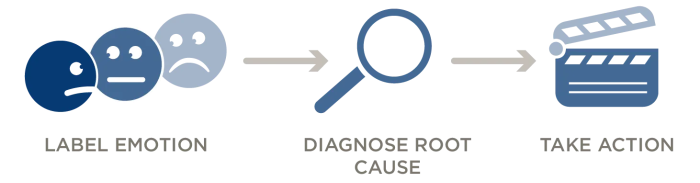
- Label the emotion. (“I’m anxious.”)
- Diagnose the root cause. (“I’m worried about my leverage in this negotiation.”)
- Take action. (“I’ll check whether there is flexibility in our budget.”)
Often, we just try to force anxious thoughts out of our head. But rather than going away, the negative thoughts end up looping in our mind.
By pausing to get into a better frame of mind, you’re investing your time wisely.
Poll
第 7 节
With distraction, you’re pulled away from what you intend to do. With procrastination, you are actively avoiding what you believe you should do. Everyone procrastinates at some point.
Often, procrastination is the surface symptom of a bigger challenge, so look for the root cause and then decide how to proceed.
Here are three simple strategies to help you start (and finish) that task on your list you just can’t seem to get around to:
如何战胜拖延症? Tackle the Task You’ve Been Avoiding
哈佛教授讲授视频逐字稿
Make a Plan
第 9 节
Test your understanding and reinforce what you’ve learned.
Try it Out
答案与解析
Put aside your emotions and sternly remind yourself the deadline is approaching.
Repressing strong emotions can linger as distraction. It’s better to label the emotion, figure out the root cause, and reduce stress.
Look around your workspace and do a “digital declutter.”(正确)
By closing unnecessary web pages, silencing alerts, and stowing your phone away, you’re eliminating interruptions and increasing focus.
Put your headphones on and listen to a favorite podcast.
To focus, choose instrumental music rather than podcasts. Words consume auditory processing power, leaving less bandwidth for your task.
Try it Out
答案与解析
Set expectations about when you can respond to questions, manage your location, and don’t reward interruptions.(正确)
These strategies manage interruptions and create a better culture for focus.
Resolve your coworker’s questions immediately and briefly so that the interruption takes as little time as possible.
Responding immediately rewards the behavior, perpetuating interruptions.
Accept that offices are communal workspaces and catch up on lost time by working through lunch.
Take action to set boundaries and expectations about focus time.
第 10 节
Reflecting on your learning helps you apply relevant concepts to your job.