Time Management
Harness Energy and Focus 查看中文版
第 1 节
“We are smarter, faster, dimmer, slower, more creative, and less creative in some parts of the day than others.”When: The Scientific Secrets of Perfect Timing, by Daniel H. Pink. Riverhead Books, January 9, 2018.
What creates a satisfying, productive day?
Often, it’s when your energy and workload are well matched. You’re tackling complex projects when you have a lot of mental horsepower, and checking off routine tasks when you’re at lower ebb.
In other words, you’re working with your body clock—and it’s powerful for productivity.
Watch how the body clock works and discover how you can surf your energy waves.
充分利用你的能量高峰期和低谷期 Make the Most of Your Energy Peaks and Troughs
哈佛教授讲授视频逐字稿
Every living thing has a biological clock operating on a 24-hour cycle--a pattern called "circadian rhythms." Each day, your body moves like a surfer between peaks and troughs of energy, with spikes, dips, and rebounds. Once you understand your own pattern, you can accomplish more with your peaks, and better mitigate your lows, so it pays to learn your rhythms and surf the energy waves.
As you wake up, your body temperature rises. You gradually feel more alert and energetic. For many people, energy peaks at some point in the morning. With your brain in high gear, you're capable of focused, complex work, and you feel more optimistic. So, go ahead and review that detailed report, or meet with a new client.
Most people's moods slump in the afternoon and our thinking is more likely to be fuzzy. Use these low energy or low enthusiasm troughs for routine or simple tasks.
But the day isn't over yet. Many people get a second wind--a rebound--in the late afternoon through early evening when mood and energy begin to rise again. We don't reach quite as high as our peak. But we're more creative--perhaps because our mental guardrails are down a little, allowing the brain to make new connections. If you were working on a difficult problem in the morning, you might get that "aha!" moment late in the afternoon.
But hang on. For every rule, there's an exception. About a quarter of the population--the night owls among us--follow a different pattern. They start the day in rebound mode with greater creativity, then experience a midday slump, and become alert and focused later at night.
A good day isn't about how much you can get done, but the meaningful things you accomplish. So pay attention to your circadian rhythms and learn to surf your energy waves.
The 2017 Nobel prize in medicine went to American researchers for discoveries related to circadian rhythms, the 24-hour cycles governing energy levels, mood, and alertness.
The 2017 Nobel prize in medicine went to American researchers for discoveries related to circadian rhythms, the 24-hour cycles governing energy levels, mood, and alertness. The 2017 Nobel prize in medicine went to American researchers for discoveries related to circadian rhythms, the 24-hour cycles governing energy levels, mood, and alertness."Gains to be made from getting work in sync with our dircadian rhythms," by Stefan Volk. The Sydney Morning Herald. November 8, 2019.
As you learned from the video, not all of your hours are created equal. The hours when you are at your peak—alert, optimistic, and focused—are particularly valuable for accomplishing important work.
Most people’s peak time lasts 2 to 3 hours.
When is your peak time? Click on the statement that best describes you.
I'm alert first thing in the morning.
Great, you’re an early bird, along with about 15 percent of people. Be the first to the office so you can relish those quiet hours and get vital work done before the office gets too busy.
I'm alert first thing in the morning.
I struggle to get up in the morning, but I can stay up as late as it takes to get something done.
Excellent, you’re a night owl, along with approximately 25% of your coworkers. Your biological peak starts much later in the day than others’. That means you can take the lead when others tire and be the one who gets the project across the finish line.
I struggle to get up in the morning, but I can stay up as late as it takes to get something done.
I'm not sure when my best time is-I'm not bright—eyed at dawn or alert at midnight.
You’re in good company! The majority of people are “intermediate” like this. They begin their peak hours sometime between 9 am and 11 am. Track yourself to see when your peak occurs. For a few days, rate yourself (1 to 5 scale) on mood, energy, and focus once each hour. Look for a pattern.
I'm not sure when my best time is-I'm not bright—eyed at dawn or alert at midnight.
第 2 节
Although the traditional work day isn’t structured for night owls, they are roughly 1 in 4 office workers.
Owls are slow to start but creative in the morning, slumping midday and at their productive peak at night.
Being a night owl is linked to greater creativity and better working memory. Teenagers and adults under age 30 tend to be night owls.
Being a night owl is linked to greater creativity and better working memory. Teenagers and adults under age 30 tend to be night owls. Being a night owl is linked to greater creativity and better working memory. Teenagers and adults under age 30 tend to be night owls. When: The Scientific Secrets of Perfect Timing, by Daniel H. Pink. Riverhead Books, January 9, 2018.
Too often, owls are subtly penalized for not fitting productivity stereotypes about go-getters and “early birds.” But that’s a mistake: Work is global now, so all 24 hours count. There are real advantages to having some sharp minds in the evening.
If you manage an “owlish” team, don’t load up morning with meetings. Set deadlines that allow people the flexibility of finishing tasks after traditional office hours, if that is when they feel most focused and energetic.
Are you a night owl? Here are some strategies for you:
Negotiate later start and finish times.
Collaborate with a team or manage customers in a different time zone.
Offer to work the “last leg” to get projects over the finish line.
Create an “overnight” analysis that others can use in the morning.
Are you a night owl? Here are some strategies for you:
第 3 节
Your peak hours are like gold—spend them wisely!
Reserve your peak time for complex,important work. Don't squander it checking your email or sitting in meetings where you barely contribute.
To get the most of your peak time each day, first identify three important things you want to accomplish.
How should I set my top priorities? Ask yourself, “For today…”
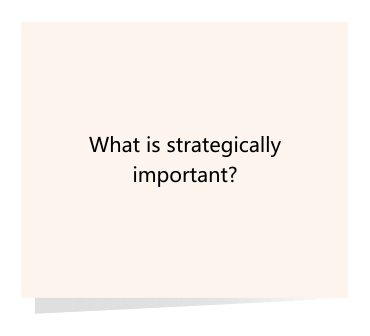
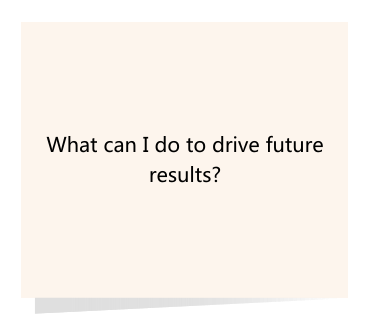
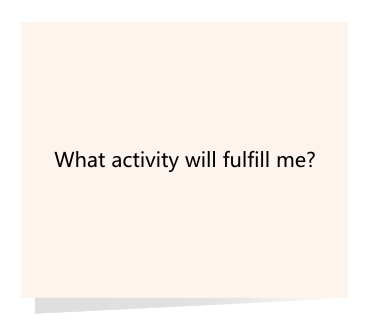
You'll remember your goals better and increase the odds of achieving them if you write them down.
You'll remember your goals better and increase the odds of achieving them if you write them down. You'll remember your goals better and increase the odds of achieving them if you write them down."Neuroscience Explains Why You Need to Write Down Your Goals If You Actually Want To Achieve Them," by Mark Murphy. Forbes, April 15, 2018.
Next, write down your top three goals. Keep them clear and brief—about the amount of text that would easily fit on a sticky note.
By writing three goals, you’re setting peak time priorities for that day. You’re not replacing a more complete to-do list or a project tracking system.
Finally, decide which of the goals you’ve identified for the day would benefit most from peak time.
Remember that at your peak, you are most capable of deep, strategic thinking.
Peak time is great for solo work, but it doesn’t have to be. Peak time often comes with feelings of optimism and goodwill, so it can also be a good time for collaborating.
Interested in examples of work that benefits from peak time?
Writing, analyzing, and researching
Reviewing complex data or documents
Strategic planning or thinking
Technically demanding processes
Meeting with important clients
Negotiating critical business
Pitching and presenting
Resolving difficult customer problems
Interested in examples of work that benefits from peak time?
But a word of advice: Just because it’s your prime time, that doesn’t mean it will always be easy to sustain focus. Here are some practical tips that will help you do just that.
分配时间进行创造性思考 Allocate Substantial Time for Creative Thinking
哈佛教授讲授视频逐字稿
If you're like many young leaders in the workplace today, you likely feel overwhelmed by the onslaught of tasks and meetings. Many of my new clients often start our coaching engagements by saying, there just isn't enough time to work on the big ideas and strategic objectives, the kind of work that requires sustained focus, free of constant interruptions. The reactive solution is to just try to do more, stay in the office longer, get less sleep.
A more effective and sustainable solution is to set aside your to-do list and build your daily schedule around your peak performance times. Observe yourself and take time to discover when your performance is at its peak, and then block off those times for focusing on your most valuable goals. And if you're forced to miss a session, reschedule right away, just as you would any other important meeting.
But if this is a new habit, you may find long stretches of time spent thinking on your own to be uncomfortable. You may even feel frustration and boredom, but don't be discouraged.
Learn from each session. Notice how long before you crave a distraction. Each session will help you discover what you need to shift into a more focused state of mind.
The pace of our work lives today has conditioned us to believe that high productivity requires a state of fragmented attention. Train yourself to enter a focused state. Start with 20 minutes of distraction-free time. Then gradually increase the blocks you schedule in your calendar. Try for 60 minutes and then work your way up to 90 minutes.
Blocking off time to think is not a luxury. Our day-to-day work lives aren't conducive to the state of mind needed to creatively solve problems and shake loose new ideas. As you begin, it may feel like you're kicking up sand from the ocean. Your vision will be blurred, but once it's settled, you'll be glad you made the change.
第 4 节
Slumps are inevitable. Your biological peak won’t last forever.
When you’re starting to lose energy and focus, don’t force your way through a task that suddenly feels twice as difficult. You’ll only waste time and, potentially, make errors.
Recognize that your energy has petered out and take a short break.
Do: Refresh yourself.
Go outside for a walk, get a healthy snack or a drink, connect with a coworker.
Do: Refresh yourself.
Do: Tackle routine work.
Keep a list of necessary work that is easy to check off, such as approving requests, returning calls, and other administrative tasks.
Do: Tackle routine work.
Do: Let ideas "simmer".
Glance at relevant information, but postpone action on the issue until your energy returns. Your subconscious mind will be processing ideas while you complete other work.
Do: Let ideas "simmer".
Don't: Make judgment calls.
When we’re mentally tired, we’re more likely to act in ways that are biased or unethical.
Don't: Make judgment calls.
You may not realize bias has crept in, but studies have shown that when we are tired, we’re more likely to stereotype, fall back on sloppy logic, and cut corners.When: The Scientific Secrets of Perfect Timing, by Daniel H. Pink. Riverhead Books, January 9, 2018. So don’t write someone’s performance review or make a tough decision, for instance, when you’re in an afternoon slump.
第 5 节
Many people experience an afternoon slump, but there’s good news: Mood and energy begin climbing again in the late afternoon and early evening. Yes!
The late afternoon rebound is a good time for important work that doesn’t require a high degree of precision. Some research suggests you may even be more creative during this rebound period.
第 6 节
When it comes to productive and satisfying days, pay attention to more than just the clock on the wall. Listen to the one inside your body, too.
When you are aware of how your energy and focus fluctuate throughout the day, you can make smarter choices about what you do-and when you do it.
At the end of each day, reflect on how you invested your focus and energy. How well did you match energy to task?
Use those insights to inform tomorrow.
第 8 节
Test your understanding and reinforce what you’ve learned.
第 9 节
Reflecting on your learning helps you apply relevant concepts to your job.
Take a Moment
1. 1. What new insights do you have that could benefit you or others in your workplace?
2. 2. What are your biggest opportunities for applying concepts from this Lesson in your workplace?
Further reading
基于数据的方法进行委派委派是管理中极为普遍的难题。许多管理者都清楚自己需要把部分任务交给他人来做,但往往难以准确识别哪些事务真正值得放手。通过…
少即是多,去除公司的“加法病”1940 年 8 月,当英国准备迎接德军一波又一波的空袭时,英国首相温斯顿·丘吉尔也开始迎接另一个敌人:冗长的报告。在长…
Top 3 in the source platform's original order
