Pocket Leadership口袋领导力

Stress Management

Manage Stress in the Moment 查看中文版

第 1 节

There are times when anger, worry, or frustration are justified. But it's difficult to respond effectively when you're in the grip of these emotions. That's because stress hormones diminish your ability to think rationally.

When you've been hijacked by stress, you may say or do things you regret later.

So, what can you do about it?

Regain calm with this 3-step process:

三步让你冷静下来 The Calm Down Effect

哈佛教授讲授视频逐字稿
If you are like most people, your stress skyrockets when a customer sends you a highly critical email that CCs your manager. Your body floods with adrenaline. You might feel intense emotion, fear, anxiety, or anger, making it difficult to think rationally, a response called an amygdala hijack. You can end an amygdala hijack and get to a calmer place by consciously reactivating the thinking part of your brain, the prefrontal cortex. The part of the brain that helps you analyze a situation and see options.When you begin to feel hijacked by strong emotion, use these three steps. Step one, pause and breathe. There is power in a pause. Breathe as if you're sipping. Count the beats in, 1, 2, 3, 4. And out, 1, 2, 3, 4. Breathing helps slow your racing heart and return oxygenated blood back to your brain. If possible, move away from whatever is triggering you. For instance, close that email. Step two, is to reflect on and name what you're feeling. This is critical. By naming your emotions and physical sensations, you are activating the prefrontal cortex. You are giving your thinking brain a task. And in doing so, getting distance from your explosive emotions. You might think, my heart is pounding. My mouth feels dry. I'm feeling scared. My manager is going to be angry. I'm feeling resentful. I've worked so hard for this customer. Step three, analyze and decide. How do you want to respond? Is there other information or context you should consider? If you are face to face with someone, you might ask for some time to respond by saying, this is a lot to consider. Let me gather my thoughts and get back to you. Or, simply, I'd like some time to process. Repeat these steps as necessary. When you are truly hijacked, adrenaline doesn't dissipate from your system immediately, and you may need to go through this process again. It can take up to an hour for adrenaline levels to return to normal. Keep monitoring how you are feeling, in body and mind. Once your stress reaction has eased, and your thinking mind is back in control, you'll be able to develop better responses for better outcomes.

StressManagement_CalmDownAndMoveForward_Infographic

〔图表类内容,图片原件见线上原文〕

Remember—it's never too late to move into the calm-down process, even after an outburst.

Make a Connection

1. Think back to the last time you felt overwhelmed by stress. Did you say or do something you later regretted? What was it?

When your stress levels spike in the middle of a conversation, you might not have the luxury of using a breathing exercise to calm your mind.

In these situations, consider using certain phrases to give yourself time clear your head:

  • “Hmmm. I need a moment to consider that.”
  • “I don't want to react too hastily. I'll get back to you.”
  • “This is challenging. I'd like to gather other opinions first.”
  • “Can we revisit this conversation? I need some time to think.”

If you're unable to interrupt, remain silent and use body language to show you're taking a “thinking pause.” Pausing for even a few seconds can prevent you from acting in a way you might regret later.

Manage Stress in the Moment - tips - 01

〔图表类内容,图片原件见线上原文〕

After you begin to calm down, it's time to think objectively about the situation and how to proceed. Here are some additional questions you can ask yourself to move forward:

Analyze

• Is my interpretation of this situation correct? • Am I getting trapped in my own biases or insecurities? • What’s most important to focus on here? Analyze

Decide

• What do I want to say or do? • How serious is this situation? • How can I persuasively convey my concerns and point-of-view to others? Decide

When you resume the conversation, make sure to:

  • Manage your stress response
  • Focus on facts
  • Listen to the other person's perspective
  • Try to find common ground

Angela takes time to breathe

Angela takes time to breathe In the middle of a hectic day, Angela, a product manager, gets an email from Diane, a safety engineer. “You are missing paperwork with this prototype—can't review without it. I'm moving on to someone who is ready.” Angela, who is under pressure to fast-track the approvals process, itches to fire off an angry response that the missing information is minor. Instead, she notices her pounding heart, closes the email, and takes a deep breath. Then she goes outside and stands in the sunshine for a few minutes. When she gets back, she feels calmer. She sends Diane a quick note: “I got your email. I have a workaround. Let's talk about a solution—is 3 pm today good for you?” Angela takes time to breathe

A 3-Step Calm Down

附件:a_three_step_calm_down - en.pdf(pdf · 136 KB,本地副本)

第 2 节

Focusing on your breathing is a great way to calm your immediate response to stress, but sometimes anxiety-inducing thoughts don't go away.

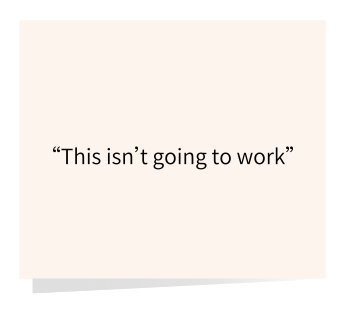
When you're overcome with stress, it's easy to become trapped in a faulty perception of reality. Your internal voice may turn negative, self-critical, fearful, or angry, conveying messages like:
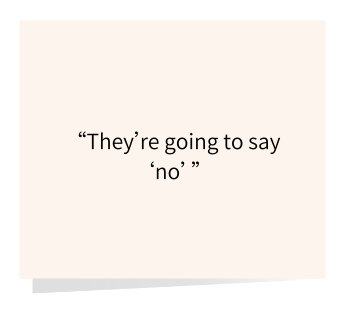
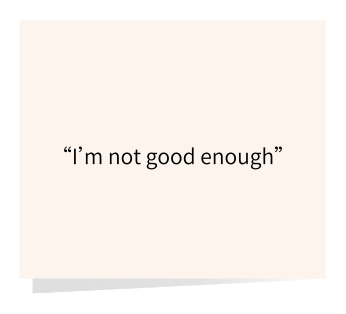
These irrational thought patterns are known as mind traps. Left unchallenged, they prevent you from seeing the truth and contribute to even higher levels of stress and anxiety."Ten Mind Traps That Dampen Your Happiness and Create Misery" by Bryan Robinson. Psychology Today, December 1, 2019.

"Here are some common mind traps to look out for:"

Manage Stress in the Moment - table 02

Manage Stress in the Moment - table 02

Take a Moment

Take a Moment

In this video, psychologist Susan David offers additional insight on how we fall into mind traps—and how we can get out.

你是否陷入了情绪陷阱?How We Get Hooked

哈佛教授讲授视频逐字稿
The prevailing view is that difficult emotions and thoughts have no place in the office. And yet these difficult emotions and thoughts are normal. And how we deal with them drives everything. What becomes really critical then is to learn strategies that help us to navigate this in a world effectively. What so often happens is we become hooked by our difficult thought. I'm not good enough. The team is undermining me. A challenging emotion. I feel really sad or stressed or disappointed. And what sometimes happens is we get hooked by crawling into these thoughts, emotions, and stories, treating them as fact and letting them dominate our actions. So rather than bringing our values, our intentions, and our choice to being a leader, we start using these thoughts, emotions, and stories to drive our actions. I'm going to ask a few questions that help you to determine whether you're hooked right here and now, or in some of the everyday challenges that you face in the workplace. Question number one, have you become so focused on being right, the right way to deliver the product? Or I'm right and that person is wrong? That you've forgotten that your actions may truly just not be serving you? Have you become so focused on the task, what it is that you're trying to do in a meeting? What's on the agenda that you have lost sight of the objective? What is it that you're trying to achieve for your customer, for your client, or even for yourself? Are there context, thoughts, or emotions that you are treating as facts rather than recognizing that emotions and thoughts are data, not directions?

Use these three steps to unhook yourself from mind traps:

1. Fact check: What evidence do I have for this?

2. Develop alternative hypotheses: Are there any other possibilities here?

3. Gain perspective: What would a neutral party say about this?

Here's what challenging mind traps looks like in practice:

Pilar hits a mind trap

Pilar hits a mind trap Pilar is getting ready to leave for work. She has an important meeting with her boss first thing to present the status of her current project. As she enters the highway, she realizes there's a huge traffic jam. Pilar bangs her hands on the steering wheel, saying, “Look at this traffic. I'm not going to make it in time for the meeting. Now I'll probably get fired.” Pilar hits a mind trap

Try it Out

1. Which mind trap has Pilar fallen into?
答案与解析

Should statement
Not quite, try again!

All or nothing thinking
Not quite, try again!

Overgeneralizing
Not quite, try again!

Catastrophizing(正确)
You’ve got it! Pilar is catastrophizing by imagining the worst-case scenario without any evidence for it.

Personalizing
Not quite, try again!

Pilar challenges her thinking

Pilar challenges her thinking After taking a deep breath and challenging her negative thoughts, Pilar concludes: “This traffic is out of my control.” “I'll call my boss and let her know I'm running late.” “Surely she'll understand and be open to rescheduling our meeting.” Pilar challenges her thinking

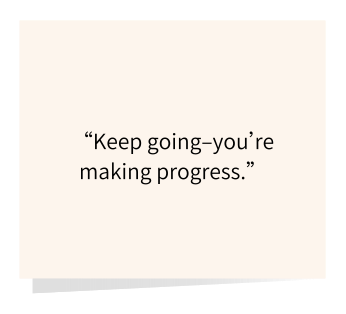
As you practice this technique, you'll develop an inner voice that sounds like a coach offering sound advice and encouragement:
These positive thoughts will help you learn to circumvent mind traps the next time you're feeling stressed.

Guide to Mind Traps

附件:guide_to_mind_traps - en.pdf(pdf · 147 KB,本地副本)

Worksheet for Challenging Stressful Thoughts

附件:challenging_stressful_thoughts_worksheet - en.docx(docx · 1107 KB,本地副本)

第 3 节

Another common source of workplace stress is feeling like a situation is out of your control.

At work, you're responsible for a lot: goals, people, customer relationships, and more. You can influence many of these things, but you can't control them. The same is also true in your personal life.

The next time you feel overwhelmed, ask yourself:

  • How close am I to the root causes in this situation?
  • Do I have the skills, information, resources, or relationships I need to change or influence this situation?
  • What factors have blocked change in this area in the past? 

Then, use this information to list what's within your influence and what's outside it.

When something is outside your influence (or barely within it), simply let it go.

Accept that there are some problems you can't solve. Or perhaps you've done all you can and need to let others finish the job.

You may feel that by worrying or feeling guilty about the situation, you're taking some action, but actually the opposite is true. You're only stealing energy that's needed elsewhere.

You'll be better off in every way—physically, emotionally, and mentally—if you can refocus on areas of your work and life where you can make an impact.

  • Calm your mind during a stress hijack by taking a pause to breathe, reflect and label, analyze and decide.
  • Take a moment to think things through before reacting to a stressful situation.
  • Recognize, avoid, and address mind traps that lock you into negative, unhealthy thought patterns.
  • Learn to let go of circumstances beyond your control and hand over responsibility when you can.

Take Action

1. Which of these strategies will you try to manage your response to stress in the moment?

第 4 节

Reflecting on your learning helps you apply relevant concepts to your job.

Take a Moment

1. 1. What new insights do you have that could benefit you or others in your workplace?
2. 2. What are your biggest opportunities for applying concepts from this Lesson in your workplace?

Further reading

当工作量超过团队能够承受的范围时
当工作要求不断增加、资源却在减少时,领导者不能简单地把多出来的工作揽到自己身上,也不能逼已经不堪重负的团队再加把劲。这两…
无形工作,正在耗尽你最优秀的员工
大多数领导者评估工作量时,关注的往往是工时、截止日期和产出,但这些衡量标准忽略了员工所承担的心理负荷—&md…
高压、高技能岗位如何降低离职率:几个反直觉的做法
职业倦怠和加班确实会导致护士及其他高技能员工离职,但这只是问题的一部分。对重症监护室护士的追踪研究发现,当员工被赋予有意…

Top 3 in the source platform's original order