Pocket Leadership口袋领导力

Digital Intelligence

Act on Promising Digital Opportunities 查看中文版

第 1 节

In today's digital world, it's not enough to stay up to speed on the latest technologies and access insightful data. To add value to your organization, you and your team need to continually spot and take advantage of new digital opportunities.

What's a digital opportunity? It's an opening for your group to solve customer and organizational challenges through emerging technology or data.

These opportunities can vary widely in scope, from improving onboarding for new employees using artificial intelligence to creating a direct line of communication to customers using an app.

See how Felicia Jadczak, co-CEO of She+ Geeks Out, discovered a digital opportunity for her organization during the COVID-19 pandemic.

利用危机升级业务运营模式 Turn Crisis into Opportunity

哈佛教授讲授视频逐字稿
When we initially had the pandemic hit, my company, She+ Geeks Out, was focused pretty much 100% on in-person gatherings. We have two sides to our company. And so, we were holding in-person networking events, and we were also holding in-person workshops and trainings for various clients. The good news was that we were already leveraging several different technology platforms that allowed us to communicate, to use video conferencing, chat with each other. So, that was not something completely new for us. And so, we really leaned into a lot of the existing platforms we were using. And what we found was that for trainings, workshops, seminars, webinars, things like that, it was really easy, to a certain extent, to just really lean into technology. On the other side of the house, though, we were holding these different community events. It was much more challenging, because the whole point of these events was to come together and be in person together. And so, we took a look at several different platforms that were out there to really get a sense of how can we find something that will allow us to have more of that two-way relationship between ourselves, our speakers, and our community members, so that it's not just a one-to-many kind of talking at a group of people, but really more of that hanging out, that networking, that moving and interacting with each other that really made our event so special. So, we landed on this platform called Remo, which allows you to basically move around a virtual space, and have that video, and that audio, and that voice, and ability to present, so there's some element of user control there. So now, actually, we're working with clients all around the world, and our community gatherings, which were previously limited primarily to the greater Boston area, we now have people dialing in from all over the United States, outside the United States-- really, all over the world, as well. And that was really key for us to be able to not completely recreate what we were doing in the past with in-person events, because it's never going to be exactly the same, but look at that as an opportunity for a way to connect with each other in a new way that still felt fresh and interactive and engaging.

Make a Connection

1. How has technology helped you solve an unexpected challenge at work?

第 2 节

Before you can take advantage of digital opportunities, you need to identify them and decide which ones to spend resources on.

Digital opportunities are everywhere. Spotting them is a matter of having the right team mindset and infrastructure in place. When you see technology as a means for innovating, solving problems, and creating efficiencies, you increase your chances of surfacing exciting ways to strengthen your organization and make customers happy.

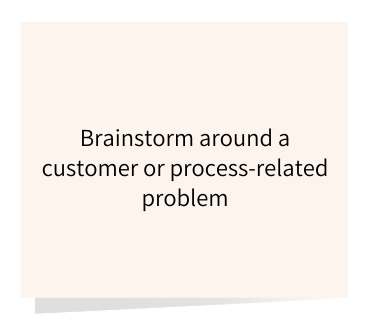
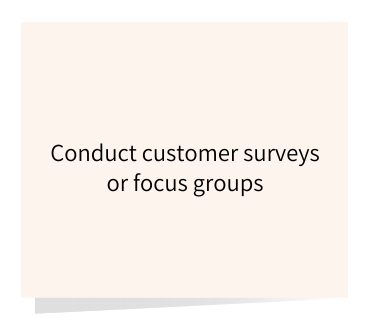
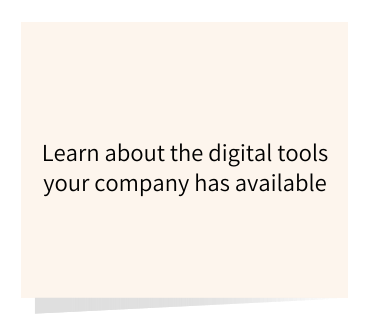
How to find these opportunities? You can:
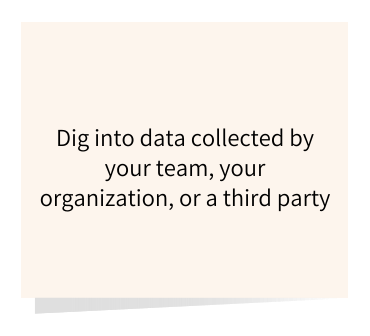
Act on Promising Digital Opportunities - Tips01

〔图表类内容,图片原件见线上原文〕

As you and your team consider new applications of technology, you'll need to make decisions about which opportunities to pursue—and which to pass up or leave for another time. Avoid falling into the trap of initiative overload—trying to take on every project or idea you come up with.

One way to decide where to focus your energy and resources is by using a prioritization matrix. See how to apply this useful tool.

如何确定数字化项目的优先级 Prioritize Your Digital Initiatives

哈佛教授讲授视频逐字稿
In a digital world, there are new tools, technologies, and ideas around every corner. So, when these new opportunities present themselves, which ones does your team act on? Sometimes the answer isn't immediately clear. The good news is that there's a simple tool to help you make those tough choices. A two-by-two matrix can help you compare competing ideas, visualize their advantages and disadvantages, and encourage discussion among your team. Your two-by-two matrix has four potential outcomes: low priority, maybe, delegate, and good bet. Of course, if your opportunity seems like a good bet, pounce on it. Let's say you lead a digital marketing team and you're developing a new feature for your customers. Do you go with a social media ad generator that creates slick new content or a smart email service that sends branded messages easily and intuitively? Your handy four quadrant model can help. Let's assume the cost for the ad generator and the smart email service is the same. One factor to consider is complexity. How difficult is the service to implement? Does it have high complexity or low complexity? Designate one axis as the complexity axis. Another factor is the opportunity's payoff. How effective will it be for your organization? Will it have a big payoff or a small payoff? Designate the other axis as the payoff axis. Now it's time to compare. You may decide that the ad generator and the smart email system can both lead to a pretty big payoff. Yet the ad generator, while cool, would be a heavy lift for your team involving graphic design and complicated coding. The ad generator belongs in the maybe category. But the smart email system is not a heavy lift and it's easy to put into practice. The big payoff combined with the relatively low complexity means smart email is a good bet. Move forward. As you lead your team and encounter promising opportunities driven by technology, try a two-by-two matrix to visualize and prioritize your way to the best decision.

For your digital projects, start by labeling your axes as effort—how complex and resource intensive they are—and impact—how significant the outcome will be for your team and organization.
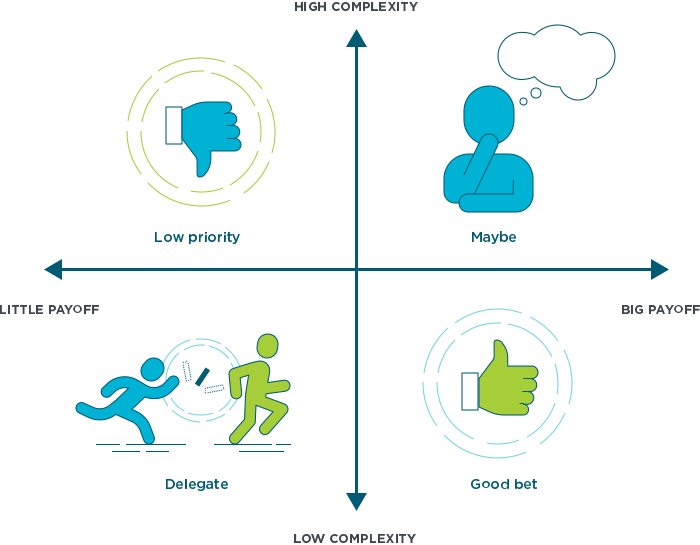
A few tips on using a prioritization matrix:

  • Define the values on the axes, if possible. For example, for "Impact," specify what constitutes high impact versus low impact.
  • Customize the axes as needed. For example, to help your team decide where to spend its time, you might want to compare "Urgency" and "Importance."
  • Beware of labels that don't include some measure of impact. For example, labeling the axes "Cost" and "Time" reduces the focus to day-to-day operating issues. The team might miss opportunities for high-value action.

Prioritizing your digital initiatives is a team sport. M­­ake a point of facilitating discussions about your matrix with your team and other stakeholders before you make concrete decisions and plan specific actions.

Take a Moment

1. List the digital opportunities your team is currently considering. How can you prioritize them?

第 3 节

Has the time come to act on the opportunity you and your team selected?

Not quite yet. To get the best results, adopt an experimental approach. Conduct pilots or trials that you can implement quickly. The goal is to test and learn so you can adapt as you go. You also avoid pitfalls, such as getting mired in the planning stage or failing to improve your project through feedback.

For example, let's say your team is excited about giving customers the option to pay for your products with cryptocurrencies. Rather than fully committing the time and resources to make this a reality, you could start by gauging interest through customer surveys. Or, if it's easy to implement, you could set up a pilot for accepting these new currencies and then pause to reflect on how the integration is going.

"In the new world, it is not the big fish which eats the small fish, it's the fast fish which eats the slow fish."

Make a Connection

1. Have you been a part of a project that might have benefited from a test and learn approach? How might the outcome have been different?

To take an experimental approach to your digital opportunity:

  • Come up with a hypothesis about your initiative—for example, "We believe that crowdsourcing ideas for our product name over new social media channels will increase our engagement with a younger demographic."
  • Take quick, targeted actions—for example, "We can pilot this idea with a few individuals in our team's network."
  • Evaluate the initial results against your hypothesis and make changes as needed—for example, "We got initial feedback that customers would be excited to participate, but some may not take it seriously. Strict submission requirements might help eliminate unproductive suggestions."

By starting with simple experiments and sharing the results, you can make the case for larger investments of time and resources. You and your team will also build skills for implementing future digital projects.

What if my team has limited resources?

Even if your team has little time or money to invest in experimentation, you can still explore digital opportunities. Depending on the project your team selects, you may simply need access to data or information from other groups. Sometimes, though, you'll have a more ambitious plan that requires the support of stakeholders and senior management. Communicating effectively is crucial to getting this support. How? Get them as excited about the idea as you are by walking them through your prioritization process and showcasing the potential benefits. What if my team has limited resources?

第 4 节

Not matter how big or small the opportunity you're acting on, you need a concrete way to evaluate its impact. Having clear metrics and setting performance goals enables you to document progress and share learnings across the organization. It also allows your team to connect with other groups doing similar projects and gather feedback about ways to improve your approach.

The metrics you use will vary depending on your specific opportunity. Some examples include customer feedback, the time your team spends to complete a task, and the amount of revenue gained from a project. Without concrete measurements, failing projects may continue far longer than they should, and successful projects won't receive the recognition they deserve.

Jason Wong, founder of JWong Works and former senior director of engineering at Etsy, shares how his team learned this lesson the hard way.

目的明确地开展试验 Experiment with a Purpose in Mind

哈佛教授讲授视频逐字稿
One of the things that's really difficult about working in technology is that not only is the technology changing all the time, but the business landscape and the business needs are changing all the time as well. This reminds me of a story of back in 2011 when I was working at an e-commerce company. We were hosting a lot of our own servers at that time and our search team wanted to start using big data to improve their search results on websites And so, they started tinkering a little bit on the cloud to do this. And they saw some success. And then they tinkered a little bit more, and they saw some more success. And they kept tinkering and tinkering until one day we got a bill at the end of the month for $100,000 in cloud computing expenses. At that point, we pulled back and said, “Hey, this is $1.2 million worth of spend in a year and we can do that more effectively and more cheaply if we brought it in-house.” And so, being really clear on what we needed to do, we went about and did it. A few months later, it's a success. Our search team is working really well on it. But the thing about big data is once you start using big data, it turns out everyone wants to start using big data. What happened when we had all these users jump on is that our reliability and availability suffered. So, our recommendations team would run these really expensive jobs and bring down our cluster, and that would affect our business intelligence team's ability to get their reports in the morning. And I will tell you nothing snaps you to attention faster than when the CEO sends you an email showing all the days of the past month that he did not get his reports. And so, we really had to pull back and say, what are we optimizing for? Our initial mission, our initial metrics for success, aren't doing it for us anymore. We have a lot of unhappy people right now. And so, we decided that what was important was reliability and availability. And so, we pivoted, and we actually doubled the size of our clusters so that we could separate out the business-critical stuff from the more experimental, computationally expensive things. And so, even though this was a lot of work, what really contributed to having a happy ending to this story was 1. Understanding what was important to the company and what our role was in it and 2. Being really clear about what the metrics of success were and 3. Knowing when to re-evaluate those metrics of success for when conditions changed.

After you've acted on your opportunity, analyze the data you've collected. Then look back at your original hypothesis and assumptions and ask:

  • Did the opportunity pay off? Were your assumptions proved or disproved?
  • What might you change going forward based on what you learned?
  • Do you need to conduct further tests?
  • Were there unexpected learnings or surprises that you should document and share with others in your organization?

If your digital project turns out to be a dud, remember that innovation is all about learning. The insights—and the experience—you gain along the way are certain to be invaluable as you look toward your next exciting opportunity.

Rogelio guides the way

Rogelio guides the way Rogelio is a manager in a mid-sized home improvement store. After noticing that customers frequently struggle to find the items they need, he recognizes an opportunity to use digital tools to improve their experience. Rogelio and his team create a rough digital map of the store with details on product locations. They put this map on a secured tablet installed near the store’s entrance with simple signage instructing customers how to use it. To measure if this new tool helps customers, the team compares the number of customer questions they received before and after installation. After a few weeks of testing, surveys indicate that the tool decreases the time team members spend guiding customers around the store. Rogelio shares these results with the chain's regional manager in case other stores might benefit from this approach. Rogelio guides the way

Try it Out

1. What other metrics can Rogelio use to measure the effectiveness of the program?
答案与解析

Productivity of team members(正确)
He can find out if team members are still less productive due to customer issues by the productivity of the team.

Weekly profit of the store
While Rogelio's experiment may affect store profits, there are so many other variables at play to make it not a reliable indicator.

Website traffic of the store
The opportunities Rogelio is trying to capture are related to in-store technology improvements, and website traffic, while also very important to monitor, is unlikely to be a good indicator of the success of the experiment.

第 6 节

Test your understanding and reinforce what you’ve learned.

Try it Out

1. 1. Your team has to choose an opportunity to pursue in the next quarter. Which one of these statements about using a prioritization matrix is correct?
答案与解析

The values on the axes are always “Effort” and “Impact.”
You should customize the axes as needed.

Prioritizing digital initiatives is best done as a team.(正确)
Facilitate discussions with your team to make decisions and plan actions.

A prioritization matrix is useful for planning how to pursue all of the opportunities you’ve identified.
A prioritization matrix is useful for deciding where to focus your energy and resources.

Try it Out

1. 2. Your team has decided to adopt a new collaboration platform. Having narrowed down the choices, you want to do a simple experiment to ensure the platform you’ve picked meets your team’s needs. Which one of these approaches represents a healthy test-and-learn process?
答案与解析

Come up with a hypothesis about the outcomes, take quick, targeted actions, analyze the results, and make changes based on what you’ve learned.(正确)
By starting with simple experiments and adapting as you go, you avoid pitfalls like getting stuck in the planning stage.

Develop mandatory evaluation criteria for ensuring the new platform meets your standards.
It’s vital to conduct small-scale tests rather than committing fully upfront.

Request support, feedback, and a measure of success from management.
While management feedback is important, piloting with small experiments is critical.

第 7 节

Reflecting on your learning helps you apply relevant concepts to your job.

Take a Moment

1. 1. What new insights do you have that could benefit you or others in your workplace?
2. 2. What are your biggest opportunities for applying concepts from this Lesson in your workplace?

Further reading

数字产品新思路:搭建长期团队
2011 年,《纽约时报》面临广告销售和发行量双双下滑的困境,迫切需要寻找新的收入来源。同年 3 月,它逆势而行,决定设…
通用 or 专业,你的企业该如何选择 AI 模型?
在面向专业场景的问题解决类应用中,选对生成式 AI 的架构至关重要。通用型模型凭借多功能性与跨领域信息整合能力,在企业级…
AI 是解决这个问题的合适工具吗?
AI 虽然具备解决重大难题的潜力,但企业在推动相关项目时往往会面临诸多障碍。这些难题包括:高质量数据的缺乏、可选方案数量…

Top 3 in the source platform's original order