
Establish Project Scope 查看中文版
第 1 节
To define the problem your project needs to solve, ask questions that uncover the practical and business issues the project will tackle. Once you've defined the problem, don't grab for the most obvious solutions; brainstorm alternative solutions.
Avoid rushing into solutions
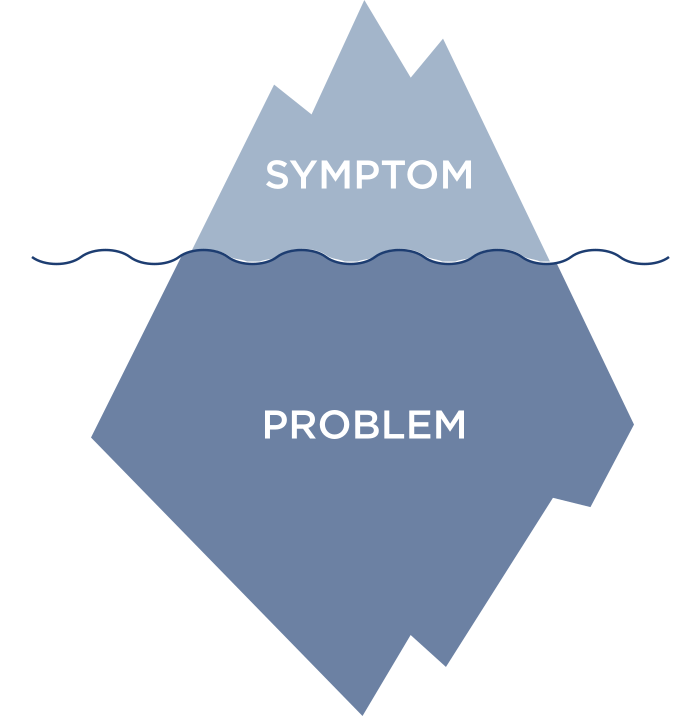
The problem that your project is supposed to solve may not be obvious. To correctly define the problem, resist any temptation to leap at a definition too quickly. For instance, suppose you're an IT manager and several people in your department have asked for a new database and data-entry system. You informally ask them: "Why do we need a new system?" The answers you receive include: "We can't get the data out fast enough" and "I have to sift through four different reports to update my clients' recent activity."
These responses describe symptoms—not underlying problems. Ask more probing questions, such as "What type of data do you need?" "How are you using the data now?" and "How quickly do you need to retrieve the data?"
If you don’t know the answers to such questions, you could waste time and money designing a system that doesn’t address your group’s fundamental concerns.
Worksheet for Clarifying Project Scope
Brainstorm alternatives
Once you pinpoint the business need for the project under consideration, develop options for addressing that need. Brainstorm alternatives with others. Ask open-ended questions that encourage exploration of new ideas, such as:
-
How many different ways can we solve this problem?
-
Of the available alternatives, which will best solve the problem? Why?
-
Is the seemingly best alternative more or less costly than other suitable choices?
-
Will this alternative result in a complete fix of the problem, or a partial fix? If a partial fix, what other options do we have for completely fixing the problem?
Evaluate your responses. Then select the best alternative.
倾听客户真正的需求 listen for your clients real needs
哈佛教授讲授视频逐字稿
Take a Moment
第 2 节
After you identify your project's stakeholders, ask them to spell out what success on the project means for them. Stakeholders' interests vary, so their definitions of success will likely differ. It's your job to meld stakeholders' expectations into a coherent set of project objectives.
A project stakeholder is: anyone who has a vested interest in the outcome of your project.
Your stakeholders might include:
-
The project sponsor—the individual who has authorized the project
-
Contributors, customers, managers, and financial staff—the people who will judge the success or failure of your project
-
Anyone affected by the project's activities or outcomes—including individuals who may have to do their work differently because of the project
-
People who contribute resources to the project—such as space, staff members, time, tools, equipment, and money
What project sponsors do
第 3 节
Successful projects meet their objectives. So state your project's objectives clearly and ensure that they reflect stakeholders' needs. That way, when the project is complete, your stakeholders will be more likely to agree that you've met the objectives.
For example, suppose that one of your organization's strategic objectives is to develop more innovative products and services. In this case, projects with objectives such as analyzing consumers' preferences, developing ideas for a new offering, and creating new kinds of marketing campaigns could all align with that organizational objective.
But remember: Many aspects of your project remain fluid, especially during planning and early stages of implementation. Be prepared to refine your project objectives as conditions change.
Tips for defining SMART objectives
Establish Project Scope
Poll
第 4 节
To anticipate trade-offs, you need to understand your stakeholders' conflicting demands, master the communication skills essential for resolving questions about trade-offs, and strategically manage "scope creep."
Every project has three competing demands:
-
Quality—satisfaction of the project's requirements
-
Time—amount of time needed to produce the project's deliverables
-
Cost—how much money, people, and other resources needed to complete the project
Change any one of these variables, and you change the other two as well.
Establish Project Scope
Communication tactics
Deciding whether and how to make trade-offs between quality, time, and cost is a major aspect of project management. To manage trade-offs, use these communication tactics:
-
Keep all stakeholders informed of any changes in your project's objectives
-
Find out which of the three variables matters most to each stakeholder
-
Explain the consequences of any changes in terms of quality, time, and cost
-
Ask stakeholders to clarify what they’re willing to give up if they want you to do something that will affect the project’s quality, time, or cost
"Scope creep"
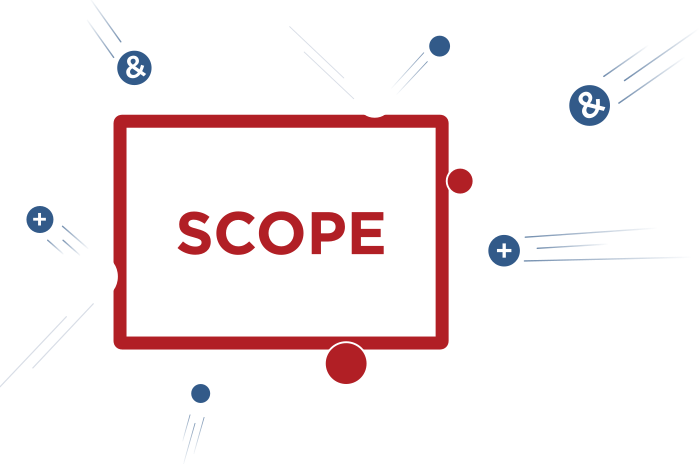
With "scope creep," stakeholders pressure a project manager to do more than the project plan originally called for. As you discuss your project with stakeholders, they may start defining "project success" in ever-expanding terms. And they might start identifying more and more problems that they believe the project should solve. Suddenly, your list of objectives for the project has grown to alarming proportions.
案例
To avoid getting caught up in scope creep, resist the urge to solve everyone's problems with your project. Even legitimate or urgent problems don't belong in your list of project objectives if they lie outside the project's scope. If stakeholders demand that you add new objectives to your project’s scope, explain the impact on quality, time, and cost.
如何管理范围潜变? how to manage scope creep
哈佛教授讲授视频逐字稿
In this activity, pick the strategy that will help balance time, cost, and quality.
Try it Out
答案与解析
A. Get the project out the door faster by encouraging the team to work paid overtime
Not the best choice. If the team works too many hours, their attention to details may suffer, which could decrease the quality of the product.
B. Hire specialists to work on the product on a temporary basis(正确)
Correct choice! For this project, hiring specialists on a temporary basis is a better solution than encouraging the team to work overtime. The specialists can apply their wealth of experience to increase the quality of the product.
答案与解析
A. Make cuts to the product’s proposed feature set
Not the best choice. In this scenario, cutting the feature set is an unacceptable choice because the product won’t meet the quality requirements for a mid-priced TV. Also, a brochure highlighting the TV’s features has already been sent out.
B. Save money by using generic rather than high-end circuitry in the set's design(正确)
Correct choice! Using generic parts can have a minimal negative effect on quality and may be the only practical way to save money while getting the product out on time with the agreed-upon features.
第 5 节
To estimate project time, costs, and skills, you need to create a Work Breakdown Structure and use it for rough estimates.
Work breakdown structure
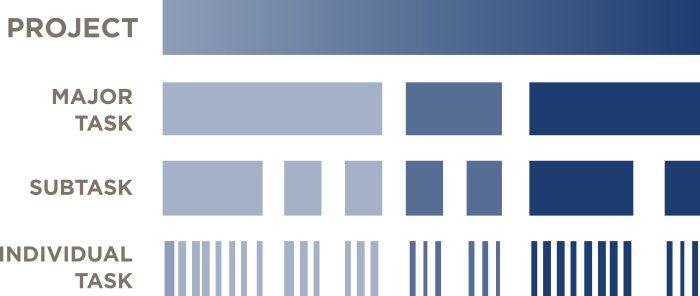
To estimate the time and costs your project will entail, use a Work Breakdown Structure (WBS). With a WBS, you can subdivide a complex project activity into smaller tasks, continuing until the activity can no longer be subdivided. At that point, you have defined each task in its smallest—and most manageable—unit.
To create a WBS, follow these steps:
-
Ask, "What tasks have to be done to accomplish activity X?"
-
Continue to ask this question, breaking tasks into the smallest possible subtasks. Keep going until your answer represents a task that can’t be subdivided further.
-
Estimate how long it will take to complete each subtask.
-
Estimate how much each subtask will cost in terms of dollars and person-hours.
-
Consider the skills you’ll need to perform each subtask.
A sample WBS
project_migrate_web_servers_and_databases_to_new_data_center
Project: Migrate web servers and databases to new data center
Worksheet for Developing Rough Estimates
Rough estimates
Don't worry about determining the order in which the project tasks in your WBS are performed. At this stage, use the WBS only to build a rough framework of tasks. Your WBS will give you an early estimate of how much time, how many people, and what skills you'll need for the project. You'll probably need to refine these estimates during the buildup and implementation phases of your project, as new information comes in or new conditions arise.
Tips for estimating project time, costs, and skills
第 6 节
To create a project charter, it's valuable to understand why you need a charter and what's in a charter.
Why you need it
A project charter spells out the nature and scope of the work and management's expectations for results. A formal charter can help ensure that your project doesn't head off in a direction that jeopardizes organizational objectives. It can also protect against scope creep.
What's in it
An effective project charter is a concise written document containing some or all of the following:
-
Project mission statement
-
Outline of the roles and responsibilities that people will play
-
Project sponsor's name
-
Project scope and objectives
-
Relationship between the project's goals and higher organizational goals
-
Expected time frame of the work and milestones
-
Resources available to the project team
-
Constraints
-
Assumptions about the project
-
Quality requirements
-
Major risks
Once you've developed a project charter, you'll distribute it to all stakeholders. You'll also distribute it to project team members once you've assembled your team.
Worksheet for Creating a Project Charter
Take Action
第 7 节
Test your understanding and reinforce what you’ve learned.
Try it Out
答案与解析
Assemble the best team to brainstorm solutions.
You must have clearly defined project objectives before addressing other activities such as assembling your team.
Determine who are the key project stakeholders.
You must have clearly defined project objectives before addressing the other activities involved in the project management process, such as identifying stakeholders.
Determine the project objectives.(正确)
A successful project begins with clearly defined objectives. Be sure you know which problems the project aims to solve—and which it is not meant to address.
Create a project charter.
You must have clearly defined project objectives before addressing other activities such as creating a charter.
Try it Out
答案与解析
Negotiate a lower cost, since the three variables—cost, time, quality—must balance.
Keep all stakeholders informed of potential changes. Find out which variable matters most to each stakeholder.
Accept the lower-quality materials in order to adhere to the schedule’s critical deadlines.
Keep all stakeholders informed of potential changes. Find out which variable matters most to each stakeholder.
Document the change in quality explicitly so team members know about your decision.
Keep all stakeholders informed of potential changes. Find out which variable matters most to each stakeholder.
Consult with your stakeholders to see if a change in quality is acceptable.(正确)
Before making a trade-off that reduces quality, it is crucial to get buy-in from stakeholders.
第 8 节
Reflecting on your learning helps you apply relevant concepts to your job.