
Overcome Language Barriers 查看中文版
第 1 节
Language barriers lead to significant misunderstandings among global collaborators. Even when all participants speak the agreed-upon common business language, differences in semantics, accents, tone, and dialects often cause misinterpretation and confusion.
When language barriers catalyze misunderstandings and uncomfortable emotions, participants can react in ways that hamper progress. For example:
Is fluency critical?
掌握其他语言的收益 The Benefits of Mastering Another Language
哈佛教授讲授视频逐字稿
Poll
Take a Moment
第 2 节
1.75 billion. That’s the number of people who speak English worldwide.
If you are managing a collaboration whose members have different levels of proficiency in the official business language, take action to foster inclusive communication:
-
Take responsibility for ensuring that everyone uses the agreed-upon business language. Monitor behavior according to any norms set by the organization.
-
Refrain from dominating conversations if you are a native speaker of the official business language. Remind other native speakers to give those who are less fluent time to speak.
-
Encourage non-fluent speakers to contribute. If they are not participating, make a point of soliciting their feedback.
-
Create a glossary of technical terms, acronyms, and figures of speech used in the official language (such as what is meant by “tabling a motion”). Distribute it to all participants.
Tips for communicating with non-fluent speakers
Try it Out
Make a Connection
第 3 节
Many international organizations today have a single-language policy: they use one agreed-upon language for all business matters. While improving business efficiency, these policies can leave employees who don’t speak the chosen language well—or don’t speak it at all—discouraged and at a disadvantage.
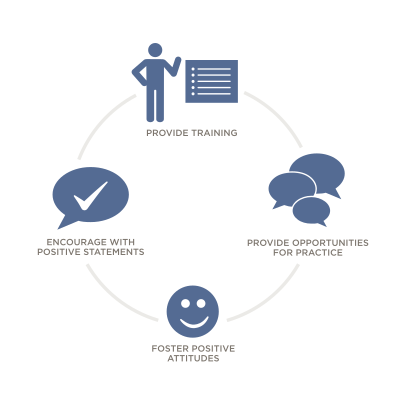
To help non-fluent speakers on your team develop proficiency in the common business language:
-
Provide training for team members who aren't fluent in the language or who lack confidence in speaking and writing the language. Assure them that they will be supported while building their language skills.
-
Offer opportunities to gain experience through language training and job rotations that require them to live abroad, if possible. These opportunities open new doors and allow employees to stretch their skills.
-
Foster positive attitudes by also demonstrating that you too are taking risks and trying new things. People’s faith in their own abilities grows if they see others having positive experiences.
-
Encourage them through positive verbal reinforcement. Simple statements like “You can do it” or “I believe in you” can have impact.
制定并执行单一语言政策 Language Policies
哈佛教授讲授视频逐字稿
第 4 节
Test your understanding and reinforce what you’ve learned.
Try it Out
答案与解析
A. Use every opportunity to reinforce the idea that all participants in the meeting should use the official language.
It is a good idea to take responsibility for ensuring that everyone uses the agreed-upon business language. Monitor behavior according to any norms set by the organization.
B. Assemble and distribute a list of "figures of speech" that non-native speakers might not readily understand.
It is a good idea to create a glossary of technical terms, acronyms, and figures of speech used in the official language and distribute it to all participants.
C. Make a point of asking Boris and Arman to add to the conversation.
It is a good idea to encourage non-fluent speakers to contribute. If they are not participating, make a point of soliciting their feedback.
D. Encourage greater contribution from native speakers of the common business language to boost Boris and Armand’s comprehension.(正确)
You should refrain from dominating conversations if you are a native speaker of the official business language. Remind other native speakers to give those who are less fluent time to speak.
第 5 节
Reflecting on your learning helps you apply relevant concepts to your job.