
Manage Diversity-Related Tension 查看中文版
第 1 节
Though workplace diversity offers major business advantages, it can also create misunderstandings and tensions in the workplace.
Diversity-related conflict can result when:
-
Team members’ behavior is misinterpreted because of cultural differences.
-
Team members form biased impressions of others based on negative stereotypes.
-
Team members discriminate against those who aren’t like them.
- Individuals who have been subject to bias in the past act defensively when others challenge their expertise.
第 2 节
It’s tempting to ignore diversity-related tension and hope that it will resolve itself. But if not addressed, small tensions often escalate to bigger conflicts. This can cause distractions, drain morale, and result in the loss of valuable talent. In extreme cases, unaddressed conflict can lead to outright hostility, discrimination, or even violence.
Instead of ignoring tension, address issues openly and establish positive guidelines for working together.
Consider the following guidelines—either introduce them to the team, or encourage the team to brainstorm similar ideas:
-
Think about others as individuals, not as members of certain groups.Bregman, Peter. “Diversity Training Doesn’t Work.” HBR Blog Network 12 Mar. 2012. This helps avoid stereotyping.
-
Treat each other with kindness and respect. Think about how you would like others to treat you.
-
Appreciate that differing viewpoints bring new insight. Though unfamiliar points of view might not resonate at first, they are often an important step along the path to the best solution.
-
Assume everyone has good intentions. Interpret mistakes as honest and not malicious.
-
Focus on the team’s shared goals and objectives. See everyone as part of the same team, with the same end goal.
-
Address tension or conflict honestly and directly. Allow yourself a “cool down” and reflection period if necessary, but address the situation in a timely fashion.
-
Seek advice. A mentor or human resources staff member may be able to provide insight about how to handle a conflict, particularly if an individual feels uncomfortable addressing a particular situation directly with a coworker.
被邀请与被接纳的区别 Invited Versus Welcomed
哈佛教授讲授视频逐字稿
第 3 节
When you notice conflict among members of your team, first analyze the cause. Is it diversity-related or does it stem from other issues such as conflicting goals or confusion about work roles and responsibilities? Often, it’s a combination of the two—a work-related confusion that’s exacerbated by cultural misunderstanding or bias.
When you address diversity-related tension, involve your team members in generating a solution, rather than prescribing one. People who think about an issue, talk it over, and arrive at a mutual agreement will be more invested in making meaningful change.
Consider these approaches for addressing diversity-related conflict:Adapted from Brett, Jeanne et. al. “Managing Multicultural Teams.” Harvard Business Review Nov. 2006.
Mediate conflict
Follow these steps to mediate employee conflict. Your role as a mediator is not to solve the problem yourself, but to facilitate a productive discussion.
-
Step 1: Help define the problem. Use open-ended questions and prompts, such as “How did you experience that?” or “Share your concerns about that interpretation.” Encourage employees to describe the conflict and to express their emotions, motivations, and viewpoints. Model paraphrasing and other active listening skills to demonstrate how this is done.
-
Step 2: Identify areas of agreement. For example, perhaps both people have a project's best interests at heart, but they have different views about how to carry out the work.
-
Step 3: Brainstorm alternative solutions together. Encourage the parties to consider multiple ideas. Evaluate how well the proposed solutions satisfy each person’s concerns and issues.
-
Step 4: Create a plan. Help the parties create a plan and help them anticipate barriers. Ask questions, such as “How would you handle a setback?” Set next steps, including a follow-up meeting to discuss how things are going and whether the solution is working.
Listen to Really Hear
Manage bias towards you
Sometimes diversity-related tension arises between you and a coworker—whether it’s a peer, direct report, or manager. If the tension is minor, you may both be able to adapt to it. If the perceived bias or unfair treatment leads to dissatisfaction, an uncomfortable work climate, or poor work results, it’s important to actively address and resolve the situation. Take these steps to manage diversity-related tension that involves you:
-
Step 1: Prepare in advance. Research the situation and gather facts. Examine if bias might be affecting how you view the situation. What needs to be remedied? Have you potentially misinterpreted someone’s honest mistake? Or is there a pattern of disrespect?
-
Step 2: State your concerns. Arrange a meeting with your coworker. Calmly explain your perspective about the situation and explain why you believe this conversation is necessary. Use “I” instead of “you” statements to help keep your views from sounding accusatory.
-
Step 3: Solicit the other person’s perspective. This doesn’t mean you need to agree, but honestly attempt to learn the other person’s concerns and opinions.
-
Step 4: Brainstorm solutions. Exchange ideas about how the situation could be improved. Ask yourself “What could I do to make things better?” Ask your coworker “What could you do to improve this situation?”
-
Step 5: Agree on solutions. Discuss the merits of proposed ideas and commit to changes that you can make. Ask your counterpart to agree on actions he or she can take that will help resolve the situation.
-
Step 6: Schedule a follow-up conversation. Decide when to meet again, perhaps in a few weeks, to assess how well the situation is being resolved.
You may find it difficult to initiate a conflict-resolution session with a coworker, especially if you believe you are the target of bias or disrespectful behavior. Or your coworker may be uncooperative when you attempt to discuss the situation. In such cases, consult with someone in Human Resources, and consider involving a third party to help you and your coworker resolve the situation.
Grounds for dismissal
Worksheet for Managing Bias Toward You
第 4 节
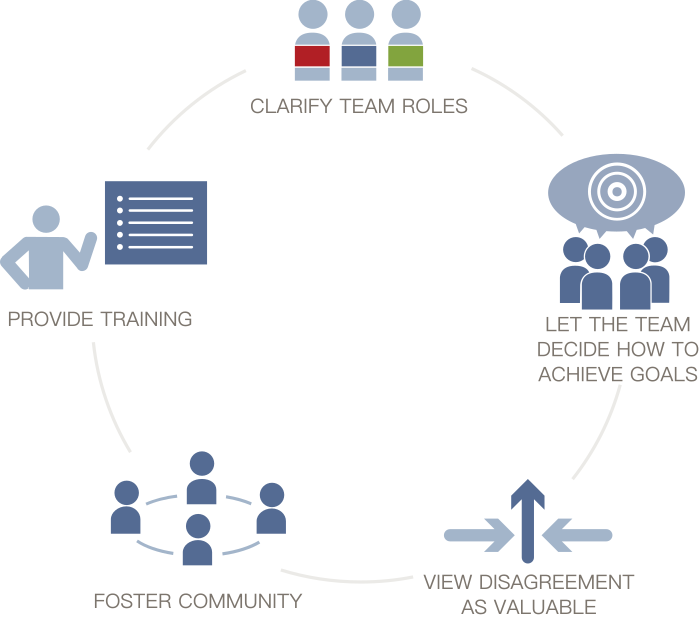
Not all conflict is bad. If every meeting is harmonious, it’s likely your people don’t feel comfortable expressing their full selves at work. When managed properly, conflict can result in creative breakthroughs.
In order to leverage creative tension and build collaboration:Gratton, Lynda and Tamara J. Erickson. “Eight Ways to Build Collaborative Teams.” Harvard Business Review Nov. 2007.
-
Clarify team roles up front. Define individual roles and ensure that employees are empowered to do a significant amount of work on their own. Otherwise, team members are likely to waste energy negotiating roles or protecting turf, rather than focusing on achieving their team goals.
-
Let the team decide how to achieve its goal. You’ll gain more from your team’s diversity if the problem-solving approach is not predefined and therefore requires creativity.
-
Coach employees to view disagreement as valuable. Emphasize resilience—that even after a disagreement, a relationship can still be productive. Praise team members when they resolve conflict and draw out each others’ distinctive talents.
-
Foster community. Plan activities that bring team members together for fun. Shared jokes and common experiences help people build mutual goodwill.
-
Seek training. Provide training in basic collaboration skills such as goal setting, conflict resolution, and listening.
第 5 节
Test your understanding and reinforce what you’ve learned.
Try it Out
答案与解析
Get all team members to focus on their shared goals and objectives.(正确)
It is a good idea to focus on the team's shared goals and objectives. Get employees to see everyone as part of the same team, with the same end goal.
Ignore the problem for now, since these situations typically resolve themselves.
tempting to ignore diversity-related tension, but if not addressed, small tensions often escalate to bigger conflicts.
Assume the problem stems from the attitudes of the group whose background is similar to the majority of the company's employees.
In some cases, individuals who have been subject to bias in the past, such as members of ethinc or racial minority groups, create conflict by acting defensively when others challenge their expertise.
Find out what the problem is and offer a solution yourself.
When you address diversity-related tension, involve your team members in generating a solution, rather than prescribing one.
Try it Out
答案与解析
Encourage crew members to acknowledge their differences and try to live with them.
This adaptation approach is unlikely to work because the crew members seem uncomfortable discussing the problem. Mediation to help crew members explore emotions and propose options to work together better should be the next step.
Reorganize the crew to reduce friction and minimize confrontations.
A structural intervention approach like this would be premature. Mediation to help crew members explore emotions and propose options to work together better should be the next step.
Mediate a discussion with crew members about their conflict, and propose options.(正确)
If team members have not successfully solved the problem on their own or they appear to lack the communication skills to manage a difficult conversation on their own, try mediation. Facilitate a discussion, explore emotions, and propose solutions.
Identify the crew members most responsible for the conflict and lay them off. Document the situation and speak with your human resources representative.
Laying off employees一a removal strategy—would be premature. Mediation to help crew members explore emotions and propose options to work better together should be the next step.
第 6 节
Reflecting on your learning helps you apply relevant concepts to your job.