Pocket Leadership口袋领导力

Difficult Interactions

Help Your Team Deal with Conflict 查看中文版

第 1 节

Teams thrive when members feel safe to offer different perspectives. A range of ideas—even when they clash—can lead to innovative solutions.

Yet managing teams with divergent points of view and personalities can be challenging, especially when members view a situation from opposing sides. When that happens, they often get stuck on the idea that opinions — and the people who hold them—are right or wrong. This us-versus-them attitude can undermine collaboration and lead to ongoing friction.

When people make a point of considering each other’s viewpoints, they’re often able to turn difficult issues into productive solutions.“Managing a Polarized Workforce," by Julia A. Minson and Francesca Gino. Harvard Business Review, March-April 2022.

To coach your team to be open-minded, encourage them to:“Managing a Polarized Workforce," by Julia A. Minson and Francesca Gino. Harvard Business Review, March-April 2022.

Consider the other side Rather than assume you know the other person's perspective, think about questions you can pose to better understand where they’re coming from. Ask, listen, and restate Ask your counterpart about their point of view and listen well. Then repeat back what they said in your own words to make sure that you understand. Learn rather than persuade Focus on learning about the other person's point of view instead of only trying to convince them to agree with yours.

Kesia coaches her team

Kesia coaches her team Kesia, a technical operations manager for a software company, overhears people on her team referring to the sales team in a negative tone. When she asks team members Autumn and Marcus about their recent interactions with sales, they complain that the sales team consistently overpromises services to new customers. After letting them vent, Kesia coaches them to better understand the sales department’s perspective. What’s important to them? Why would they make unrealistic commitments with customers? She encourages Marcus and Autumn to spend the week learning about the sales team’s priorities and constraints and asks them to share what they learned at the next team meeting. Kesia coaches her team

Here, Harvard Business School professor Francesca Gino offers guidance on how to coach your team members to be open to people with different views.

解决冲突的关键之一:开放的心态 One Key to Resolving Conflict: Open Mindedness

哈佛教授讲授视频逐字稿
You might think that being open-minded is something that you're either born with or not. But as it turns out, it's a skill that we can nurture and further develop. And as managers and leaders, we can train others and teach others to be more open-minded. And it starts from every single meeting. So next time you're with your team or with your team members, try to role model what it means to take others' perspectives. You might feel very strongly about an issue or a viewpoint. Consider all the reasons that support it. But also get into the habit of talking about reasons that might speak against it. And once you have the reasons that speaks against your point of view, see if those criticisms allow you to evolve your way of thinking. Conflict brings a lot of discomfort. But is through discomfort that we learn the most. So as a manager and as a leader, show others that with more receptiveness and more of an open mind, we can truly turn any disagreement into a productive moment.

第 2 节

One way to build respect is to coach your team to be curious about other people’s thoughts and ideas. When team members acknowledge and explore their differences, communication improves and connections deepen.

If tensions do rise, colleagues are then in the habit of being candid, sharing what’s bothering them, and brainstorming creative ways to solve problems together. These actions can prevent small issues from escalating into bigger ones.

Take these steps to foster respect within your team:"5 Ways to Reduce Rudeness in the RemoteWorkplace," by Dana Kabat-Farr and Remi Labelle-Deraspe. Harvard Business Review, August 19, 2021.

Set expectations Establish team norms that explicitly include respect as a core value. For example, you might agree not to talk over each other in meetings. Decide in advance how you’ll address differences of opinion. Make time for casual conversation Create regular opportunities for team members to share what’s going on in their lives. This is especially important for remote and hybrid teams, where members have fewer opportunities to form relationships. Follow up on miscues Acknowledge any misunderstandings that come up. For example, if you accidentally jump in while someone else is speaking, speak up about your mistake. By doing so, you’ll make it easier for others to take responsibility for their own missteps.

Recurring conflict can erode people’s sense of self-esteem and even their dignity. When you emphasize the importance of treating each other with respect, you help team members not only strengthen their working relationships but also enhance their personal well-being.

Take a Moment

1. What norms does your team follow to ensure members treat each other with respect? How have you adapted those expectations for virtual or hybrid settings?

第 3 节

Interacting respectfully also means staying alert to—and avoiding—microaggressions.

Microaggressions are insensitive comments, questions, or actions that unconsciously target some aspect of a person’s identity.

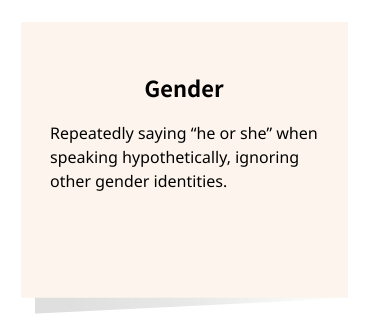
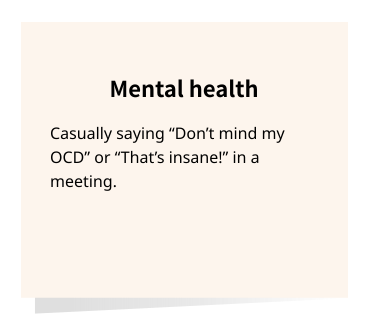
The following are examples of microaggressions related to a few identity characteristics:"Recognizing and Responding to Microaggressions at Work," by Ella F. Washington. Harvard Business Review, May 10, 2022.
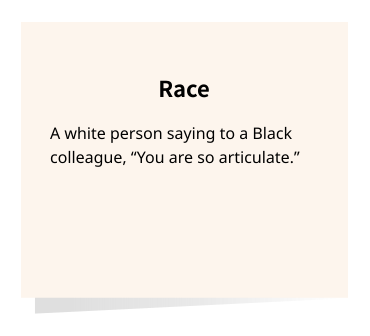
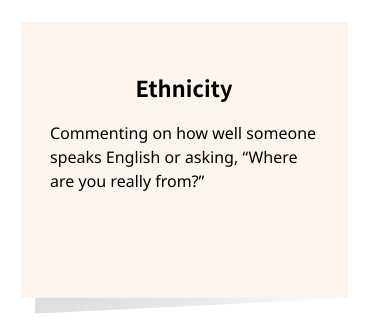
Although rarely intended to be insulting, these phrases and comments highlight differences that make the other person feel like they don’t belong. When words or actions convey disrespect, trust between team members deteriorates, often leading to conflict.

To create a welcoming and inclusive environment, coach your team to be aware of the impact of their language choices. In addition:

Speak up If someone on your team makes an insensitive comment, point it out in a non-accusatory way and move on. For example, say something like, “Let’s make a habit to use each other’s correct pronouns,” if a team member refers to a colleague by the wrong gender pronoun. Address the comment one-on-one Sometimes it’s better to correct insensitive behavior through private conversations so as not to embarrass the person. You might say, “You probably didn’t mean anything disrespectful by what you said in the meeting; however, that word choice makes people uncomfortable.” Frame the microaggression as an opportunity to develop understanding. Pause Making a mistake is uncomfortable. After pointing out their misstep, give people a chance to acknowledge the mistake and apologize. Let them know you trust them to be more aware and cautious with their language in the future.

If you leave microaggressions uncorrected, you give people unspoken permission to continue making them. Addressing them helps to build team trust and avoid conflict."Recognizing and Responding to Microaggressions at Work," by Ella F. Washington. Harvard Business Review, May 10, 2022.
第 4 节

In addition to creating a respectful and supportive team culture, you can model effective ways to manage conflict.

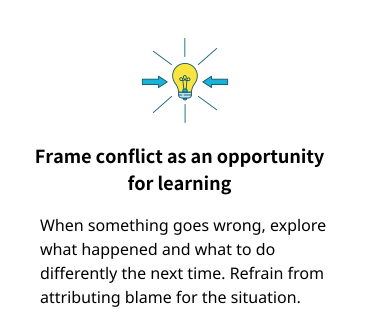
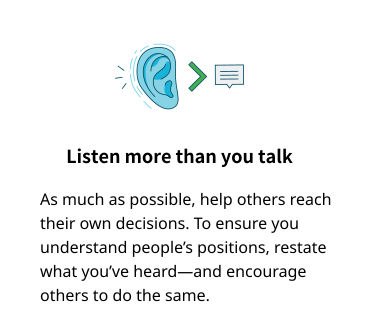
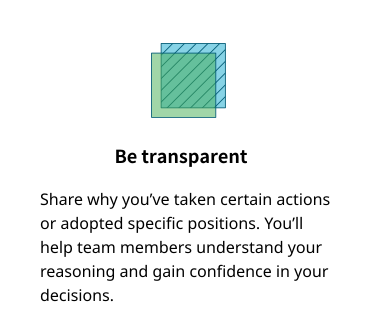
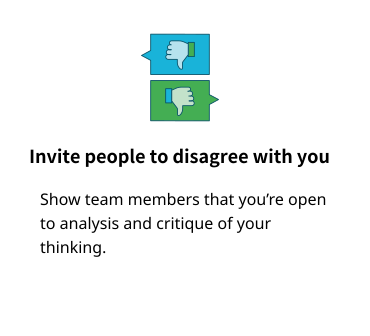
To set a positive example:"5 Ways to Reduce Rudeness in the RemoteWorkplace," by Dana Kabat-Farr and Remi Labelle-Deraspe. Harvard Business Review, August 19, 2021.
Here, author Liane Davey offers practical tips on language you can use when helping your team to handle conflict.

管理团队的良性冲突 When Conflict Is Constructive and When It’s Not

哈佛教授讲授视频逐字稿
Conflict is a notion that strikes fear into the heart of many managers, and I understand. You can probably think of situations where there's been really nasty arguments or hurt feelings, but as a manager, conflict is something that you want to create on your team and manage because conflict is really inevitable. There are often, opposing wishes and demands and needs. The key is to make sure, as a manager, that you're promoting productive conflict. Productive conflict, I like to think of it as tension. Tension is a stretch, something that makes us think differently about an issue than we've ever thought before. Maybe we have to think about a different angle on a problem or a different stakeholder that we don't normally think of. That tension between different individuals on your team, between opposing interests is how we optimize decisions. So tension is productive conflict, but what's unproductive conflict? It's friction, and friction is where we don't listen to one another, we wear each other down by being aggressive, being personal in our points, not flexing and changing what we're thinking based on how the conversation is going. That friction, you'll know it's happening on your team because people won't be listening well, there'll be lots of interrupting, and very little time in between each person speaking. When that happens, we often see emotions start to get more involved. Sometimes, those emotions even sort of overflow when we get someone yelling or pounding the table or in tears. When that happens, it's important to remember that emotions are not unproductive or unprofessional. They're just the way humans interact with our world. So don't fear emotions but do find a way to work through them. Don't stop and say, “OK, we'll take this offline” just because you've seen emotion, but do say something like, “This is important. What do we need to understand?” That's a great phrase because it doesn't have judgment. It doesn't risk speaking on someone else's behalf like you would if you said, “I see you're very upset.” Usually, within a very short period of time, the person will be talking about a path forward. If they don't get there, you have a few options. You can say something like, “What do you need?” for somebody who's really getting wrapped up in feeling very emotional, but not being clear what would make things better. You could also use the line, “Where from here?” That's really great if somebody keeps talking about what's gone wrong in the past, but isn't doing anything to help you figure out what you do in the future. Finally, if you're getting a lot of, but this won't work or that won't work or but, but, but, but, but, you're getting a lot of that, it can be really helpful to say, “What do we still need to solve for?” Get them to actually be specific about what the problems and issues are. When you keep conflict focused on the productive tensions between different expertise and different perspectives and different stakeholders, and you avoid letting it become friction with poor listening and personal statements and too much aggressiveness, when you manage through emotions out to the other side, you'll find productive conflict becomes the secret to your team's success.

Some people learn best through hands-on practice. For example, consider leading team members in role-playing different conflict-resolution scenarios.

Bowen and Jian practice handling a difficult interaction

Bowen and Jian practice handling a difficult interaction Jian, a department manager at a manufacturing company, wants to ensure that her team feels comfortable resolving conflict on their own. She constructs a scenario involving a vendor who recently started missing deadlines and has been slow to respond to emails. Jian invites Bowen, a production supervisor on her team, to role play different ways to respond to the scenario. She begins by asking Bowen to consider what issues may have led to the missed deadlines and communication problems. Next, they practice productive ways to begin the conversation and discuss how to reach a resolution. Finally, Jian initiates a practice conversation, taking on the role of the vendor. Jian then asks Bowen what went well, what didn’t go well, and how they might handle the conversation better the next time. Bowen and Jian practice handling a difficult interaction

Through your efforts, you’ll demonstrate to your team how to manage and resolve their own disagreements with respect and collegiality.

第 5 节

Managing conflict can consume up to 40% of a manager’s time.

Managing conflict can consume up to 40% of a manager’s time. Managing conflict can consume up to 40% of a manager’s time."Managers spend about 40% of time resolving employee conflicts at work," by Aparna Desikan. The Times of India, April 28, 2018.

Optimally, members of your team will work out disputes on their own. But when members of your team are struggling to resolve a conflict, how do you decide if you need to step in?

Poll
Poll
Refrain from intervening if a dispute doesn’t: Interfere with an employee’s performance Disrupt the team’s work together Violate company policy Do intervene if a conflict: Hampers productivity Occurs between two people of different rank Expands to involve additional people Escalates into a personal attack

When you notice that team members are experiencing friction or are disrespectful when talking with each other, it’s time to step in. Here’s what you can do:"The Problem with Saying 'lt's No Big Deal," by James R. Detert. Harvard Business Review, August 20, 2021.

Check in Chat with the individuals involved privately and gently explain that you noticed some tension. Ask, “Is there anything going on that I can help you with?” Dig deeper Watch for some version of the phrase, “It’s no big deal.” When an employee dismisses your concerns, it’s a warning sign that they may need support. Offer support Communicate that you’re willing to help. The parties might need coaching if they can’t work the situation out on their own.

Take a Moment

1. At what point do you usually intervene in a conflict?

If you decide that it’s necessary to mediate, follow these steps to help the parties work through and resolve the conflict:

Help frame the problem Invite each person to share what led to the conflict from each point of view. Encourage active listening Listen without interruption as each person offers their perspective. Highlight areas of agreement Encourage the parties to focus on a shared goal. Redirect the conversation from differences to commonalities. Explore solutions Talk through resolutions that satisfy each person’s concerns. Recommend a plan Help the parties make a plan for moving forward.

Manage Employee Conflict

附件:manage_employee_conflict1703481573232.docx(docx · 66 KB,本地副本)

After the team members come to a resolution, schedule a follow-up conversation to check in on how things are going and whether their solution is working. Your continued support can help them build a productive working relationship.

第 6 节

  • Coach your team to be open-minded. Encourage them to consider the other person’s perspective, listen well, and learn from others.

  • Promote a culture of respect on your team to prevent small issues from growing into larger ones.

  • Address microaggressions to promote inclusion, rebuild team trust and avoid conflict.

  • Model effective ways to resolve conflict by being transparent, inviting others to disagree with you, using conflict as an opportunity to learn, and listening more than you talk.

  • Intervene in team conflict when it disrupts productivity, escalates into a personal attack, or expands to involve other people.

第 7 节

Test your understanding and reinforce what you’ve learned.

Try it Out

1. During the last two weeks you’ve noticed the members of your team having increasingly heated and divisive debates over the timing of a new product launch. The salespeople on the team have committed to a release date with their clients, but the software developers think the product needs further refinement. How can you coach your team to be more open-minded and engage productively?
答案与解析

A: Remind the software developers to communicate product updates more frequently and schedule regular check-ins.
While more communication between the team members can help, you don’t want to discourage divergent points of view. A range of ideas, even those that clash, can lead to innovative solutions. Coach your team to be open-minded by asking each other questions so they can better understand and learn from each other’s perspective.

B: Encourage the sales team members and the software developers to ask each other questions so they can better understand and learn from each other’s perspective.(正确)
A range of ideas, even those that clash, can lead to innovative solutions. Coach your team to be open-minded and encourage them to consider other perspectives, listen well, and learn from each other.

C: Schedule a meeting to point out the mistakes both parties have made. Give people a chance to acknowledge their mistakes and apologize.
You don’t want to discourage divergent points of view. A range of ideas, even those that clash, can lead to innovative solutions. Coach your team to be open-minded by asking each other questions so they can better understand and learn from each other’s perspective.

第 8 节

Reflecting on your learning helps you apply relevant concepts to your job.

Take a Moment

1. 1. What new insights do you have that could benefit you or others in your workplace?
2. 2. What are your biggest opportunities for applying concepts from this Lesson in your workplace?

Further reading

化干戈为玉帛的 7 个锦囊——冲突年代的领导力必修课
随着全球范围内社会动荡不断加剧,职场中的冲突也日益频繁。工作中的不文明行为愈演愈烈,每天都因生产力下降和员工缺勤给企业造…
走心倾听有多难
研究表明,当员工感到自己的声音被倾听时,他们的投入度会提升,工作表现也会随之改善,从而为企业带来显著的收益。然而,对职场…
如何与团队谈论“房间里的大象”
如果你的团队感到“卡住了”,问题很可能涉及一些难以讨论的话题,比如两位团队成员之间的冲突,或者某位员工表现不佳。要正面应…

Top 3 in the source platform's original order