Difficult Interactions
Prepare for a Difficult Conversation 查看中文版
第 1 节
Nearly 60% of employees found disagreements with colleagues to be moderately to extremely uncomfortable.
Nearly 60% of employees found disagreements with colleagues to be moderately to extremely uncomfortable. Nearly 60% of employees found disagreements with colleagues to be moderately to extremely uncomfortable.Managing a Polarized Workforce," by Julia A. Minson and Francesca Gino. Harvard Business Review, March-April 2022.
Addressing a conflict directly with a coworker can seem daunting. You’ve likely had times when you’ve avoided bringing up a problem with someone. Maybe it was because it felt awkward, or you didn’t know how to do it in a way that preserved, or even improved, the relationship.
You can ease some of that stress by having a plan. Before you start a conversation, consider the best way to approach the problem and how your counterpart might react. Preparing in advance will help you stay calm during the exchange and keep you focused on seeking solutions.
LaShawn considers whether to confront David
LaShawn considers whether to confront David
LaShawn is frustrated that her colleague David delivered data containing several errors for a customer billing audit they’re working on together. To make their deadline, LaShawn had to work after hours correcting David’s mistakes. She knows she’ll need to work with David on future projects, including a presentation they’re delivering to their leadership committee next month.
Still, LaShawn is hesitant to address the issue with David. She’s not sure how to approach him and is worried their conversation will be awkward and tense.
LaShawn considers whether to confront David
If you're still deciding whether to directly address a conflict, consider these factors:
-
How much do you need to interact with this person to do your job? If you’re having difficulties with a coworker who you collaborate with regularly on important projects, don’t let conflict prevent you from being able to work together in the future. Addressing it directly can help improve your communication with this person.
-
Will you be working together for a brief time or an extended period? For short-term interactions, you may decide it’s not worth your time and energy to improve the relationship. However, for long-term working relationships, you will want to find positive ways to address disagreement.
-
What’s the impact if you don’t address the conflict? When a conflict involves a relationship that could carry a great deal of risk for your organization, it’s important to address it directly.
If you know that addressing the conflict directly is the most effective approach, here are the first steps you can take to get ready for the conversation:HBR Guide to Dealing with Conflict, by Amy Gallo. Harvard Business Review Press, 2017.
Here, Harvard Business School professor Francesca Gino offers tips on how to prepare for a difficult conversation.
应对冲突的适当方式 A Healthy Way to Engage with Conflict
哈佛教授讲授视频逐字稿
There are so many self-help books out there with misguided advice about how to engage with conflict. These are books that often talk about how conflict is bad. And so, as a result of it, we want to avoid conflict because we know that is going to raise all sorts of emotions that we don't want to experience and is not going to be productive.
My colleagues and I studied the language that we can use to come across as more receptive. We came up with a framework that we refer to as I HEAR You. And the important part is the HEAR. The H stands for hedging your claims. So rather than saying, “I'm 100% sure this point is right,” you come in with a little bit more certainty saying, “One perspective on the issue is or one way of thinking about the problem is.”
The E is for emphasizing common agreement. Maybe a point that you see eye to eye on. You might disagree about a lot of things, but maybe you agree on the fact that it's important to make a decision or it's important to have a point of view for the company or the organization.
The A stands for acknowledging others' perspectives. Again, you might not agree with them. You're very likely not to agree with them, but you're acknowledging that there is a different way of tackling the problem or a different point of view.
And finally, the R stands for reframing in positive terms. Often when we are in conflict, there is a lot of negativity. We say, “I hate, or I don't like.” And reframing in positive terms is about bringing up more positivity saying, “One thing I do appreciate, and one of the things that I like is.”
When we use this language, not only we are more receptive and more open minded, we give ourselves the chance to learn more from each other. And if your goal was to influence others of your point of view, our research suggests that you're going to be much more effective if you use this language.
So, try to get over your fear. Don't think that conflict is bad because it's not as bad as you think, but also try to use this language so that you can be more receptive. And preparation is key. It's not easy to be receptive, especially when we feel very strongly about our beliefs or about our opinions but preparing once we enter that conflict or that disagreement is going to be extremely helpful.
第 2 节
As you assess the situation, you’ll also want to think about the other person. Do you know how they usually respond to conflict? There are a few ways you can learn about your counterpart:
Identify patterns
If you frequently work with this person, what do you know about how they communicate? Do they prefer to engage directly or indirectly? Observe how they handle a tense discussion. Multiple interactions may help you see a pattern.
Ask a colleague
When you don’t know the other person well, consider approaching a mutual colleague for their input (without oversharing about the nature of the conflict). Use open-ended questions such as “In what you’ve seen, how would you say this person addresses conflict?”
Have a conversation
Try to find out the other person’s style by talking with them. Be gentle with this approach. You want to avoid coming across as judgmental. Start by sharing your own preferences, such as “You might have noticed that I don’t shy away from a disagreement. Based on how you responded in our meeting, it looks like you'd prefer to avoid one. Am I right?”
LaShawn observes David’s approach to conflict
LaShawn observes David’s approach to conflict
LaShawn decides to talk with David about the billing audit data he delivered with errors. She’s only worked with David once before and doesn’t really know him well, but her friend, Suhani, has worked with David on several projects. LaShawn asks Suhani whether she’s ever had to confront David about an issue and how he responded. Suhani shares that she’s noticed that David is very direct and doesn’t shy away from tricky conversations. She counsels LaShawn to speak with him about her concerns and tell him what she needs from him when they work together.
LaShawn observes David’s approach to conflict
Observing how coworkers handle conflict will help you be prepared for a difficult conversation with them in the future.
第 3 节
Before addressing any conflict directly, start with the end in mind. What do you hope to accomplish with this conversation? What needs resolving?
Focus on a tangible, realistic goal that addresses what needs to happen to move forward. It might sound like this:
I want us to . . .
-
complete the project on time
-
focus on achieving our organizational objectives
-
work together respectfully now and in the future
-
deliver the best results possible
The goal will vary depending on the type of conflict. If you’re experiencing more than one kind of conflict, you may need more than one goal.
LaShawn prepares for her conversation
LaShawn prepares for her conversation
After thinking about what Suhani said about being direct with David, LaShawn decides that what she needs from him is to be able to trust that his contribution doesn’t contain errors that create more work for her. To prepare for their meeting, she makes a list of specific examples from the last project she can reference if necessary. She also reflects on how to phrase her views directly without being confrontational or disrespectful.
LaShawn prepares for her conversation
Take a Moment
1. Think about the last difficult or uncomfortable conversation you’ve had. What did you hope to achieve? Were you able to reach your goal?
第 4 节
The truth is that conflict is stressful for most people. Be honest with yourself that the interaction might be difficult. Before scheduling your conversation, take a few steps to minimize negative emotions and ensure a positive frame of mind.
-
Approach the discussion as a normal conversation. Remind yourself that you’re just two people respectfully exchanging information.
-
Focus on what you can learn or gain from the discussion. Together you can discover a creative idea or solution.
It’s natural to experience a surge of emotion during a conflict, but don’t let this prevent you from working through the issue. The more you try to suppress your emotions, the more likely you’ll explode at the wrong time. Calm yourself by venting in advance to a trusted friend or colleague.
Consider how you can set the tone of the conversation to highlight collaboration rather than conflict. Expressing care and concern about the working relationship helps diffuse some of the tension and establishes a more cooperative approach.
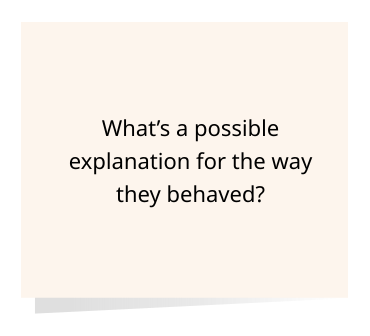
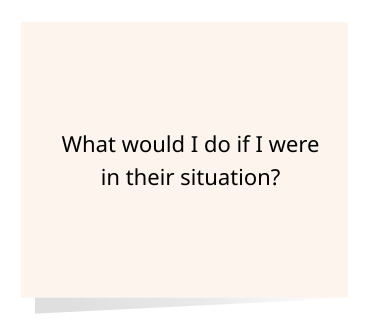
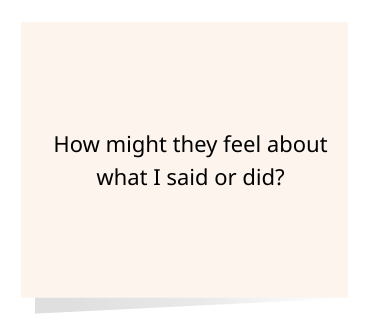
You can avoid judging or blaming the other person by taking time to view the disagreement from their perspective. Before you meet with them, think about how they might be approaching the problem. Ask yourself these questions:
Show respect for the other person's point of view by preparing questions that invite them to share what they're thinking.
第 5 节
You’ll feel more confident and ready to engage in a difficult conversation if you work out a few logistics first. Tell yourself to approach the discussion with the same thoughtful preparation as you might for a customer presentation or the launch of a new initiative.
Think about what you’ll say ahead of time
Define the takeaway.
Identify key points that you will present.
Consider possible “what if” scenarios.
Think about what you’ll say ahead of time
Schedule the meeting
Allow emotions to cool down but meet while the details are still fresh.
Be aware of any need to resolve the conflict before project deadlines.
Give yourself plenty of time to reach a conclusion or schedule a follow-up.
Schedule the meeting
Select the right place
Meet in private, whether face-to-face or virtually, so you can speak freely.
Choose a comfortable, neutral location.
If possible, change the scenery. Meet away from the office.
Select the right place
Preparing doesn’t mean you have to follow a rigid script. Instead, it helps you be flexible throughout the conversation and keep moving forward toward your goal.
“Think about what you’ll say when you get in the room before you get in the room, incorporating your goal and your colleague’s perspective, interests, and style.”
—Amy Gallo, contributing editor at Harvard Business Review
Listen to Aaron Gonzales, director of programs and services at the Boston Alliance of Gay, Lesbian, Bisexual and Transgender Youth, talk about how he helped someone in his organization plan for a tough conversation.
为艰难的对话做准备 Get Ready for a Tough Conversation
哈佛教授讲授视频逐字稿
If you know you're about to have a difficult conversation, be prepared. My job is Director of Programs and Services at BAGLY, the Boston Alliance of LGBTQ Youth, provides leadership opportunities for young folks.
I was working with a young person at our organization. And they got a job in a retail store. They were really excited. It was a clothing brand that they liked. When they started their first day, they were informed that employees needed to wear the clothing that the store sold.
The assistant manager let them know that they needed to choose from the men's section of the store, even though this young person used they and them pronouns and identified as non-binary. Very frustrated by this, the young person came to talk to me and asked about what they should do.
I asked what it was that they wanted the outcome to be. The young person really wanted to continue to work there. They just wanted to be able to select different clothing from the store. I asked the young person if they had ever seen the employee handbook.
The company's policy was that clothing from the store needed to be worn by employees, but nowhere in the company policy was there a designation for gender. The young person now had facts that this was not an organizational or a company decision. It was actually a bias of the assistant manager.
So, we prepared for the conversation. The young person decided to write things down. They thought about what it was that they would compromise on, what they were OK with hearing, and what they weren't OK with hearing.
We selected a day that they were going to talk to the assistant manager. But the young person wanted to talk to the assistant manager as soon as they got there because the conversation that they had been going over in their head was causing a lot of anxiety.
It's probably not the best time because if the conversation didn't go well, they would have been stuck on a shift with an assistant manager that was not happy with them. The young person opted to have their conversation at the end of their shift. The assistant manager, even though confronted with the handbook and the actual company policy, was not happy that this was the outcome in the conversation.
They felt like it was only proper for them to wear clothing from the men's section. At some point in the overnight, the young person realized that this was the assistant manager and not the manager. And so, therefore, the conversation didn't need to end there.
Armed with the employee handbook and what they had just learned from that conversation with the assistant manager, they then set out to have the conversation with the manager. The manager confirmed that it is an organizational policy that clothing from the store is worn but that it is not gender specific.
The young person, very much excited in hearing about this, ended up working there for quite a few years after and continued to work there and be able to wear clothes from across the store. When preparing to have a difficult conversation with a colleague or a supervisor, know what it is that you want to say, have the facts, and choose the perfect time. Even though these conversations can be anxiety invoking, you have the ability to turn a difficult conversation into a productive conversation.
While you can’t make any assumptions about how a conversation will go, good planning allows you to feel more confident and prepared to resolve a conflict. Developing this foundation is important for engaging in a productive discussion.
第 6 节
-
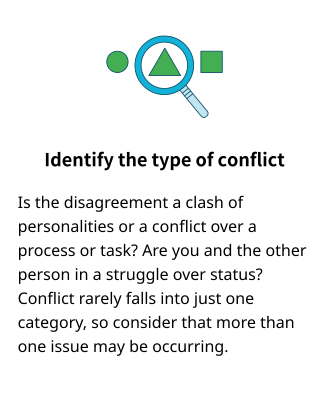
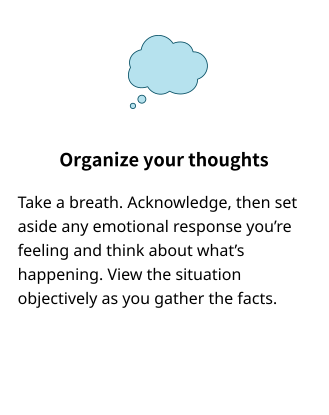
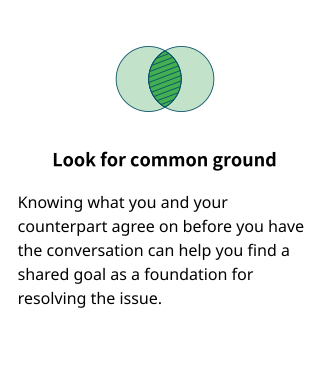
Assess what you know in advance. Identify the type of conflict, organize your thoughts, find common ground, and note points of disagreement to structure the conversation.
-
Observe how the other person handles conflict and communicates with others. Take this into account as you plan for the discussion.
-
Determine your desired outcome to the situation. Focus on a tangible and realistic goal.
-
Prepare mentally by managing your own emotions, considering different perspectives, and entering the conversation with an empathetic mindset.
-
Strategically prepare for this discussion as you would a customer presentation.
第 7 节
Test your understanding and reinforce what you’ve learned.
第 8 节
Reflecting on your learning helps you apply relevant concepts to your job.
Take a Moment
1. 1. What new insights do you have that could benefit you or others in your workplace?
2. 2. What are your biggest opportunities for applying concepts from this Lesson in your workplace?
Further reading
走心倾听有多难研究表明,当员工感到自己的声音被倾听时,他们的投入度会提升,工作表现也会随之改善,从而为企业带来显著的收益。然而,对职场…
如何与团队谈论“房间里的大象”如果你的团队感到“卡住了”,问题很可能涉及一些难以讨论的话题,比如两位团队成员之间的冲突,或者某位员工表现不佳。要正面应…
Top 3 in the source platform's original order