
Four Steps to Effective Decisions 查看中文版
第 1 节
To do your job well, you need to make effective decisions——ones that achieve key goals, solve problems, and get results that help your organization and your career thrive.
Your decision process will be influenced by how important the decision is, how much risk is involved, how much time you have, what role other stakeholders play, and other factors.
But no matter what kind of decision you’re faced with, taking a structured approach will ensure that you move through the process thoughtfully, without getting stuck in endless contemplation or debate.
Four basic steps can guide your thinking. With any decision, take time to:
Four Steps to Making a Decision
You can use this process to structure all kinds of decisions. Even if you need to move quickly, going through these stages will help you choose thoughtfully and confidently. With this in mind, take a closer look at each of the four steps that help you make good decisions.
Take a Moment
第 2 节
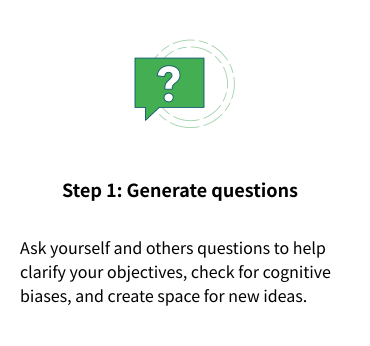
Even when you’re under time pressure, start your decision-making process by asking a series of questions designed to probe the issues you’re facing and spark new ideas.
Andre and his team brainstorm questions
Brainstorming for questions, rather than answers, can spark more novel ideas.
Pausing to generate questions before you take action will help you think through different aspects of the decision. And it may save you time in the end, by helping you reach a solid decision that won’t require you to backtrack and start again.
To generate questions that drive you toward effective choices:
Generating questions will help you think critically about the decision before you. By clarifying objectives and exploring your thinking, you boost your ability to make wise choices. Using open-ended questions will spark creative thinking and help you develop a set of strong alternatives to consider.
What’s your real objective?
第 3 节
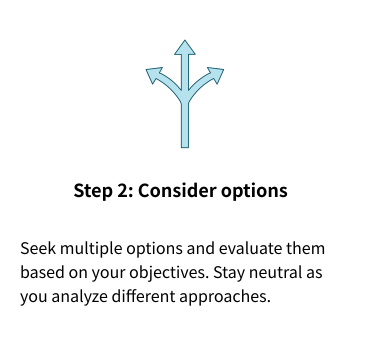
Once you've asked questions and figured out what your objective is, the next step is to explore your options. At this point, you’re still in brainstorming mode. Seek alternatives and don't make a decision too quickly. Let the ideas simmer for a bit, as you (and in some cases your team) assess and evaluate them.
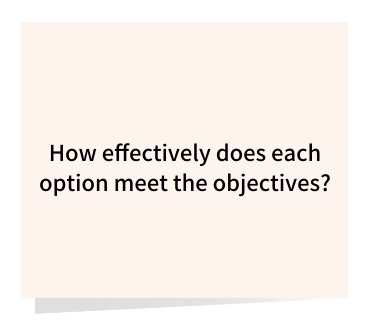
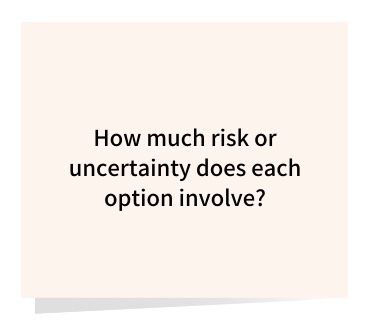
Keep asking questions at this stage to help refine your thinking and weigh the different alternatives in front of you. To assess different options, consider:

To probe and refine your thinking:
-
Ask what you haven’t yet considered. When possible, assign someone the task of finding gaps in your thinking.
-
Ensure all parties listen and respond to different viewpoints.
Stay neutral as you carefully consider your choices. This can be hard, as you likely have opinions, experience, and personal preferences that shape your response to the options in front of you. Strike a balance by drawing on your knowledge while actively considering each alternative with genuine curiosity.
Andre’s team explores several options
If you’re struggling to make a decision, either on your own or with a team, try these strategies to assess alternatives:
Make a Connection
第 4 节
In many situations, there may not be just one good decision. And if different stakeholders hold opposing views, you won’t be able to please everyone. But don’t get stuck in endless debate.
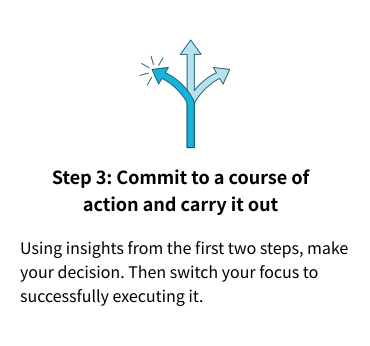
At a certain point, you need to make a choice and commit to a course of action.
These tips can help you move forward to carry out your decision successfully:"Stop Worrying About Making the Right Decision" oy Ed Batista and "What to Do After You Choose." HBR Guide to Making Better Decisions. Harvard Business Review Press, 2020."Stop Second-Guessing Your Decisions at Work," by Carolyn O’Hara. Harvard Business Review November 6, 2015.
Work Toward a Decision
第 5 节
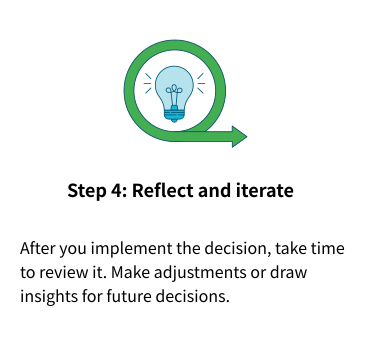
Effective decision makers get in the habit of continually reflecting on their process. It might be hard to find time to fully assess every decision you make, but doing so helps to sharpen your skills and learn from experience.
Reviewing and reflecting on your decision allows you to make adjustments quickly when needed. Often, you need to see how your decision plays out before you know if you made a good call. Being ready and willing to iterate on your plan supports continuous improvement.
Dounia revisits her decision
When you allow yourself to see decision making as an iterative process, you won’t get stuck trying to assign blame for imperfect decisions. Instead, you’re looking for learning opportunities and responding to current information.
Take a Moment
Listen to Bryan Simmons, vice president of communications at Arcus Foundation, offer tips on how to cultivate a safe space to iterate on decisions during the decision-making journey.
质疑假设以做出更好的决策 Challenge a Hypothesis to Make a Better Decision
哈佛教授讲授视频逐字稿
Applying a basic four-step process can help you make more effective decisions. By questioning and exploring alternatives in the early stages of the process, you broaden your perspective and gain insights. Then, you’re ready to commit to a decision with confidence and see it through to success. And you’ll refine and improve your overall decision making by understanding that every decision can help you learn and prepare for the future.
第 7 节
Test your understanding and reinforce what you’ve learned.
Try it Out
答案与解析
A. Gather input from diverse sources and try to keep a neutral point of view.(正确)
Getting input from different people, teams, data sets, or other sources helps ensure that you’re well-informed and have considered issues thoroughly. As you gather input, try to maintain a neutral perspective and consider a range of information and viewpoints.
B. Listen to your instincts and make a choice that will work best for your team.
Sometimes you need to act quickly and make a decision based on your instincts or what you know about your team’s needs. But to make more effective decisions, get into the habit of gathering input from diverse sources. As you gather input, try to maintain a neutral perspective and consider a range of information and viewpoints.
C. Present several options to senior leadership so they can make the final call.
Unless you’re tasked with identifying options and bringing them to leadership, doing so should not be your go-to strategy. When it’s up to you to make the decision, you should get into the habit of gathering information from diverse sources. As you gather input, try to maintain a neutral perspective and consider a range of viewpoints.
Try it Out
答案与解析
A. Groups spend most of their time developing rules and policies and then rush to make a decision.
A "culture of politeness” does not necessarily mean an excessive focus on group rules. Many organizations and teams develop a “culture of politeness” because people want to be cordial and supportive. This helps create a positive work environment, but leaders need to ensure that people don’t value cordial interactions so much that they hesitate to question others’ ideas.
B. Group members value cordial interactions so much that they hesitate to question others’ ideas.(正确)
Many organizations and teams develop a “culture of politeness” because people want to be cordial and supportive. This helps create a positive work environment, but leaders need to ensure that people don’t value cordial interactions so much that they hesitate to question others’ ideas. Real discussion and debate require that group members offer different views and push back against ideas they don’t understand or agree with.
C. Group leaders feel unempowered and aren’t sure who is supposed to make the final decision.
While it’s important to clarify roles when making a group decision, the lack of clarity isn’t usually the result of an emphasis on politeness. Many organizations and teams develop a “culture of politeness” because people want to be cordial and supportive. This helps create a positive work environment, but leaders need to ensure that people don’t value cordial interactions so much that they hesitate to question others’ ideas.
第 8 节
Reflecting on your learning helps you apply relevant concepts to your job.