
Make Better Decisions 查看中文版
第 1 节
What influences decisions?
Everyone wants to make good decisions—it's important for doing your job effectively and for succeeding in your career. Yet decision making can be challenging, whatever your level or role. The good news is that you can learn to make better decisions, on your own or as part of a team.
The first step is to understand why decision making can be so tricky.
It can be difficult to recognize how these factors impact your decisions. But it’s crucial to learn to analyze them so they don’t steer you in the wrong direction. When you take the time to understand and analyze the factors that affect your decisions, you uncover hidden assumptions and influences. And that means you’re better positioned to make choices that help you achieve your goals.
第 2 节
Human nature
Why can making good decisions be so complicated? Part of the reason is that, whether you’re aware of it or not, your decisions are shaped by:HBR Guide to Making Better Decisions, py Harvard Business Review. Harvard Business Review Press, 2020.
All these factors come into play even when you use research and data to guide your decisions. Increasing your awareness of how they shape your thinking is key to preventing flawed decision making.
Poll
第 3 节
Complex situations
Another challenge is that you often need to make choices under complex circumstances. Certain situational factors can complicate decisions, including:
If you don’t acknowledge and address these factors, they can contribute to bad decisions or affect how confident you are after settling on a particular choice.
Try it Out
Take a Moment
第 4 节
Cultural expectations
Cultural values and expectations can also play a role in how decisions get made.Around the world and across organizations and teams, people have different perspectives on how decisions should get made and what counts as a good decision.
Organizations and teams develop their own cultures. For example, your company culture may include an unspoken rule that senior leaders should make most decisions. Or it may encourage employees at all levels to make many decisions on their own. Similarly, your team culture may favor a particular approach to decision making. When you join a team or organization, look for guidance about how decisions are made. And if you see room for improvement, be sensitive to team or organization norms when discussing potential changes.
To start analyzing your expectations around decision making, you can ask questions about who’s in charge, what beliefs shape behavior at work, what concepts are valued, and why."How Authority and Decision-Making Differ Across Cultures," by Erin Meyer. HBR IdeaCast, Episode 584, July 6, 2017.
Gain perspective on your team’s norms and expectations by thinking about:
Listen to entrepreneur and Babson University professor Vincent Onyemah talk about how bringing in diverse perspectives can enrich decision making.
文化多样性造就更好的决策Cultural_Diversity_Leads_to_Better_Decision_Making
哈佛教授讲授视频逐字稿
Make a Connection
第 5 节
Navigate ethical dilemmas
At times, you may struggle to figure out the most ethical choice in a situation. You may even find yourself under pressure to pick an unethical option. How can you navigate this kind of thorny situation while choosing a course of action?
While there may not be a clear or easy path, these strategies can provide some direction:
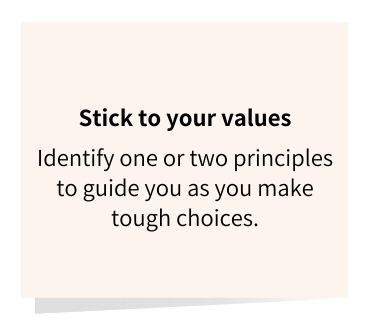
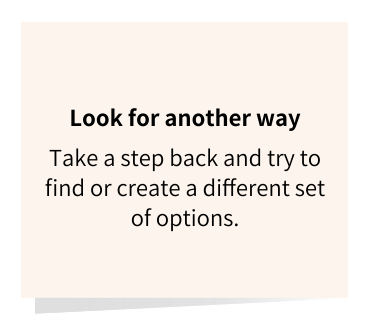
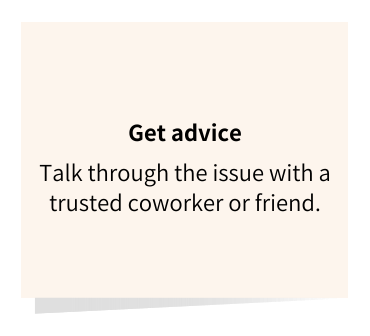
Yiru’s dilemma
Want to learn more about how to manage ethical questions in the workplace? Check out the HMM course Ethics at Work to dive more deeply into how to resolve ethical dilemmas and build a culture of integrity.
第 6 节
Cultivate critical thinking
Given these challenges, what’s the best way to ensure that you consistently make smart and informed decisions? One key is to continuously develop your critical thinking.
Critical thinking involves numerous skills and habits that you can develop throughout your life. Some of the most important are:
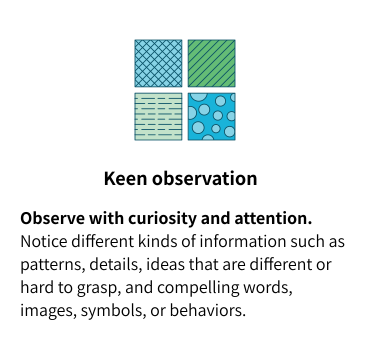
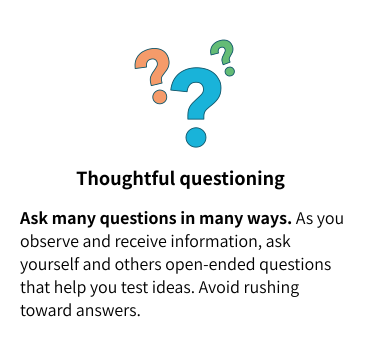
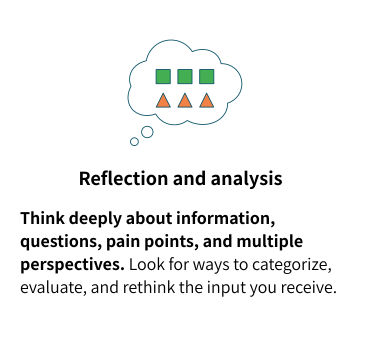
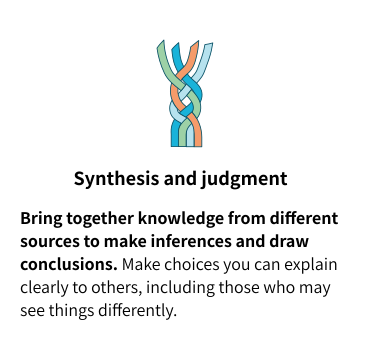
Key Critical Thinking Skills
There are many ways to develop and engage in critical thinking. In this video, Harvard Business School professor Ranjay Gulati describes a parallel concept that he calls diagnostic thinking. Listen as he explains how effective leaders pause, consider, and question before taking action.
诊断性思维 Diagnostic Thinking
哈佛教授讲授视频逐字稿
When time allows, it’s helpful to research, question, discuss, and consider a decision from different points of view. But when you’re crunched for time, you can improve your decision making by drawing on your critical thinking skills.
Poll
You’ve considered the many reasons why making decisions at work can be challenging at times. While there’s no single way to improve your decision-making abilities, you can start by looking out for the human, situational, and cultural factors that can influence decisions. Once you’re more aware of these considerations, you’ll be better prepared to avoid some of the common traps you might fall into when making choices.
第 8 节
APPLY
Test your understanding and reinforce what you’ve learned.
Try it Out
答案与解析
A. Using a clear and efficient process.
While it’s important to use a clear process and strive for efficiency in decision making, other habits are more effective in building your critical thinking skills. Examining ideas from multiple angles helps you question your assumptions and analyze arguments.
B. Carrying out decisions with confidence.
Once you make a decision, you want to move forward with confidence. But other habits are more effective in building your critical thinking skills. Examining ideas from multiple angles helps you question assumptions and analyze arguments.
C. Examining ideas from multiple angles.(正确)
Examining ideas from multiple angles helps you develop critical thinking skills like questioning assumptions and analyzing arguments.
Try it Out
答案与解析
A. Her first conversation anchored her thinking, leading her to give more weight to the finance team’s perspective.(正确)
The first piece of information you encounter can become an “anchor” that holds your thinking in place and prevents you from considering other information when making a decision.
B. Her positive feelings about the current platform clouded her analysis of how well it meets the organization's needs.
Becoming emotionally attached to an idea or product can cloud your thinking. But in Paula’s case, her emotions didn’t play a major role. Her first conversation with the finance team anchored her thinking, leading her to give more weight to their perspective and to dismiss input from the design team.
C. Her personal relationships with colleagues on the finance team led her to ignore the design team’s ideas.
Becoming emotionally attached to a collaborator can make it hard to weigh information neutrally. But in this case, Paula's personal relationships didn’t play a major role. Her first conversation with the finance team anchored her thinking, leading her to give more weight to their perspective and to dismiss input from the design team.
第 9 节
REFLECT
Reflecting on your learning helps you apply relevant concepts to your job.