You can do all the right things to engage and develop members of your team, but even so, departures are an inevitable part of the employee journey.
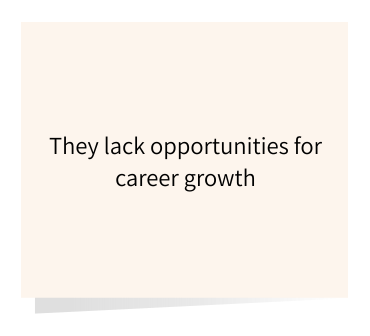
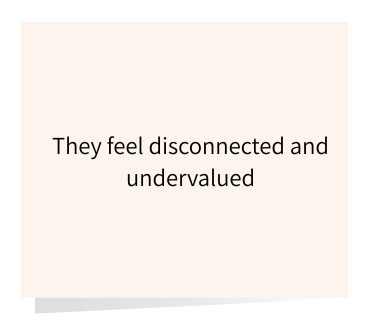
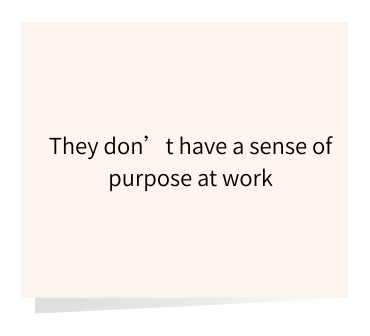
People leave a job for a lot of different reasons:
Stay attuned to the people on your team and be alert to signs they may be considering a change.
To understand how team members feel about their work:
Have candid one-on-one meetings regularly.
Take time to learn about employees’ growth interests and personal career goals.
Ask them to share any concerns they have and challenges they face on the job.
Listen to Angela Cheng-Cimini, senior vice president of talent and chief human resources officer at Harvard Business Publishing, talk about clues that indicate an employee is thinking of leaving, and what you can do when you notice them.
预防和管理好员工离职 Prevent and Manage Employee Exits
哈佛教授讲授视频逐字稿
Gone are the days of lifetime employment. In fact, since 2010, the average tenure for employees has hovered around 4 to 4 and 1/2 years, so we should expect that employee journeys come to an end.
What can you do as a manager to positively impact your team members longevity? Does it surprise you to learn that compensation is typically not the driving factor behind resignations? In fact, it's often third or fourth on the list. The most oft cited reasons are lack of opportunities for career progression, disconnectedness with the company's purpose, and lack of relationships at work.
But those reasons are often gleaned at the exit interview. That is, when it's generally too late to save the relationship. But with care and attention, managers can perceive the signals that employees are often telegraphing, well in advance of their formal resignation.
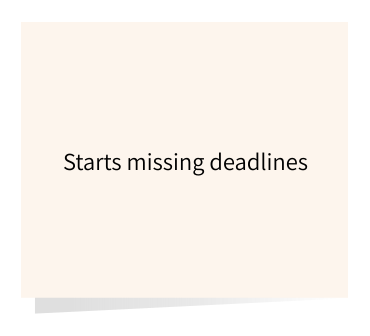
Does your team member appear less engaged? Is their work uncharacteristically late or sloppy? Are they physically checking out, and not appearing for work or turning off their camera? If you sense any of these warning signs, the easiest way to get to the root cause is to simply ask. How are you doing? You seem preoccupied with something that is affecting your work. How can I help you? What should I be doing differently?
Even better, making these questions part of your normal check in process sends the explicit signal that you care about the person, and not just their work. This kind of proactive care and feeding can often lift up issues to be addressed before they become intractable.
If despite all this, your employee chooses to end their journey with you, find a way to a dignified end. Acknowledge their contributions, and wish them well. You never know. That employee may boomerang and return, or become one of the best ambassadors for your brand.
Equally important, for those who remain, a smooth exit will facilitate knowledge transfer and provide time to plan for the change. It may even give you an opportunity to rethink the skills you need, and recast the role to something more appropriate to the needs of the business.
The employee experience is a path with a beginning, middle, and end. Employees want and deserve the agency to chart their own course, and managers serve as their guides. As they say, all good things come to an end, and your responsibility is to make it as good as it can possibly be.
Moira addresses warning signs of a possible employee departure
Moira addresses warning signs of a possible employee departure
Moira manages a team at a large financial services company. She has noticed that Josh, who works remotely, has recently seemed less engaged in his job. Errors have cropped up in his work, and he hasn’t contributed much during team meetings. Moira meets with Josh and tells him she’s noticed he’s preoccupied. She gives a few quick examples of behavioral changes she has observed, then asks, “How are you doing?”
Josh tells Moira he’s feeling a bit disconnected from the team and wondering about his career path at the company. Together they explore ideas for helping Josh feel more connected, such as building in time for casual conversation at the beginning of meetings. They also discuss Josh’s career hopes and brainstorm ways he can build the skills needed to take on more challenging roles. Josh seems energized by the conversation, and in the coming weeks, his engagement and the quality of his work improve.
Moira addresses warning signs of a possible employee departure
Take a Moment
1. Think about someone you've managed or worked with who left your organization. Looking back, were there any signs leading up to their departure? What steps could you have taken, if any, to persuade the person to stay?
One common contributor to employee departures is burnout. Burnout results from chronic stress at work that hasn’t been successfully managed. In addition to making people feel run down and exhausted, burnout can cause employees to question their value or competence on the job.
Common causes of burnout include:
Competing priorities
Employees feel pressure when they have conflicting tasks with no guidance on how to prioritize them.
Unclear objectives
When priorities shift and the purpose for an assignment is vague, people tend to lose interest and focus.
Conflict
Frequent disagreements with others at work can be draining and negatively affect employee morale.
Lack of balance
When workloads become unmanageable and consistently erode personal time, well-being suffers.
Boredom
Employees who aren’t being challenged to use their talents or learn new skills often feel stuck and undervalued.
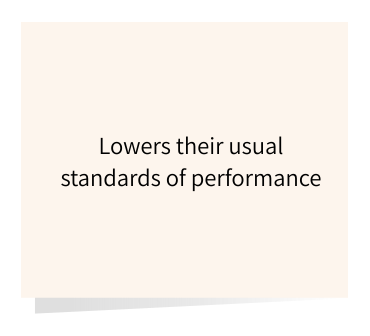
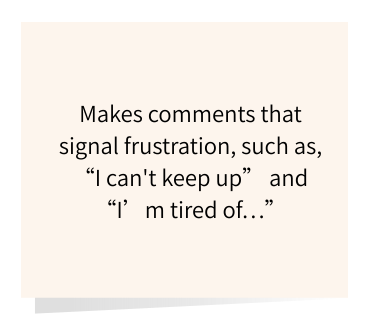
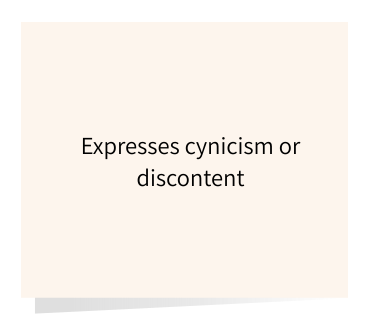
Take care of your team by regularly watching for signs of burnout. Pay attention when someone:
When you notice signs of burnout, invite the person to meet with you one-on-one. Ask what’s going on and what you can do to help. By actively listening and responding with understanding and support, you may be able to identify ways to reduce the pressure they’re feeling.
Try it Out
Try it Out
Take a Moment
1. If you didn't pick all the strategies above, what can you do the next time you notice someone on your team seems burned out?
According to the “peak-end rule,” people judge an experience largely by how they felt at its most intense point and at its end. This means people remember how they—or others—were treated on the way out of an organization.
According to the “peak-end rule,” people judge an experience largely by how they felt at its most intense point and at its end. This means people remember how they—or others—were treated on the way out of an organization. According to the “peak-end rule,” people judge an experience largely by how they felt at its most intense point and at its end. This means people remember how they—or others—were treated on the way out of an organization.
Sometimes, an individual’s career goals or development needs lead them toward another team or organization. When this happens, especially with a valued team member, it’s natural to feel frustrated or disappointed. But think before you respond so you can set the right tone in your conversations.
When an employee transitions off your team, you have an opportunity to:
Develop a new kind of relationship
Today’s exiting employee may be tomorrow’s customer, supplier, consultant, or ambassador for your company or brand. Preserve that relationship by responding to resignations with grace and support.
Send a message
When you treat an employee who is leaving with respect, you show team members that you appreciate their contributions and want what’s best for them. This helps to keep your team’s morale and productivity high.
Model your culture
The way you say goodbye to an employee should reflect your organization’s values. You’ll want your final interactions with the departing employee to leave a positive impression.
Accept resignations with understanding and sincere congratulations. In addition:
Tell the person leaving that you value them and hate to lose them, but if this move better supports their goals, you are happy for them.
Acknowledge the departing employee’s contributions to the team.
Show your appreciation by hosting a small in-person or virtual gathering to thank them.
Rodrigo gives Tonia a great send-off
Rodrigo gives Tonia a great send-off
Rodrigo organizes a gathering for his team to say goodbye to Tonia, who has decided to start her own business. During the gathering, Rodrigo describes how Tonia contributed to the team’s accomplishments. He also invites each team member to share a favorite memory of working with Tonia. Some recall funny moments, while others describe important things they learned from Tonia. There’s lively discussion about Tonia’s plans for her new business, and Tonia invites her teammates to stay in touch after she leaves.
Rodrigo gives Tonia a great send-off
When departures are involuntary
When layoffs occur, support team members by helping them find new jobs. Make sure they’re aware of any outplacement services, such as career coaching and resume writing assistance. Some offboarding programs also offer counseling and other support.
When departures are involuntary
第 4 节
When an employee leaves, their work doesn’t go with them! So, meet with the employee as soon as possible to begin a transition plan that:
Identifies current projects and upcoming deadlines
Captures specialized knowledge and important contacts for each project
Documents processes and procedures for critical workflows
Prioritizes getting projects to a state where they can be handed off to others
Review your team’s workload and determine who can assume the duties left behind. If remaining employees see new tasks as a burden, listen to and address their concerns.
Help team members prioritize their projects so they don’t feel overwhelmed. Schedule a handoff meeting with the departing employee to facilitate the transfer of knowledge and address questions.
In addition to wrapping up the work, take time to learn from the exiting employee. Schedule a final one-on-one meeting to collect information on why they are leaving. Use that conversation to solicit ideas for improving your team and organization.
Follow these best practices to facilitate your last conversation:
Timing
Schedule the meeting halfway between the resignation and final day. Don’t wait until the last day.
Confidentiality
Give departing employees permission to be candid; reassure them that information collected is confidential.
Tone
Be patient and friendly. Probe to understand concerns, but don’t offer solutions.
When someone leaves your team, your relationship doesn’t have to end. Former employees can become valuable ambassadors if they remain engaged and connected to your company.
The team member who left your team last year could today:
Refer potential employees to apply for an open position on your team.
Recommend your organization’s products and services to others.
Initiate a new business alliance between you and their new employer.
"Lifetime employment might be over,but a lifetime relationship remains the ideal..."
Keep the lines of communication open by periodically checking in with former colleagues. Recognize them as a member of your organization’s extended community by periodically updating them about company and team news.
If your organization manages a formal or informal network of former employees, be sure to encourage any outgoing employees to join.
Maintain an open door
Maintain an open door
When Ash submitted their resignation and announced they were taking a job that would allow them to learn new technical skills, Mark was dismayed. Over the past two years, Ash proved to be a valuable employee. But Mark also understood Ash's choice to try something new and made the departure smooth and cordial. He let Ash know about the organization’s alumni network, a group of former employees who stay connected to the company and each other. Through that group, about 18 months later, Ash learned about a job opening in the company where they could apply new skills they had acquired, and Ash applied to rejoin Mark’s organization.
Maintain an open door
Organizations that rehire former employees benefit from their knowledge of the culture and processes, resulting in a shorter training time. Rehires also bring a fresh perspective and new expertise.
Here, author and entrepreneur Christopher Yeh talks about the value of tapping into your alumni network.
构建你的离职员工网络 Build Your Alumni Network
哈佛教授讲授视频逐字稿
What if I told you that you had a vast untapped resource that could allow you to increase your revenues, make better business decisions, and tie you in more closely with your employees? Well, this gold mine is your alumni network. The vast majority of companies do almost nothing to tap their alumni, despite the fact that those alumni may very well be the most valuable resource they have.
Think about all the different things that your alumni can do for you. They can refer customers, because who knows your products better than your former employees? They can refer job candidates, because if you have a good relationship with them, if they think fondly of their time at your company, they're definitely going to want their friends to work for you.
With your alumni, you have a ready-made source of potential talent-- people who know what kind of personnel are going to fit into your organization, and more importantly, into your particular style. And when your alumni are out there talking about your company, that's actually the best possible thing for your talent brand. People are going to judge your organization and judge you based on what your alumni have gone on to accomplish and what they say about you.
Now if you as a manager want to develop a relationship with your alumni, it's actually easier than it's ever been. If you look on LinkedIn, 96% of Fortune 500 companies have an alumni network. But the amazing thing is, the vast majority of those alumni networks have no formal relationship with the company. Well, guess what? You can fix that.
Whether it's for your organization or just for your group, you can easily set up a LinkedIn group, or whatever tool you want, that allows you to stay in touch with your alumni. You're able to reach out to them and keep them informed about what's going on with the company. You can tell them about what you're looking for out in the marketplace, be it job candidates, or prospects, or information, and give them a chance to learn about what's going on and reconnect with each other. You'll build stronger relationships that you can tap to drive business results.
Make a Connection
1. Do you maintain contact with anyone from previous jobs? In what ways have you remained engaged with or shown support to your former employers?
第 6 节
When a valued teammate departs, others on your team may question their own roles and their future at your company. Use this time of transition to concentrate on your existing talent. Follow these steps to check in with your team:
Take their pulse
Meet with team members individually to find out how they’re doing. Listen to their concerns and ask for their take on the team’s morale.
Keep them motivated
When someone leaves, remaining team members may worry that their own goals will be pushed aside as they take on extra work. Let them know that their aspirations will continue to be a priority, and thank them for how they’re showing up during changing times.
Focus on the future
Reinforce the message that the team’s work makes an important contribution to the organization’s purpose and strategy. Let members know that your group will have the staffing it needs to achieve current and future goals. Invite their input as you begin the recruiting process for a new team member.
You can’t retain every employee. Departures are an inevitable part of the employee’s journey. A well-defined exit process is an important aspect of shaping a positive employee experience.
第 7 节
Stay attuned to your team members and look for clues that they’re dissatisfied and considering a change.
Watch for signs of burnout on your team. Have a plan to address its common causes.
Accept resignations with grace, and support and celebrate departing employees.
Develop a plan to transfer projects and knowledge from the exiting team member. Don’t wait until the last minute!
Stay connected to the former employee. They may become a valuable member of your organization’s extended community.
Spend extra time supporting the team members who remain.
第 8 节
Try it Out
1. 1. During the last two weeks, you’ve noticed that your project coordinator missed two important deadlines and displayed impatience in team meetings. What’s the best way to handle this behavior?
答案与解析
A. Assume that something personal is going on. Give the employee some space and time to work things out on their own. Managers often want to give their employees the space and time to work out issues. However, ignoring signs of potential burnout can escalate the situation. If someone is showing signs of burnout, meet with them one-on-one, and ask what’s going on and what you can do to help. By actively listening and responding with understanding and support, you may be able to identify ways to reduce the pressure they’re feeling.
B. Meet with the employee one-on-one. Ask what’s going on and how you can help. Actively listen and respond with understanding.(正确) Missing deadlines and expressing frustration are signs of burnout. If someone is showing signs of burnout, meet with them one-on-one and ask what’s going on and what you can do to help. By actively listening and responding with understanding and support, you may be able to identify ways to reduce the pressure they’re feeling.
C. Meet with the employee one-on-one. Let them know that their recent behavior isn’t acceptable and needs to improve. While your employee’s behavior isn’t acceptable, ignoring signs of potential burnout can escalate the situation. If someone is showing signs of burnout, meet with them one-on-one and ask what’s going on and what you can do to help. By actively listening and responding with understanding and support, you may be able to identify ways to reduce the pressure they’re feeling.
Try it Out
1. 2. Your team is in the middle of a large project when your top performer submits their resignation. What’s the best way to handle this situation?
答案与解析
A. Tell the team member that their timing is terrible and that you need them to stay through the end of the project. It’s natural to feel frustrated and disappointed when an employee resigns, especially during a busy time. However, a response like this sends a negative message to your team. Show you value them as individuals by accepting the resignation with understanding and acknowledging the departing employee’s contributions to the team.
B. Accept the resignation and immediately start listing all the tasks the person must do before their last day. Check in frequently to ensure completion. Although you’ll need to help the team member wrap up their work, be sure not to overwhelm the person or the rest of your team with tasks. Take the time to offer your support and sincere congratulations. Send a message to your entire team that you value them as individuals by acknowledging the person's contributions.
C. Accept the resignation with understanding. Acknowledge the person’s contributions to the team and schedule a meeting to review your team’s transition plan.(正确) By accepting the resignation with understanding and acknowledging the person's contributions, you’re sending a message to your entire team that you value them as individuals.
第 9 节
Reflecting on your learning helps you apply relevant concepts to your job.
Take a Moment
1. 1. What new insights do you have that could benefit you or others in your workplace?
2. 2. What are your biggest opportunities for applying concepts from this Lesson in your workplace?