
Engage and Keep Employees 查看中文版
第 1 节
You’ve added talented new employees to your team. How do you continually motivate, engage, and retain them—and others?
Your team undoubtedly includes people with varying levels of experience and skills. Take time to get to know them as individuals so you can meet their unique development needs.
When people can build their skills at work, they feel more engaged and are more loyal to the organization.
Poll
When you meet with team members individually to give feedback and talk about their career development, find out how satisfied they are with their jobs and what skills they’d like to strengthen. These conversations differ from your regular check-ins where you discuss the status of their projects.
Here are questions you might ask to facilitate a career development discussion with a team member:
-
What parts of your job do you find most interesting or rewarding? Least?
-
How would you rate your current workload?
-
What areas are you finding most challenging right now?
-
What skills do you need to, or would you like to, learn?
-
What do you need from me to be more successful?
Listen actively and take notes. As you learn team members’ strengths and interests, you’ll be able to recognize new opportunities for them.
Raisa identifies career development opportunities for Tomas
In addition, work with each person to create a personalized development plan. The plan should include the skills the person wants to develop, why those skills are important to the employee and your organization, and how the person will accomplish their goals. Ensure the plans are relevant, realistic, and rewarding. And once plans are activated, check in regularly to track progress.
Listen to KeyAnna Schmiedl, global head of culture and inclusion at Wayfair, talk about how to have productive career development conversations.
登上职业生涯“攀岩墙”的顶端 Navigating the Career “Rock Wall”
哈佛教授讲授视频逐字稿
第 2 节
Employees who see good opportunities to learn and grow at work are 2.9 times more likely to be engaged.
Another way to keep employees engaged is to provide plenty of opportunities for learning. Ongoing training helps people feel secure in their jobs and prepare for future opportunities.
It also allows organizations to keep up with the pace of change. By providing employees with opportunities for upskilling—learning additional skills within the same role—and reskilling—gaining the skills needed to do a different job—organizations stay competitive as their industries evolve. For instance, as more companies use digital tools and technologies to get work done, employees who gain skills in areas like data analytics and machine learning become even more valuable.
Based on your one-on-one conversations with team members and your understanding of the organization’s needs, offer individualized learning opportunities. These may include:
-
On-the-job practice to build desired new skills—for example, writing marketing copy or facilitating meetings.
-
Relevant in-person or virtual conferences and courses, especially ones that cover innovations or new ways of working.
-
Formal company-sponsored programs, including ones that aren’t directly applicable to the person’s current responsibilities—for instance, a series of workshops on how industry regulations are changing or what leading companies are doing to improve their processes.
New skills vs. new employees
第 3 节
Don’t leave skill development to chance. Be sure to:
By encouraging continual learning, you create an environment where people feel confident in trying out new things and expanding their skills and knowledge.
2X2 Matrix to Prioritize Skill Building
第 4 节
Sometimes, a person’s desire to build new skills will take them outside your group. For example, a programmer might be interested in learning more about copywriting. Or a customer service representative may want to try designing a social media ad campaign.
While it’s natural to want to keep top performers close, when you and other managers actively move employees into different roles, you boost innovation and collaboration for the organization overall.You also become known for your role in growing the organization’s talent pool.
Here are two ways to promote talent mobility within your organization:
-
Design “tours of duty,” in which team members rotate through a series of functional areas within a defined period to gain exposure to other parts of the organization.
-
Coordinate a lateral transition to another department where the employee will have a chance to learn new skills and have a better chance of being promoted.
Here, entrepreneur and author Christopher Yeh describes how tours of duty benefit both the employee and the company.
与员工共同设计“工作任期”Tours of Duty
哈佛教授讲授视频逐字稿
第 5 节
It probably won’t surprise you to learn that people who find their work meaningful have higher levels of job satisfaction and commitment. You can contribute to team members’ sense of purpose by partnering with them to personalize their jobs based on their strengths and interests.
Although it may seem like a contradiction, this kind of personalization works best—for the individual and the organization—when you involve the whole team in the process. To do so, follow these steps:
Identify your team’s unique contribution
Share strengths and aspirations
Match skills and passion to strategic commitments
Periodically revisit this process and shift responsibilities as needed to ensure each team member has work that aligns with their sense of purpose.
Take a Moment
第 6 节
People thrive at work when they feel they belong and their contributions are valued. As you support and connect with your team, be sure you engage everyone in the group. How?
-
Promote opportunities for all employees, paying close attention to those in historically marginalized groups.
-
Make contractors feel part of the team—for example, by including them when appropriate in project kickoff meetings, social gatherings, and celebrations of successes.
-
Foster social connections with remote-only team members—for instance, by starting video meetings with fun check-ins where each member says what their favorite food is or describes a book they’re currently reading.
As you think about ways to engage and develop all employees—especially new hires and employees from groups that have been underrepresented within the organization—consider mentorship.
Mentoring is all about building connections. It connects:
If your organization doesn’t have a formal mentorship program, recruit experienced employees to serve as mentors. Acting as a mentor brings its own benefits, including becoming a better leader and deepening your sense of purpose.
Take a Moment
第 7 节
If you want to foster engagement on your team, don’t underestimate the value of expressions of appreciation. Being seen, recognized, and valued is a fundamental human need, both at work and in life. When you show appreciation, you boost morale, encourage good work, and contribute to employees’ well-being.
But appreciation must be warm and sincere to produce these benefits. Here are some ways to authentically let someone know you appreciate their efforts:
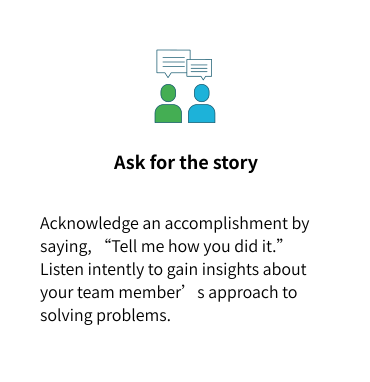
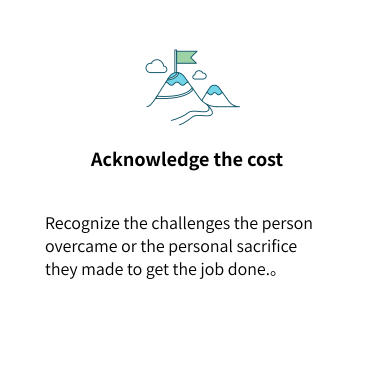
Martina expresses appreciation for Josef’s accomplishment
Make a Connection
When you take the time to get to know the people on your team, help them develop the skills they need now and for the future, and offer regular appreciation, you help to engage and retain employees. That’s good for them, your team, and your organization.
第 8 节
-
Take time to get to know employees through regular one-on-one development meetings.
-
Provide opportunities for upskilling and reskilling and make learning on the job a priority for your team.
-
Support team members in moving around the company to gain new skills and knowledge.
-
Help people personalize their work to better reflect strengths and interests.
-
Engage all employees and look for ways to build connection and belonging.
-
Deliver authentic appreciation with warmth and sincerity.
第 9 节
Try it Out
答案与解析
A. Suggest they research an online certification course to take during their personal time outside of work.
While an online certification course could be a good way to continue learning, by encouraging the employee to learn outside of work, you aren’t actively supporting their career development. Instead, work with them to identify opportunities to learn new skills on the job and create a personalized development plan to help them get there.
B. Remind them of all the skills and experience they’ve gained in their role and encourage them to stay focused on their current responsibilities.
Focusing on the skills and experience they’ve already gained doesn’t show that you’re actively listening or looking for development opportunities. Instead, work with the individual to identify opportunities to learn new skills and create a personalized development plan to help them get there.
C. Work together to craft a personalized development plan that includes the skills the employee wants to develop and how they will achieve their goals.(正确)
One of your responsibilities as a leader is to help team members identify opportunities to learn and grow in their careers. The best way to support them is to create a personalized development plan that includes the skills they want to develop. Make plans relevant and realistic with frequent check-ins to track progress.
Try it Out
答案与解析
A. Express your appreciation sincerely, taking time to learn how the person approached the project and to acknowledge any challenges they had to overcome.(正确)
Asking how the employee got the job done, connecting their work to a larger purpose, and acknowledging their effort and any challenges they overcame are ways to express sincere appreciation.
B. Connect with the customer to learn more about what worked well and reinforce the positive relationship.
Although it’s a good idea to reinforce positive relationships with customers, this is not the best way to acknowledge the employee’s contributions. Asking the team member how they got the job done, connecting their work to a larger purpose, and acknowledging their effort and any challenges they overcame are ways to express sincere appreciation.
C. Reward your team member by assigning them a low-stress, low-profile task or project to work on next.
Your team member may not consider this move to be a reward, and it doesn’t acknowledge their contributions in a meaningful way. Asking the team member how they got the job done, connecting their work to a larger purpose, and acknowledging their effort and any challenges they overcame are ways to express sincere appreciation.
第 10 节
Reflecting on your learning helps you apply relevant concepts to your job.