Pocket Leadership口袋领导力

Change Management

Navigate Continual Change 查看中文版

第 1 节

Studies show that going through an organizational change can be just as painful as suffering the loss of a loved one.

Studies show that going through an organizational change can be just as painful as suffering the loss of a loved one. Studies show that going through an organizational change can be just as painful as suffering the loss of a loved one.“How to Embrace Change Using Emotional Intelligence," by Kandi Wiens and Darin Rowell. Harvard Business Review, December 31, 2018.

Your company just announced a major change initiative. It might be a merger or acquisition, or shifts in your team’s structure or processes.

Poll

Poll

Based on your answer, how do you compare with others in your organization?

From the poll results, you may notice that people’s responses are all over the place. That’s because whether you’re the CEO or a frontline contributor, change can spark a variety of feelings—including fear, excitement, anxiety, and frustration.

Conflicting feelings about change can raise your stress levels or cause you to resist new initiatives. And if you’re someone who tends to ignore your emotions, you may find yourself mentally, physically, and emotionally exhausted—without even knowing why.

Make a Connection

1. Have you ever found yourself feeling conflicted about a change initiative? If so, what do you think led you to feel that way?

第 2 节

So what’s the best way to handle any conflicting feelings you may have about change? Start by naming your main emotion at the moment.

When you’re clear about what you’re experiencing, you can work with those feelings, not against them.

For example, many people respond to change with fear. By examining the thoughts associated with that feeling, you can come up with actions to move past them:

I’ll look incompetent Take the initiative to learn any new skills the change may require. Sure, it can be scary, but it's an opportunity to grow. I have no control over it Let go of what you can't control and focus on what you can. For instance, you can continually build your skills and make new connections. I'm afraid of being excluded from decision making about the change Figure out how you can contribute to the initiative's success. Collaborate with others in the spirit of strengthening the change effort. My job might become redundant Show your value by offering to take on specific change-related tasks. You might find opportunity for advancementif you're ready to seize it.

Researchers have found that people who journal about their emotional experiences not only gain insight into their feelings, they also handle work-related obstacles more productively."3 Ways to Better Understand Your Emotions," by Susan David. Harvard Business Review, November 10, 2016

Try it Out

Practice shifting from being reactive to being proactive in response to change.
1. What is a change you’re anticipating or involved in?
2. What’s your primary emotion related to this change?
3. What are some of your unspoken thoughts about it?
4. What actions can you take to move forward?

If you manage a team, you play a key role in helping others navigate the emotional ups and downs that change can bring. Author Amy Jen Su suggests three steps for keeping your team on track during uncertain times.

带领团队迎接变革的三个建议 Make the Most of Constant Change

哈佛教授讲授视频逐字稿
It’s almost become cliché to talk about how fast the world is changing. We all know that organizations today face transformation, sparked in part by a constant stream of game-changing technologies. But much less attention has been paid to what the significant shift in the corporate landscape actually means for you and your team. How can you be your personal best in a world that’s moving so fast? How can your team navigate the current when the tides are constantly changing? Here are three ideas to help you and your team. Number one: Put on your own oxygen mask first. If you don’t take care of yourself first, you can’t help others. Now’s the time to double down on your practices for self-care, whether they include exercise, journaling, meditation, or spending time with friends. When you bring a stable and grounded presence in the face of change, your team will feel comfortable bringing you important information, even if it’s bad news, so that you can help to remove obstacles, reset priorities, or get the team back on track. Number two is to see yourself as an influencer. This can feel like scary territory. It means giving up being the victim and the blame game. It means depending less on asking others what they think, trusting yourself, and taking ownership. Ownership means owning your part of the change initiative, taking responsibility for it, and upholding your team’s accountabilities. In the process, you gain confidence and see the full range of choices available to you. Number three: Be a role model. When faced with change and ambiguity, it is even more important than ever to acknowledge the situation, paint the way forward, and maintain realistic optimism. Being in dialogue is different from going passive on the sidelines—or, even worse, standing at the water cooler complaining with others, playing the “we versus them” game. Help your team stay focused on new opportunities rather than getting caught up in negative dynamics. When you develop the skills to make the most of constant change, you shift from viewing change as a problem to seeing it as a huge opportunity. Even more, you will have demonstrated one of the most critical roles you play as a leader: that as change agent, helping yourself, your organization, and your team.
Take care of yourself first Practice self-care by exercising, meditating, or spending time with friends. See yourself as an influencer Take ownership for your part of a change initiative. Be a role model Help your team stay focused on new opportunities rather than get caught up in negative dynamics.

第 3 节

Naming your feelings about a particular change initiative is a good step. But to stay productive in a climate of near-constant upheaval, you’ll also want to work on developing resilience.

Resilience is the ability to bounce back from challenges—like those you may face during times of constant change—again and again.

Whether you’re dealing with minor inconveniences or major roadblocks, resilience helps you:

  • Put the brakes on unproductive responses

  • Replace negativity with creativity

  • Move ahead despite challenges

Organizational psychologist Nick Tasler shares how a certain group of individuals thrived during a major industry transformation.

在行业发生颠覆性变化后,强者如何应对? What’s Your Outlook on Change?

哈佛教授讲授视频逐字稿
In the early 1980s, a really momentous change happened in the telephone industry in the United States. The US government decided, we’re going to deregulate, de-monopolize, the phone company, and we’re going to allow other competitors to come in. And people working for the phone company, as you can imagine, this was a hugely disruptive change. And fortunately for us, a couple of researchers at the time—a few years before that—had decided that they were going to go in and measure, follow some of these people around and see how they were responding to the prospect of this massively disruptive change before it happened, and then also after the change happened—how did they respond? When the deregulation actually happened, and all of a sudden,overnight, the phone company was cut in half in terms of size, half the people—hundreds of thousands of people—laid off. The psychological and physiological toll on the employees was pretty massive. There was heart attacks, kidney failures, strokes, suicides, gambling addictions, alcoholism, and in widely disproportionate measures. But it wasn’t everyone—and that’s what was interesting about it—there was also another group of people who didn’t just survive the change, they actually thrived in the midst of it. Whether they, if they got laid off, they turned out to be shooting stars at their new organizations. If they remained at the phone company, then they rose and became important leaders within the new phone company. And so the question, ofcourse, for all of us—particularly for these researchers—is: What’s the difference? Why did these people perform so much better, deal with it so much better, than these people who were brought to their knees by the stress? And what they found out is, among many other things—even though these people looked the same on paper, they had a very different outlook on the role of stress in our lives, the role of stressful changes. The people who struggled with it had a view of stress that stress is an anomaly, that it only happens to tragic, unfortunate souls. These other people didn’t expect stability. In fact, when they looked at life, they assumed that change was going to happen to them throughout the course of their lives. And they’re not going to like it all; there’s going to be some changes that are not positive, no matter how you want to spin it, but we’re going to get through it. And so they saw change, even stressful change, as a perfectly normal part of a healthy, meaningful existence. And so I think the key takeaway for us is: How do you view stress? And then secondly, when this change happens—from government regulations, from on high, from our superiors, or from other competitors, customers—the question we should be asking is: What do good people do when bad things happen? And that’s the most adaptive response to any kind of stressful change that happens to us.

To build your resilience, the next time you face a challenge:"To Build Your Resilience, Ask Yourself Two Simple Questions," by Srikumar Rao. Harvard Business Review, June 13, 2017

Step 1: Ask yourself, “Why is this situation undesirable?”

List the potentially negative outcomes it may produce. Example: “Because of this reorganization, I may be moved to a different team where I don’t know anyone.” Step 1: Ask yourself, “Why is this situation undesirable?”

Step 2: Ask yourself, “Is there any way this could actually end up being a good thing?”

This thinking opens up possibilities you might not have considered. Example: “I might form new relationships and enjoy my work even more.” Step 2: Ask yourself, “Is there any way this could actually end up being a good thing?”

Step 3: Ask yourself, “What, if anything, can I do to make this positive outcome come about?”

Think about actions you can take to produce the beneficial outcomes you identified. Example: “I can take the time to get to know everyone on my new team.” Step 3: Ask yourself, “What, if anything, can I do to make this positive outcome come about?”

Practice these steps with smaller challenges so you can be prepared when larger ones come up.

If you manage others, avoid insincere pep talks or vague reassurance that the situation will turn out okay. Instead, ask them, “How can you have the most immediate, positive impact on this situation?”

Make a Plan

Make a Plan

第 4 节

Change often involves learning new skills—something that demands a lot of brain power.

Wellness coach Margaret Moore shares tips for making it easier for your brain to learn new things.

让大脑为迎接变化做好准备 Prepare Your Brain for Change

哈佛教授讲授视频逐字稿
From your brain's point of view, change means learning something new, which means creating new connections that lead to a new neural network. Like a company launching a new product, you need to make sure your brain has all the resources it needs to learn. Studies show that brain cells produce nerve growth factors when you exercise. Sleep and a good diet also enables the consolidation of learning. You should also exercise your brain. Practice cognitive agility rapidly trying on new points of view, ideas, and perspectives. This builds brain flexibility improving your access to your working memory, and that is the raw material for creativity. The brain gets tired quickly. Take a break at least every hour or more often if you're tired and stressed. Get out of your chair. Shift to a menial task, like watering a plant, move your body, or just let your mind wander. Many creative breakthroughs arrive when your brain is defocused, so take brain breaks throughout your day. Researchers have shown us that it's impossible to hold a negative thought and a positive thought in your brain at the same moment. Negative emotions impair thinking, memory, creativity, and a strategic perspective while positive emotions improve these brain capacities.So when tackling change, you need to prepare your brain. Your brain will reward you with rapid learning and growth and, occasionally, a moment of brilliance.

Take a Moment

1. What’s one thing you’ll do today to prepare your brain for change?

Once you’re ready to learn, here are four tips for mastering new skills:

Start small Develop one or two new skills at a time. Come up with concrete activities and timelines for your learning. Name the outcome Be specific about what you want to achieve—for example, learning to use a certain app to increase your efficiency. Find resources Take advantage of training provided by your organization or online classes—whatever format meets your needs. Make it social Partner with another learner or join a learning community. For many people, being accountable to others helps keep them on track with their goals.

第 5 节

Change isn’t just about what’s new.

It’s also about letting go of practices, routines, and beliefs that no longer meet your needs.

Habits—set ways of thinking or acting—can be useful when they allow us to save time or stay on a beneficial track.

But our habits stand in our way when they keep us locked into unproductive behaviors.

For example, you may notice that whenever you’re on a conference call, you check your email instead of paying attention to the speaker. You end up missing out on important information.

Poll

Poll

All habits involve a cue, a behavior, and a reward.The Power of Habit: Why We Do What We Do in Life and Business, by Charles Duhigg. Random House, 2012: appendix.
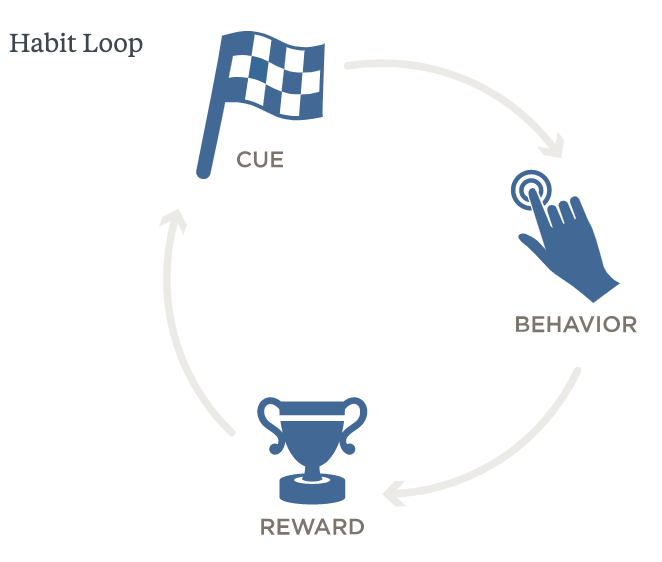
The cue is the signal that prompts the habitual behavior. A chime on your phone reminds you ir's time to exercise. The behavior is the action you take based on the cue. You head to thegym and work out for 45 minutes. The reward is the benefit the behavior provides you. Your brain releases endorphins that pump youfull of energy and positive feelings.

A reward doesn’t have to be tangible. For example, the reward for organizing your desk before leaving work every evening may be feeling more energized and creative in the morning.

Changing Your Habits

附件:worksheet_for_changing_habits1697009402683.docx(docx · 1176 KB,本地副本)

To change a behavior, identify and alter the cue or the reward, or both.

Liz’s new habit

Liz’s new habit Liz, a busy sales manager, sets a goal of submitting expense reports every week. With her demanding schedule, she struggles to adopt this new habit. Liz decides to: Block off 30 minutes on her calendar every Friday morning and set a reminder on her phone. (cue) Spend the first 15 minutes of that time completing and submitting the reports. (behavior) Spend the second 15 minutes catching up on emails. (reward) After testing this new routine for two weeks, Liz realizes the reward isn’t strong enough, since catching up on emails isn’t something she finds enjoyable. She shifts the reward to reading her favorite industry blog while savoring a cup of tea. Liz’s new habit

Make a Connection

1. What habit could you change or develop to be more effective at work?

Try it Out

Now identify the cue, behavior, and reward. What's your habit loop?
1. When this cue happens:
2. I will behave in this way/take this action:
3. Because it provides me with this reward:

Try this new routine for a week. See what’s working and what’s not, and adjust as needed. Good luck!

Understanding and Changing Your Habits

附件:understanding_and_changing_your_habits1697009571056.pdf(pdf · 124 KB,本地副本)

第 6 节

  • Conflicting feelings about change can raise your stress levels or cause you to resist new initiatives.

  • Identify your feelings about change, and take steps to work with them, not against them.

  • Practice building resilience by viewing change as an opportunity, not a problem.

  • Prepare your brain for learning and master new skills by starting small and naming the outcome you want to achieve.

  • To change a habit, pick a new cue, behavior, and reward.

第 7 节

Reflecting on your learning helps you apply relevant concepts to your job.

Take a Moment

1. 1. What new insights do you have that could benefit you or others in your workplace?
2. 2. What are your biggest opportunities for applying concepts from this Lesson in your workplace?

Further reading

HCLTech 首席执行官谈企业如何在 AI 时代实现战略转向
生成式 AI 出现后,HCLTech 意识到,这项技术将从根本上重塑 IT 服务的经济逻辑,打破收入增长与员工规模扩张之…
中层管理者将决定 AI 采用的成败
生成式 AI 项目之所以常常陷入停滞,原因往往不在于董事会、供应商或培训,而在于中层管理者决定了 AI 应该如何真正落地…
AI 转型需要对工作进行重新设计,而不是裁减岗位
AI 开始重塑企业的人员决策,但许多公司的行动速度已经超出了现有证据能够支持的程度。早期因 AI 而进行的裁员往往未能带…

Top 3 in the source platform's original order