
Know Yourself 查看中文版
第 1 节
Is the idea of having one lifelong career obsolete? Consider these points:
-
According to the U.S. Bureau of Labor Statistics, today's average worker holds 10 different jobs before age forty.
-
A large majority of workers have careers in fields that are completely different than what they went to school for.
-
Many of today’s jobs won’t exist tomorrow—and many of tomorrow’s jobs don’t yet exist.
Few of us can expect to follow a straight line from graduation to retirement. In fact, only 1 in 5 companies still have traditionally defined career paths.
And no one can assume that the skills and expertise they have today will be relevant tomorrow.
What does all this mean for your professional life?
-
Consider building new skills as part of your job description so you can do your current job well and prepare for your next opportunity.
-
Regularly take the time to know yourself. What interests you today might be different from what motivates and drives you tomorrow or next year.
-
Avoid letting your role define you. You may easily mistake a job you do well for one that satisfies you. If you’re not fulfilled, you may ultimately burn out—which doesn’t serve you or your organization.
Poll
If your answer to this question isn’t favorable, it’s up to you to make things happen. To take charge of your work path and determine your career priorities, think about:

As you reflect on these areas, you may find new aspects of your current position or new roles in your company that meet your needs.
Or, as chef and bakery owner Joanne Chang recounts, you may decide to reinvent yourself and move into a completely new direction.
Take a Moment
第 2 节
As you evaluate your job priorities, consider what excites you. These are your core interests.
They drive the kinds of activities that make you happy and ultimately keep you engaged at work.
For instance, you may be passionate about tracking the statistics of your favorite sport team. Or you may love language and ideas—and write a personal blog.
Try it Out
How do your interests influence your career decisions? Video producer and esports pioneer Ariel Horn shares how making choices around his core interests led to a deeply satisfying job.
是什么,点燃了你的热情? What Lights Your Fire
哈佛教授讲授视频逐字稿
People whose professions match their strongest interests have the greatest likelihood of career satisfaction.
It’s relatively easy to learn a new skill; it’s hard to feel passionate about work that isn't fulfilling.
Understanding Core Interests
第 3 节
Microsoft’s Bill Gates—an expert software engineer—and Apple’s Steve Jobs—an unparalleled design thinker—applied different skills to make a lasting impact in the same industry during the same time period.
No matter what stage you are at in your career, continually assess your skills—those you have and those you want to develop.
Some of your skills may be easy to recognize. For instance, you might think, “I’m often praised for my organization and planning abilities.” But other skills may be less obvious.
To identify less obvious strengths, reach out to those who know you best. Your family, your co-workers, and your mentors can help you see strengths in areas you don’t immediately think of.
And don’t let a lack of skills deter you from pursuing a goal–you can build skills through training and practice.
Poll
It can be tough to commit to learn new skills. Set manageable goals, and reward yourself for reaching them.
To make learning a habit:
-
Focus on the latest industry skills
-
Engage with other learners
-
Immediately implement what you’ve learned
-
Identify milestones to work toward
Want to close a skills gap?
If your organization doesn’t offer the training you're looking for, search for free online courses—there are thousands of them. You’re bound to find one that meets your needs.
Make a Connection
Skills Assessment
第 4 节
A big part of career satisfaction comes from aligning your work with your values.
Regularly evaluate the match between your job and your values. Workplace demands are changing so quickly that what you were hired for might be vastly different from what you’re currently doing. And depending on where you are in your life, your values may shift, too.
There are no right or wrong answers. Each of us is motivated by different values.
As you think about your values, keep track of those that are most important to you, and make sure your job supports them. If you find a mismatch in your current position, talk with your boss about the possibility of making a change.
What matters most?
See how career expert Beverly Kaye suggests bringing together your core interests, skills, and values to identify your “career fit.”
好工作的三个要素 A Great Job Fit
哈佛教授讲授视频逐字稿
Work Values Worksheet
第 5 节
When you think about your job, it’s also important to find the right workplace fit.
Here are four common workplace styles. Do you have a strong preference for one of these?
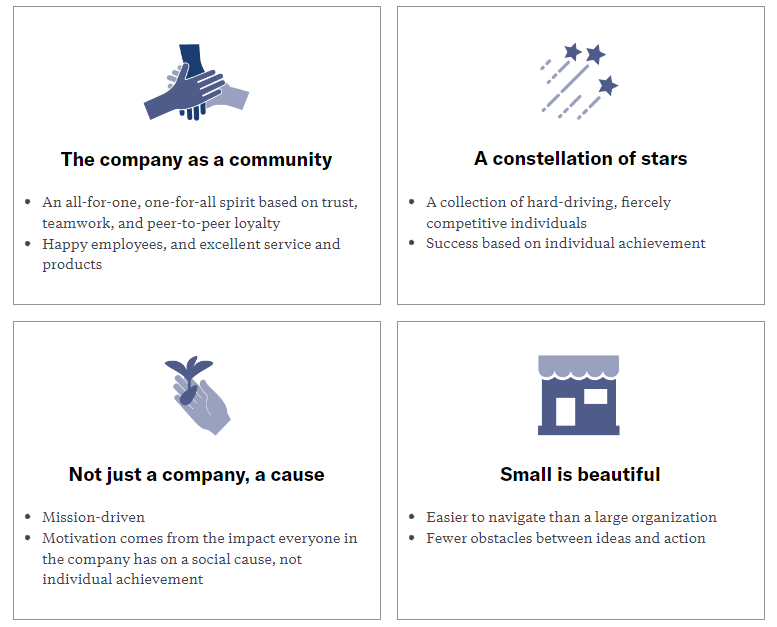
Workplace cultures differ in other ways as well. Even different departments within the same organization can have vastly different cultures. How would you rate your ideal organizational culture?
Make a Connection
As your career unfolds, your workplace preferences may change, too. You may start your career doing really well in a competitive “constellation of stars” organization. Later, you may find yourself more drawn to mission-driven assignments.
Understanding organizational cultural differences and how your personal preferences may change over time will help you make satisfying job choices.
第 6 节
-
When you truly know yourself, you can look for the opportunities, support, and rewards you need for a fulfilling career.
-
Examine your core interests to determine what excites you and keeps you engaged.
-
Look at what skills you have and what skills you want to develop.
-
Consider how your values impact the decisions you make at work.
-
Find the right workplace fit. The department you work in should match your workplace preferences.
第 7 节
Reflecting on your learning helps you apply relevant concepts to your job.