
Lead with Emotional Intelligence 查看中文版
第 1 节
To advance in your career and become a better leader—whether you head up a team or not—what do you think you need?
More experience? Greater technical knowledge? Coaching from your boss?
These are useful thoughts, but they don't provide the full picture.
Wait, leaders are judged on relationships, not results?
It turns out relationships and results are inextricably linked. Over the long term, leaders achieves positive outcomes by being someone whom others can trust to create smart plans and do the right thing.
What if I've witnessed the opposite?
There's a term for managing yourself and your interactions well: emotional intelligence.
In its simplest form, emotional intelligence is the ability to:
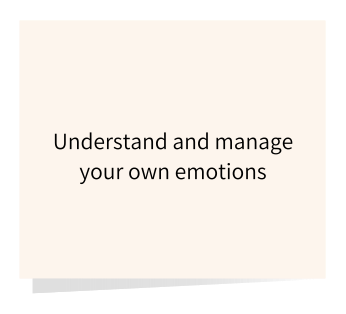
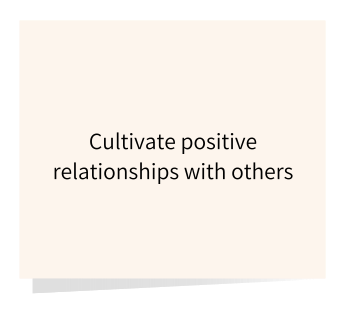
There are enormous benefits to leading this way.
Developing your emotional intelligence doesn't mean you have to change your personality. Think of it as a tool for being your best self.
When you lead with emotional intelligence, you'll take your team further—and help members reach individual and shared goals.
Let's explore how.
第 2 节
Emotional intelligence starts with managing yourself. When you're attuned to your own emotions—and you appropriately channel them—you're better able to be calm and receptive toward others.
Self-management is especially important for leaders, because you are responsible for making big decisions. And whether you know it or not, your team takes its emotional cues from you.
The first step toward managing yourself is noticing how your emotions influence how you think about and experience events.
Emotions are powerful because they're not just in the mind, but they're also physical experiences that affect every bodily system—heart rate, blood pressure, breathing patterns, digestion, vision, and more. Most critically for the workplace, emotion impacts how your brain functions.
When emotion soars up, the ability to think rationally drops down.
A leader’s mood is highly contagious to the rest of the group. In particular, a bad mood spreads fast.
第 3 节
How good are you at recognizing your emotions and managing their impact? Take this assessment to see:
Make a Connection
Emotions can cloud your judgment. For instance, knowing that excitement increases risk taking, casinos use sounds and lights to get patrons hyped up, so they spend more freely.
Each day, make a habit of tuning in to your thoughts, energy level, and mood—even if it means reflecting on an encounter that didn't go well.
Your goal isn't to be robotically calm at work. That's not realistic. Plus, emotions have real value in that they help you form genuine connections with others and enable you to make smart decisions that blend instinct and analysis.
You just don't want blind emotion driving your actions.
Make a Plan
答案与解析
A.Notice my physical reactions to stressful events
Physical reactions are your early warning signs for strong emotional responses. Label what's going on and the emotion it provokes. “My heart started pounding in response to Dave's comments. I'm getting defensive.” By labeling what’s happening, you're analyzing your response instead of lashing out.
B.Pause before responding
A pause gives you time to move out of “fight or flight” mode and reactivate the higher-reasoning part of your brain. Try focusing on your breath, taking a walk, or simply calling a time-out on an interaction: “This is a lot to process. Let's table this for now.”
C.Challenge automatic negative thoughts
A critical inner voice can cause you to take things overly personally, imagine worst-case scenarios, or cling to biased thinking. Challenge what your inner voice is saying by asking yourself, “What else could be true in this situation?”
D.Monitor my mood and energy level
You'll be most productive when you effectively gauge your energy. Tackle important work when you are feeling calm and focused. Avoid making tough decisions or judgment calls when your energy is low.
E.Actively manage my stress
Stress and lack of sleep reduce empathy, so prioritize self-care as a performance enhancer. * “The Neuroscience of Trust,” by Paul J. Zak. Harvard Business Review, January–February 2017.
Strategies to Bring Calm and Focus
Studies show people are more likely to act in a biased or unethical way when their energy levels are low. For more, visit the Harness Energy and Focus lesson within the Harvard ManageMentor Time Management topic.
第 4 节
When you tune in to your thoughts and feelings, you manage yourself better.
When you tune in to your team's perspectives and experiences, you manage your workplace relationships better.
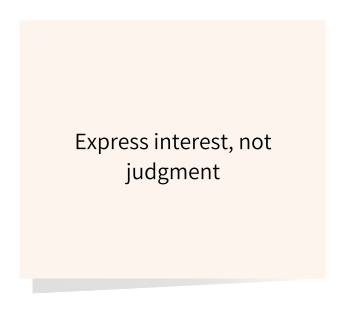
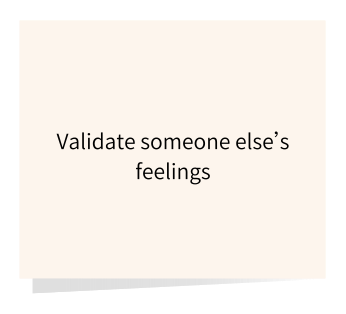
Why these two traits?
Curiosity allows you to learn from others. It signals humility and openness to your coworkers' ideas and experiences.
Empathy helps you understand others' feelings and what they need from you.
One skill—listening—allows you to show curiosity and build empathy.
Learn how effective listening works (hint: it's not simply paraphrasing what someone else says):
How else can you show curiosity and empathy?
Carol Kauffman, assistant professor of medicine at Harvard Medical School, offers this beautiful image of empathy in action: "Walk over the bridge to where the other person is, try to see the world from their point of view, and then help them see yours."
Make a Connection
第 5 节
As a leader, you'll juggle many different priorities at any given time. But to be trusted and effective, you need to harness your attention and focus on those around you.
During meetings—even when they are virtual—make sure your etiquette and body language shows "I'm fully here. You and this work matter to me." It's a sign of respect that boosts the group's productivity.
Here's how to be present:
A Bain & Co survey ranked the ability to be mindfully present with others as the most important skill for aspiring leaders.
第 6 节
When you're stressed or busy, you may feel you don't have time to check in with yourself or focus carefully on another person.
Emotional intelligence may be last thing that comes to mind in a tense situation. But that's exactly when you need it most.
If you've imagined what you'll do beforehand, you're more likely to successfully manage your emotions and relationships in delicate situations.
Here, nonprofit executive Bryan Simmons describes how to put emotional intelligence, or what he refers to as "active empathy," into action.
在工作中展现同理心 Put Empathy into Action
哈佛教授讲授视频逐字稿
Here's a menu of strategies for applying emotional intelligence:
- Notice my physical reactions, such as my heart rate increasing.
- Pause before responding.
- Challenge and shift automatic negative thoughts.
- Monitor my mood and energy level.
- See the world from the other person's point of view.
- Express interest, not judgment.
Try it Out
As you experiment, remember that your early attempts may feel clumsy or incomplete.That's okay. It's hard to change deeply ingrained habits, but with time you'll make progress!
Reflect on what worked and what didn't work. Observe others in your workplace who are skilled at staying calm and optimistic and who readily forge bonds with others—and adopt some of their strategies.
Finally, get some feedback. Share the goal you're working on with a trusted coworker.Explain why it's important to you and ask them to hold you accountable in a specific way. For example, "I'm trying to become a better listener; specifically, I'm trying not to jump in and give my opinion prematurely. If I do this in a meeting, please let me know by catching my eye."
Only by regularly experimenting and reflecting will you improve your skills.
Evaluate Your Emotional Intelligence Capabilities
- Successful leaders develop strong track records of managing themselves and their professional relationships well.
- Emotional intelligence helps you manage your own emotions and cultivate positive relationships.
- Strong emotions cloud thinking and judgment. You're mentally sharpest when you are calm, focused, and realistically optimistic.
- Manage your emotions by developing self-awareness and practicing good self-care.
- Use curiosity and empathy to create positive relationships with team members.
- Plan how you’ll put emotional intelligence into action when you know you'll face a challenging situation.
Take Action
第 7 节
Reflecting on your learning helps you apply relevant concepts to your job.