Pocket Leadership口袋领导力

Time Management

Defeat Distractions 查看中文版

第 1 节

Do you get distracted—a lot?

It’s natural, even healthy, to lose focus. Our minds wander to relax, process information, and dream. 

But constant distraction is another matter altogether.

So much is coming at us-more pixels and data than ever before-that we face a constant battle to focus.

Instead of occasionally wandering off task, our minds are yanked by competing bids for our attention. Emails. Alerts. News headlines. Questions and requests.

Even the chatter of coworkers in an open office can be maddeningly distracting.

All this makes it hard to get into a “flow state,” a calm and focused mindspace where we are highly productive.

Distraction depletes energy. The brain burns more glucose switching tasks versus staying focused.

Distraction depletes energy. The brain burns more glucose switching tasks versus staying focused. Distraction depletes energy. The brain burns more glucose switching tasks versus staying focused."Distractions Are Hunting You More Than You Realize: Here’s Why," by Jayson DeMers. Entrepreneur, June 14, 2018.

第 2 节

You won’t be able to eliminate distractions entirely, but you can reduce them.

Poll

Poll

Often, we aren’t aware of our biggest sources of distraction—and that’s why they consume so much time and energy.

Over the next couple of days, track what distracts you. Use these broad categories and put a check mark when you notice you’ve lost focus due to:

  • Digital devices
  • Coworker interruptions
  • Office noise
  • Frustration or worry
  • Other

At the end of two days, tally up your totals. Many people have an aha moment when they review their patterns.

Track Your Distractions

附件:track_your_distractions - en.docx(docx · 1129 KB,本地副本)

第 3 节

What’s in sight from where you’re sitting right now?

Make a Connection

Make a Connection

Did you select two or more things?

If so, those competing digital demands may have you operating in a mental fog.

To perform better, try a digital “de-clutter.”

Move your phone into a drawer or bag.

A Harvard study found that people who kept a phone nearby (even when it was off) performed worse on tasks than those who worked with the phone out of sight."Having Your Smartphone Nearby Takes a Toll on Your Thinking," by Kristen Duke, Adrian Wade, Ayelet Gneezy and Maarten Bos. Harvard Business Review, March 20, 2018. Move your phone into a drawer or bag.

Close extra browser tabs.

Our brains crave novelty and are pained by boredom, so those extra tabs are a huge temptation. Close extra browser tabs.

Turn off notifications.
Each new alert draws your attention away from work—affecting your focus and performance. Turn off notifications.

Every tiny action we do—sending a text message, returning an email—gives our brain a feel-good boost, making us addicted to achieving small, insignificant tasks. Hear how to avoid getting mired in details that derail your day.

避免陷入只干小事的“行动成瘾” Don’t Let Little Tasks Distract You from Big Ones

哈佛教授讲授视频逐字稿
In our research of 35,000 leaders, we found that there was one thing that is really compromising productivity for many people. We call it action addiction, meaning we are addicted to doing stuff. The reason for that is that we are living in a very fast paced world. And our brain has gotten used to getting dopamine releases constantly by every little action we do, whether we return an email, whether we send a text message, whether we take something off from a little checklist. And dopamine gives us a sense of gratification, gives us a sense of ease, and it is heavily, heavily addictive. So when we have done something, accomplished something once, we want to have more of that. And this makes us do a lot of small insignificant actions, like responding to emails that we don't need to. So we are basically becoming addicts of doing small, insignificant actions rather than moving the big rocks, focusing on the things that is really going to make us move forward and help the organization we work for. The problem that many of us face is that we get so many emails, and the first thing we do in the morning is check our emails. And immediately, our mind is catapulted into detail after detail and that just takes the entire day away. So to avoid action addiction, take a few moments at the beginning of the day to really set your goals and then get started. Good luck with it.

第 4 节

TimeManagement_LessonBubbes_Infographic

〔图表类内容,图片原件见线上原文〕

Sound familiar?

Whether they come via instant message or desk-side visit, coworker interruptions are really common.

They’re not necessarily bad. Camaraderie and collaboration are vital for organizations.

But when interrupting becomes incessant, there’s a real cost to the culture. Stress rises and productivity declines. People may end up coming in early or staying late just to get work done.

Most people don’t realize how time-consuming interruptions actually are.

The average worker is interrupted 50 to 60 times daily, mostly for low-value matters.

The average worker is interrupted 50 to 60 times daily, mostly for low-value matters. The average worker is interrupted 50 to 60 times daily, mostly for low-value matters."10 Quick Tips for Avoiding Distractions at Work,"by Steve Glaveski. Harvard Business Review, December 18, 2019.

Take a Moment

1. When people are interrupted, how long do you think it takes them on average to refocus on the original task?
答案与解析

5 minutes
No way! It’s much longer.

13 minutes
Wishful thinking!

25 minutes(正确)
Correct! That “quick question” consumes nearly a half hour!

60 minutes
Thankfully, interruptions don’t drain this much time.

Don’t let minor requests consume your time.

Here are three strategies to reduce interruptions:

Set expectations. Let people know your availability in advance: “I’m on deadline until noon. Message me any questions and I will be back online after lunch to follow up.” Manage location. Make yourself scarce by reserving a conference room or relocating away from your team. If you can’t relocate, use a “Do not disturb” sign, put on headphones, or position yourself with your back to the flow of office traffic. Don’t reward the behavior. If you immediately resolve the issue, you’ll just perpetuate interruptions. Respond briefly, such as: “Thank you—please put it on the team task board” or “Happy to chat after I’m off deadline. I’ll message you.”

Have to pause what you’re doing?

Take a moment to highlight where you left off or use a sticky note to indicate what comes next—e.g., “Check column G.”

Research shows that leaving yourself a reminder will help you restart up to 80% faster when you do return to your task.“How to Prevent Interruptions at Work,” by Brianna Steinhillber. NBC News, May 5, 2017.

Be sensitive to others. Bundle questions and requests, and look for opportunities to speak when coworkers are between tasks.

第 5 节

Conversations, buzzing phones, the whir of a microwave, the tapping of someone’s keyboard.

Poll

Poll

As open-plan offices have become increasingly common, distraction has risen.

About a third of workers say noisy, open offices make it hard to be productive.“Open-Plan Work Spaces Lower Productivity And Employee Morale,” by Jia Wertz. Forbes, June 30, 2019.

Sound has a profound impact on concentration. Erratic sounds—such as personal conversations or a sudden loud ringtone—can rupture focus. In contrast, soothing sounds can actually deepen concentration.

Sounds that soothe

White noise Natural ambiance—surf, wind, birdsong Instrumental music Sounds that soothe

Tracks that distract

Music with lyrics Podcasts Radio stations Tracks that distract

People who work while listening to music with lyrics recall less of what they read and are slower to learn a new skill.

People who work while listening to music with lyrics recall less of what they read and are slower to learn a new skill. People who work while listening to music with lyrics recall less of what they read and are slower to learn a new skill."What Listening to Music at Work Does to Your Brain, by Tom Popomaronis. Inc, July 20, 2016.

Go wordless. Even if it feels like you’re barely listening, you’re using some auditory processing power to monitor words—which leaves less bandwidth for your primary task.

To make your office “neighborhood” a place where people can focus, make some etiquette agreements among coworkers who sit near you.

  • Keep phones on vibrate.
  • Take personal conversations to a public area.
  • Eat lunch away from your desk.

第 6 节

Frustration and worry can also be highly distracting. It’s difficult to get work done when you’re mentally replaying a disagreement or fretting about an upcoming meeting.

Not only that, worry and frustration can cloud judgment and increase errors.

Instead, pause to:
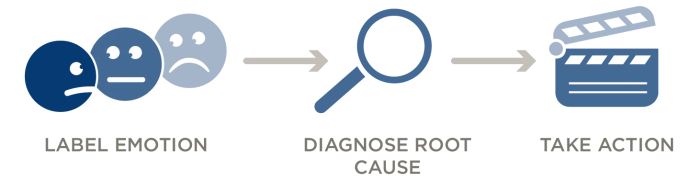
  • Label the emotion. (“I’m anxious.”)
  • Diagnose the root cause. (“I’m worried about my leverage in this negotiation.”)
  • Take action. (“I’ll check whether there is flexibility in our budget.”)

Often, we just try to force anxious thoughts out of our head. But rather than going away, the negative thoughts end up looping in our mind.

By pausing to get into a better frame of mind, you’re investing your time wisely.

Poll

Poll

第 7 节

With distraction, you’re pulled away from what you intend to do. With procrastination, you are actively avoiding what you believe you should do. Everyone procrastinates at some point.

Often, procrastination is the surface symptom of a bigger challenge, so look for the root cause and then decide how to proceed.

Here are three simple strategies to help you start (and finish) that task on your list you just can’t seem to get around to:

如何战胜拖延症? Tackle the Task You’ve Been Avoiding

哈佛教授讲授视频逐字稿
I have this list that I make every single week. So I need to do these 10 things this week. And then I, every day, I have a list of five things I need to get done this day. And what I will find is that pretty much, every day, I get most of them done. But sometimes, there is this one task that's at the top of my list. And I didn't do it today. And I don't do it tomorrow. And I don't do it the next day. And I've wondered, like why am I not doing that one task? Why am I avoiding it? Well here are three things that I've learned. Sometimes, we put things on lists. And it seems like the right thing to do, or we think it's a high priority. But when we really start to evaluate it, it's not actually that important. It doesn't fit within what needs to actually get done today or next week or in the next couple of weeks. And so it may be that you just need to take it off the list, because it's not a high priority. So the second thing we found is, in the research from Timothy Pychylis that sometimes people avoid tasks because the task is somehow disconnected from the why. There is not a good sense of like, "why are we doing this?" You can have a conversation with your manager and say, "OK. I'm struggling here. I know you said it's important. I know we need to get this done. But can you help me think through this just a little bit? Why is this important for me to do it? Why is it important for our team to do it? Why is it important for our company to do that?" And when you can tie the why to the task, oftentimes you'll be able to say, OK, I got it. I can get this done. And then the third thing that I do is, sometimes, for me, and this may be true for you is, I have so much on my plate. When I think about what I have to get done next week, or even tomorrow, or even in the four hours sometimes, I'm like, "I can't do it. I can't do it." So I get completely paralyzed. But if all shrink the time frame to, what do I need to get done in the next half an hour? The next 10 minutes? The next five minutes? And when I'm feeling really overwhelmed, the next 30 seconds? Then I can start to move forward. So you expand time by shrinking the time frame. So try those three tacks. They've certainly helped me. And I think they'll help you to move forward on that task that you know you need to do, but you haven't quite gotten to yet.

Make a Plan

1. Identify a task that you know you've been putting off. How could you use the tips suggested in the video to help you get started?

第 9 节

Test your understanding and reinforce what you’ve learned.

Try it Out

1. 1. You’ve got an important report to finish, but are feeling distracted by everything else you need to do. What might help you focus?
答案与解析

Put aside your emotions and sternly remind yourself the deadline is approaching.
Repressing strong emotions can linger as distraction. It’s better to label the emotion, figure out the root cause, and reduce stress.

Look around your workspace and do a “digital declutter.”(正确)
By closing unnecessary web pages, silencing alerts, and stowing your phone away, you’re eliminating interruptions and increasing focus.

Put your headphones on and listen to a favorite podcast.
To focus, choose instrumental music rather than podcasts. Words consume auditory processing power, leaving less bandwidth for your task.

Try it Out

1. 2. You have a coworker who is constantly popping over to your desk with comments and “quick questions.” You find yourself staying late in order to meet deadlines. What’s a good way to improve the situation?
答案与解析

Set expectations about when you can respond to questions, manage your location, and don’t reward interruptions.(正确)
These strategies manage interruptions and create a better culture for focus.

Resolve your coworker’s questions immediately and briefly so that the interruption takes as little time as possible.
Responding immediately rewards the behavior, perpetuating interruptions.

Accept that offices are communal workspaces and catch up on lost time by working through lunch.
Take action to set boundaries and expectations about focus time.

第 10 节

Reflecting on your learning helps you apply relevant concepts to your job.

Take a Moment

1. 1. What new insights do you have that could benefit you or others in your workplace?
2. 2. What are your biggest opportunities for applying concepts from this Lesson in your workplace?

Further reading

基于数据的方法进行委派
委派是管理中极为普遍的难题。许多管理者都清楚自己需要把部分任务交给他人来做,但往往难以准确识别哪些事务真正值得放手。通过…
来自李嘉图的启发:CEO 应以“比较优势”筛选任务
公司可以通过扩大产能来满足日益增长的需求,领导者却不同,他们受自然法则的约束:俗话说,一天只有 24 小时。许多人以为,…
少即是多,去除公司的“加法病”
1940 年 8 月,当英国准备迎接德军一波又一波的空袭时,英国首相温斯顿·丘吉尔也开始迎接另一个敌人:冗长的报告。在长…

Top 3 in the source platform's original order