
Foster Integrity 查看中文版
第 1 节
Who's responsible for ensuring ethical behavior in an organization? This task used to fall mainly to a company's human resources department, general counsel's office, and senior management. Not anymore.
Thanks to the major misdeeds and lapses in good judgment that have rocked the business world over the years, business ethics is now a primary responsibility of frontline managers.McNulty, Eric. “On the Front Lines: Managers, Ethics, and Compliance.” Harvard Management Update Aug. 2004.
In Harvard Business School's MBA program, for example, ethics is taught as one of three core responsibilities of all managers.
Specifically, every manager is responsible for:
-
Ethics—setting an example of moral values and standards of conduct
-
Economics—wealth creation and resource allocation
-
The law—adherence to governmental rules and regulations Harvard Business School. Leadership and Corporate Accountability (LCA), course overview July 2009.
By embracing ethical responsibilities in addition to economic and legal duties, you help your company reap the benefits that come with being ethical—including higher workforce morale, greater customer satisfaction, and stronger financial performance.
第 2 节
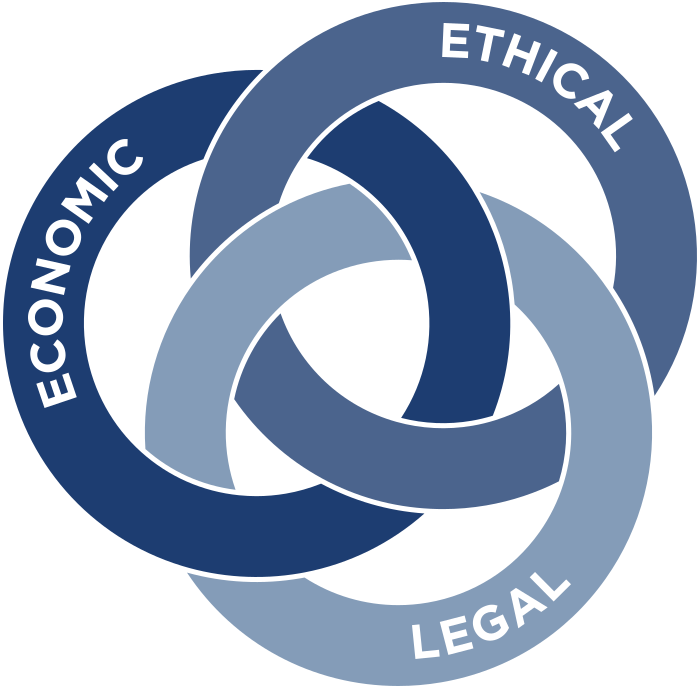
Your ethical, economic, and legal responsibilities as a manager are intertwined—not mutually exclusive. That's because:Harvard Business School. Leadership and Corporate Accountability (LCA), course overview. July 2009.
-
Many economic and ethical responsibilities have been written into law.
-
Responsibilities to create wealth and obey the law rest on an ethical foundation.
-
As society's ethical standards evolve, the law itself often changes in response.
As you fulfill your economic and legal responsibilities, remember to uphold your ethical responsibilities as well.
Influencing the 60 percent
第 3 节
When direct reports or suppliers come to you with tough questions, you may be tempted to simply refer them to local laws or to your organization's compliance program. By obeying laws and compliance codes, everyone can be sure they're acting ethically, right? Not necessarily.
While compliance programs are important, they have limitations. For example:Paine, Lynn Sharp. “Managing for Organizational Integrity.” Harvard Business Review Mar.–Apr. 1994.
- Conduct that's lawful may not be ethical. In some countries, it's legal to sell hazardous products without appropriate warnings, sell goods from suppliers who operate sweatshops, and offer bribes while doing business.
- Compliance programs don't inspire good behavior. Such programs tend to overemphasize the threat of detection and punishment, rather than rewarding exemplary behavior. Employees view them as unwelcome constraints and may rebel against them.
- Compliance programs emphasize the importance of obeying laws. But being truly ethical requires more than just following laws. It requires understanding the impact of our decisions and actions on others.
Ethics online: The court of public opinion
第 4 节
To establish an ethical culture, go beyond a compliance program. Ethics come alive when they're discussed, debated, and celebrated—not shelved in a code of conduct.
Make ethics part of your team's conversations. For example:
-
Create a team mission or values statement. Get input from all members to help define the good work you'd like to achieve.Kusyk, Sophia. “Learning to Navigate the Rough Seas of Ethics,” IESE Insight 5 June 2010.
-
Highlight positive values and praise ethical decisions—in speeches, training efforts, and routine meetings. Constantly look for new examples.Schwartz, Mark S. “Developing and Sustaining an Ethical Corporate Culture: The Core Elements.” Business Horizons 56 2012: 39-50.
-
Encourage dialogue and advice seeking. Ask direct reports about ethical challenges and, when possible, share your own dilemmas.
-
Reinforce the message—that how goals are met is as important as what goals are met.
-
Conduct surveys of customers and partners—to find out how they're being treated. Share the feedback with the team.Schwartz, Mark S. “Developing and Sustaining an Ethical Corporate Culture: The Core Elements.” Business Horizons 56 2012: 39-50
打造有意义的组织 Design an Organization That Makes a Difference
哈佛教授讲授视频逐字稿
第 5 节
As a manager, you serve as a powerful role model for your team; your employees take their cues from you. Lead by example and behave ethically in all you do.
Accordingly: Paine, Lynn Sharp. “Managing for Organizational Integrity.”Harvard Business ReviewMar.–Apr. 1994. Piper, Thomas. “Restoring Trust in Corporate Practices.”Harvard Management Update September 2002.
-
Be consistent. Ensure that you uphold the values you espouse.
-
Be honest. Even small things—such as a well-intentioned and trivial falsehood—set a tone.
-
Assume responsibility for the tough calls—when ethical obligations conflict. And regularly scrutinize your own decisions for bias.
-
Demonstrate transparency and genuine concern for all your company's constituencies—investors, customers, employees, suppliers, the community—rather than making maximizing shareholder wealth the primary goal.
用价值观指导决策 Use Values in Decision Making
哈佛教授讲授视频逐字稿
Tips for addressing ethical challenges
Make a Plan
第 6 节
Honesty is critical. In workplaces where there is candor, people are more likely to discuss and embrace ethical behavior.
To encourage openness in your team: O’Toole, James and Warren Bennis. “What’s Needed Next: A Culture of Candor.” Harvard Business Review June 2009.
-
Share information—unless there's a clear reason not to.
-
Tell the truth. You'll develop a reputation for honesty, and others will return the favor.
-
Make it safe for people to tell you difficult truths. Other employees often have access to information that you don't. Let them know you want them to tell you unpalatable truths about what they see in the workplace or with suppliers or customers.
-
Diversify your information sources. Communicate regularly with different groups of employees, customers, and competitors. You'll develop a broader understanding of ethical challenges—and opportunities—for your organization.
-
Hire people for candor. Look for job candidates who fostered openness in their previous organization. They'll be valuable assets to your team.
承担错误展现领导力 Own Your Mistakes
哈佛教授讲授视频逐字稿
In this activity, practice what you've learned by choosing the best tactic for promoting a team’s ethical behavior.
Try it Out
答案与解析
Charlotte should ensure the team’s reward and recognition system promotes the organization’s long-term health alongside ethical behavior.(正确)
Rewards and incentives can certainly encourage achievement among team members, but they also have the potential to backfire. For example, rewards that are tied solely to short-term deadlines may inadvertently encourage unethical behavior. Here, Charlotte is making the right decision by recognizing her team for actions taken that contribute to the company’s long-term health rather than just short-term gains.
Charlotte needs to clearly define standards that specify unacceptable behaviors. She should then ensure these standards remain consistent throughout her tenure with the team.
While clarifying unacceptable behavior will help the team embrace ethical behavior, the standards Charlotte sets should evolve over time as new situations dictate. Ethical behavior must be flexible for it to suit a variety of needs and situations.
Charlotte should remind her team during routine meetings to make the concerns and goals of the company’s shareholders their highest priority.
While Charlotte’s team should take shareholders’ concerns into account, she should also encourage her team to consider all those impacted by their decisions—investors, customers, employees, suppliers, the community.
答案与解析
Make candor an important criterion when recruiting new team members.(正确)
Charlotte should look for job candidates who practiced openness in their previous organization. They’ll be valuable assets to her team. In workplaces where there is candor, people are more likely to discuss and embrace ethical behavior.
During an upcoming all-team meeting, Charlotte should encourage individual team members to share what they see in the organization that may be viewed as unethical.
While Charlotte should encourage her team members to be transparent regarding what they see in the workplace, she needs to provide a safe space for them to do so. Large meetings may not be the most appropriate place for her team to share hard truths.
Introduce a team policy to share all information with everyone all of the time.
While encouraging people to share information will promote a more open and honest team environment, Charlotte should realize that there still might be good reasons why some information should not be shared with everyone. Rather, she should encourage her team to share information unless there’s a clear reason not to.
答案与解析
For the sake of transparency, Charlotte should confront Ethan as soon as possible by asking why he is disregarding regulations.
Rather than accusing Ethan, Charlotte should instead demonstrate she is simply trying to ascertain all the facts. To do this, she should speak in a calm and level manner, providing Ethan with the benefit of the doubt and allowing him to explain the situation from his point of view.
Charlotte should start monitoring Ethan to see if he engages in any unethical behavior.
Charlotte shouldn’t wait for egregious behavior to occur. If she has the opportunity to act, she should have a conversation about the situation with everyone involved.
Charlotte should try to carefully verify the facts in the case with others before acting.(正确)
In any conflict, the first course of action should be to obtain as much information as possible. While she believes Ibrahim, perceptions vary drastically from individual to individual. By acting rashly, Charlotte risks misinterpreting Ethan’s intentions. She should first ensure Ibrahim’s perceptions are correct by discreetly verifying his story with other employees.
第 7 节
Reward systems can encourage great achievement—but they can also backfire. For example, rewards that are tied only to short-term productivity may inadvertently encourage unethical behavior.
Foster Integrity
Create a Balanced Rewards System
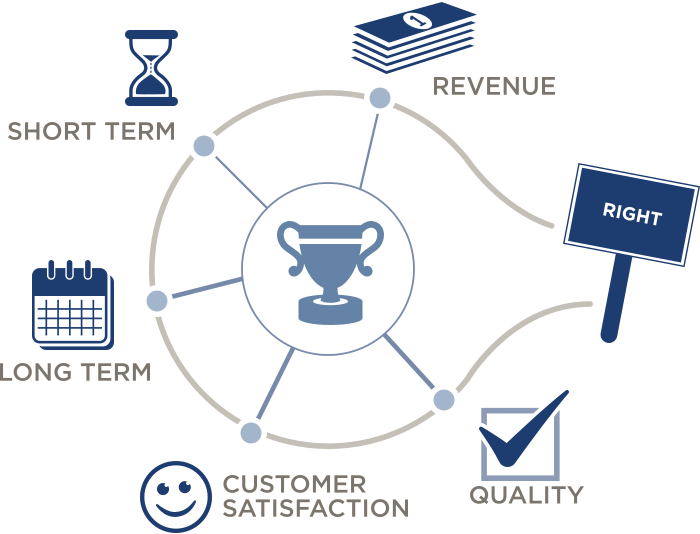
Make sure your reward systems:
-
Acknowledge good work in multiple areas—revenue production, accuracy, and customer satisfaction.
-
Recognize actions taken for the company's long-term health, not just short-term gains.
第 8 节
Here are a few more ways to discourage unethical behavior in your organization:O’Toole, James and Warren Bennis. “What’s Needed Next: A Culture of Candor.” Harvard Business Review June 2009.Gellerman, Saul W. “Why ‘Good’ Managers Make Bad Ethical Choices.” Harvard Business Review July–Aug. 1986.
-
Clearly define proscribed behaviors. Specify what's unacceptable. Keep the standards up-to-date as your team faces new situations.
-
Conduct audits. Periodically check your employees' work to detect wrongdoing. Do this on an unscheduled, unannounced basis. When employees know you're keeping track, they're less likely to engage in misconduct.
-
Address obvious ethical missteps immediately. By setting a "no tolerance" policy, you'll prevent the behavior from becoming widespread.
Tips for confronting unethical behavior
Take Action
第 9 节
Test your understanding and reinforce what you’ve learned.
Try it Out
答案与解析
Keep your legal and ethical responsibilities separate.
Your ethical, economic, and legal responsibilities as a manager are intertwined—not mutually exclusive.
Put your trust in compliance programs to keep you on a solid ethical footing.
While compliance programs are important, they have limitations. You must have your own ethical principles.
You are responsible for upholding the firm’s ethics, economics, and adherence to regulations.(正确)
Business ethics is a primary responsibility of frontline managers. Every manager is responsible for ethics, economics, and adherence to governmental rules and regulations within an organization.
Keep discussions about ethics to a minimum to avoid making your team uncomfortable.
Make ethics part of your team’s conversations. Highlight positive values and praise ethical decisions in speeches, training efforts, and routine meetings. Encourage dialogue by asking direct reports about ethical challenges and, when possible, sharing your own dilemmas.
第 10 节
Reflecting on your learning helps you apply relevant concepts to your job.