
Manage Project Risks 查看中文版
第 1 节
Every project comes with risks. A service provider to whom you've outsourced an important task falls a month behind schedule. A key member of your project team is suddenly called away for several weeks to deal with a family medical crisis. A piece of equipment you need to purchase for the project turns out not to be available or costs far more than you expected.
Given the wide array of risks that can derail a project, you need to practice risk management: identifying key risks and developing plans for preventing them or mitigating their adverse effects. Risk management consists of three steps:
-
Conduct a risk audit.
-
Take action to avoid or minimize risks you've identified.
-
Develop contingency plans.
Managing project risks is something you start doing during the buildup phase of the project management process. But it continues during the implementation phase. For example, you may need to put a contingency plan into effect if a risk that you anticipated does arise.
Manage Project Risks
第 2 节
To conduct a risk audit, take stock of all the things that could go wrong with your project:
-
Collect ideas widely. People's perspectives about risk differ greatly. Some foresee perils that others miss entirely. So talk with project team members, customers, or suppliers to get a complete picture of risks to your project.For instance, a supplier tells you that a rival company is working on a product for the same market that your team is working on. Even more worrisome, the competitor's product development team is much further along than yours.
-
Identify internal risks. Understaffing is a common source of risk. One key resignation could cause an important project to collapse. Poorly trained quality assurance personnel represent another source of internal risk. Their substandard work may allow defective or dangerous products to reach customers. That could result in a costly product recall, lawsuits, and a public relations fiasco.
-
Identify external risks. An external risk may take the form of an emerging technology that will render your new product line obsolete. An impending regulatory change may also pose a threat.
Pay particular attention to problems that have the greatest potential to harm your project. Depending on the project, these might include health and environmental issues, technical breakdowns, economic and market volatility, and relationships with customers and suppliers.
Then identify which of these things are most likely to surface.
Risks that would do the most harm and are the most likely to surface are the ones you most need to avoid or minimize.
Try it Out
Make a Connection
第 3 节
Identify Most Harmful and Most Likely Risks
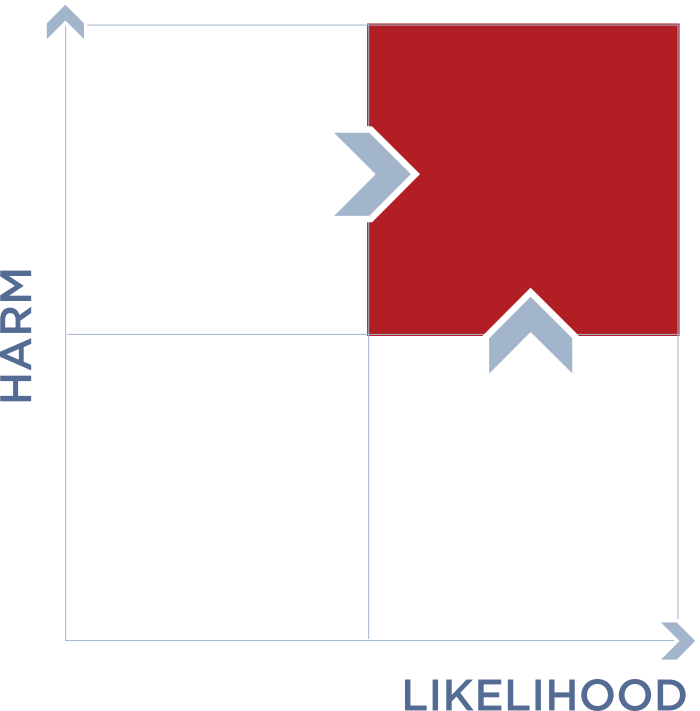
Look at the risks that represent the worst things that could go wrong for your project and that are most likely to occur. For any such risks that you’re not prepared to confront, alter your project's scope to avoid them.
Manage Project Risks
With other risks, you may take steps to prevent them from escalating into full-blown crises.
Manage Project Risks
第 4 节
Develop contingency plans for unavoidable and uncontrollable risks. A contingency plan is a course of action you prepare in advance to deal with a potential problem. It answers this question: "If _____ happens, how could we respond in a way that would neutralize or minimize the damage?"
Manage Project Risks
A good contingency plan prepares your project and organization to deal quickly and effectively with adverse situations. When disaster strikes, you and your project team can take immediate action. You don't have to spend weeks trying to figure out what you should do or how you'll find the resources to deal with the situation.
Poll
Make a Connection
第 5 节
Test your understanding and reinforce what you’ve learned.
Try it Out
答案与解析
Develop contingency plans.
Andre would not develop contingency plans before conducting a risk audit to identify and minimize risks.
Practice risk management.
Practicing risk management starts with conducting a risk audit.
Alter the project scope to avoid the most harmful risk.
Andre would not alter the project scope without evaluating risks through a risk audit.
Conduct a risk audit.(正确)
The first step in managing risk is conducting a risk audit, which involves identifying internal and external risks.
第 6 节
Reflecting on your learning helps you apply relevant concepts to your job.