Pocket Leadership口袋领导力

Project Management

Establish Project Scope 查看中文版

第 1 节

To define the problem your project needs to solve, ask questions that uncover the practical and business issues the project will tackle. Once you've defined the problem, don't grab for the most obvious solutions; brainstorm alternative solutions.

Avoid rushing into solutions
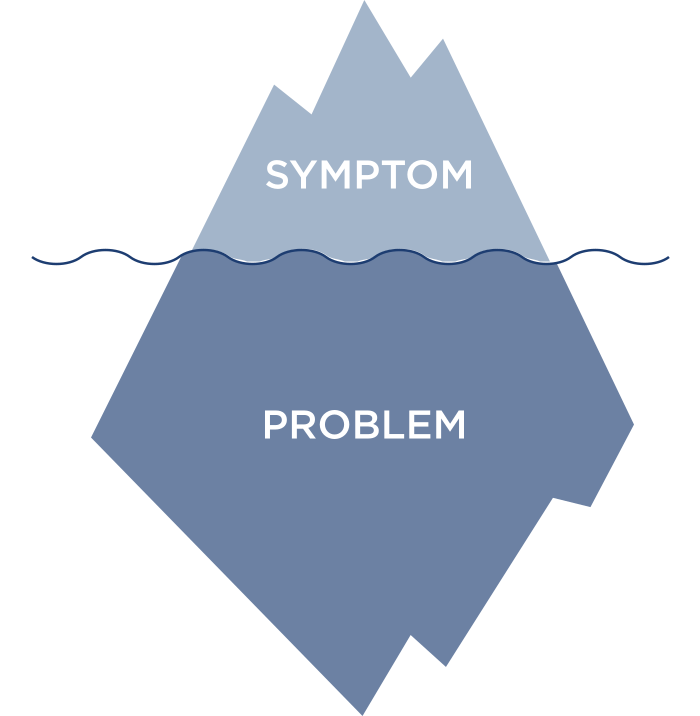
The problem that your project is supposed to solve may not be obvious. To correctly define the problem, resist any temptation to leap at a definition too quickly. For instance, suppose you're an IT manager and several people in your department have asked for a new database and data-entry system. You informally ask them: "Why do we need a new system?" The answers you receive include: "We can't get the data out fast enough" and "I have to sift through four different reports to update my clients' recent activity."

These responses describe symptoms—not underlying problems. Ask more probing questions, such as "What type of data do you need?" "How are you using the data now?" and "How quickly do you need to retrieve the data?"

If you don’t know the answers to such questions, you could waste time and money designing a system that doesn’t address your group’s fundamental concerns.

Worksheet for Clarifying Project Scope

附件:worksheet_for_clarifying_project_scope(docx · 1105 KB,本地副本)

Brainstorm alternatives  

Once you pinpoint the business need for the project under consideration, develop options for addressing that need. Brainstorm alternatives with others. Ask open-ended questions that encourage exploration of new ideas, such as:

  • How many different ways can we solve this problem?

  • Of the available alternatives, which will best solve the problem? Why?

  • Is the seemingly best alternative more or less costly than other suitable choices?

  • Will this alternative result in a complete fix of the problem, or a partial fix? If a partial fix, what other options do we have for completely fixing the problem?

Evaluate your responses. Then select the best alternative.

倾听客户真正的需求 listen for your clients real needs

哈佛教授讲授视频逐字稿
Earlier in my career, I learned a great lesson about listening to clients. Back then, I was working on educational products. I had direct reports. I had a creative staff that would develop these products. And we had a wonderful opportunity. The U.S. Army Heritage Center came to us, and that U.S. Army Heritage Center is basically a museum for the Army. They have thousands upon thousands of artifacts. They have collections that represent different periods in history, and they would take a cut of those collections and tell a story about a particular event. They came to us wanting to tell about the Army Nurse Corps in World War I. The story they wanted to tell this time was about the Army Nurse Corps during World War I. These were about 10,000 women that were deployed from New York harbor to the front lines of Europe. In fact, they were so close to the front that they had to keep gas masks on their bedposts. Now prior to this, they had been developing the kind of multimedia, museum-kiosk interaction pieces that I think a lot of us have seen. And the truth be told, as I began to question them, they weren't altogether happy with them. They didn't perform altogether well. And the other problem was, they were trying to shoehorn content into those pieces that didn't quite work. And then, finally, the light bulb went off over my head. I was thinking, "They're trying to be a movie sometimes, and they're trying to be a book at other times." So I told them, "Listen, why don't we just do a book, and we'll do a documentary movie." And after a little more discussion, they agreed. Now the catch was, none of us had done anything on that scale before. I had been through the essential process of creating video-type presentations, but I hadn't done a feature before. They hadn't. My company hadn't. But because we arrived at the right solution, it gave us the confidence that, even though there were some risks, this was the path that we should all go down, and we all went down it together. And the outcome was wonderful for them. They really fulfilled their mission in an effective way. Instead of just having these stories contained on interactive discs, we actually got it aired on some regional PBS stations to a potential audience of millions. And it really extended their reach in an amazing way beyond their expectations. So again, this was a process of listening deeply, not getting carried away with what a customer thinks they want, and getting down to the actual need and pairing it up with a solution that really works.

Take a Moment

1. Think about a project for which you had to establish the scope. What questions did you ask to help you define the problem?

第 2 节

After you identify your project's stakeholders, ask them to spell out what success on the project means for them. Stakeholders' interests vary, so their definitions of success will likely differ. It's your job to meld stakeholders' expectations into a coherent set of project objectives.

A project stakeholder is: anyone who has a vested interest in the outcome of your project.

Your stakeholders might include:

  • The project sponsor—the individual who has authorized the project

  • Contributors, customers, managers, and financial staff—the people who will judge the success or failure of your project

  • Anyone affected by the project's activities or outcomes—including individuals who may have to do their work differently because of the project

  • People who contribute resources to the project—such as space, staff members, time, tools, equipment, and money

What project sponsors do

The project sponsor is a key stakeholder for any project. He or she is often a manager or executive who has major accountability for the project's performance. The sponsor: Authorizes the project Champions the project Ensures that senior management supports the project team's decisions and direction Has the authority to define the scope of the work Provides the project team with necessary resources Approves or rejects the project's final deliverables Makes certain that the project's progress is communicated to the rest of the organization, especially to leadership Eliminates organizational obstructions Watches for any changes in organizational objectives that may affect the project's objectives Helps managers resolve any difficulties regarding their direct reports' splitting time between project duties and regular assignments What project sponsors do

第 3 节

Successful projects meet their objectives. So state your project's objectives clearly and ensure that they reflect stakeholders' needs. That way, when the project is complete, your stakeholders will be more likely to agree that you've met the objectives.

For example, suppose that one of your organization's strategic objectives is to develop more innovative products and services. In this case, projects with objectives such as analyzing consumers' preferences, developing ideas for a new offering, and creating new kinds of marketing campaigns could all align with that organizational objective.

But remember: Many aspects of your project remain fluid, especially during planning and early stages of implementation. Be prepared to refine your project objectives as conditions change.

Tips for defining SMART objectives

When defining your project objectives, think SMART. Each objective should be: Specific. Clearly defines the details of what is to be accomplished. Measurable. Gauges success using either quantitative or qualitative assessments. Action-oriented. Identifies concrete behaviors or processes. Realistic. Can be achieved given existing constraints, such as time and resources. Time-limited. Is accomplished within a specific time frame. Tips for defining SMART objectives

Establish Project Scope

A task force within an HR department has been charged with developing a new health care benefits plan. The task force develops the following SMART objective: "To survey (action-oriented) at least six providers (specific) who meet the department's minimum threshold criteria for service quality (measurable) and to recommend (action-oriented) at the June board of directors' meeting (time-limited) the three providers (specific) that offer the best and broadest coverage at a cost that is at least 10% less (realistic) than the company's current per-employee contribution (measurable)." Establish Project Scope

Poll

Poll

第 4 节

To anticipate trade-offs, you need to understand your stakeholders' conflicting demands, master the communication skills essential for resolving questions about trade-offs, and strategically manage "scope creep."

Every project has three competing demands:

  • Quality—satisfaction of the project's requirements

  • Time—amount of time needed to produce the project's deliverables

  • Cost—how much money, people, and other resources needed to complete the project

Change any one of these variables, and you change the other two as well.

Establish Project Scope

Your manager insists that you complete a database project in half the time that you originally estimated. If you try to do this, one of two things may happen: Your costs will go up, because you'll need to employ more people to get the job done faster. Or the quality of the final product will go down: You'll have more problems than originally planned because you didn't allow enough time or personnel to assess the completed database's functionality. Establish Project Scope

Communication tactics

Deciding whether and how to make trade-offs between quality, time, and cost is a major aspect of project management. To manage trade-offs, use these communication tactics:

  • Keep all stakeholders informed of any changes in your project's objectives

  • Find out which of the three variables matters most to each stakeholder

  • Explain the consequences of any changes in terms of quality, time, and cost

  • Ask stakeholders to clarify what they’re willing to give up if they want you to do something that will affect the project’s quality, time, or cost

"Scope creep"

With "scope creep," stakeholders pressure a project manager to do more than the project plan originally called for. As you discuss your project with stakeholders, they may start defining "project success" in ever-expanding terms. And they might start identifying more and more problems that they believe the project should solve. Suddenly, your list of objectives for the project has grown to alarming proportions.

案例

You're managing a project aimed at improving an inefficient exhaust system during construction of a new automobile model. The manager in charge of the car's lighting fixtures asks you to develop sturdier headlights and more colorful dashboard lighting "while you're at it."

To avoid getting caught up in scope creep, resist the urge to solve everyone's problems with your project. Even legitimate or urgent problems don't belong in your list of project objectives if they lie outside the project's scope. If stakeholders demand that you add new objectives to your project’s scope, explain the impact on quality, time, and cost.

如何管理范围潜变? how to manage scope creep

哈佛教授讲授视频逐字稿
You routinely see scope creep in projects of all sizes in every industry and sector. Various stakeholders ask the team to produce more and more as work progresses, without understanding the collective effect on the project schedule or budget. As a certified project management professional, consultant, and teacher with 30 years' experience doing this work in all sectors, I can tell you that scope creep is all too common. And if left unmanaged, it will cause your project to fail. You'll risk going over budget, missing key deadlines, and delivering low-quality outcomes, like a bug-ridden IT system or a faulty product. To avoid this, you need to get agreement on scope before launching your project. I've used two techniques to do this. If your stakeholders are clear about your project's goals, you can work with them to list what's in scope and what's not. You do this up front. What's in scope are the things required to achieve your project goal. Things are out of scope if they're not directly supporting the project goal, or if there's not enough time or money to accomplish them. Let's say you're developing a marketing campaign for a new product. Creating printed collateral material to use during a customer visit is in scope, but getting the materials translated into different languages may not be. Perhaps it's something your local sales teams can handle. Or, if you decide it's in scope, be as specific as possible about those requirements. How many and which languages do you need? It may take some back-and-forth to agree on both lists, but work to finalize them before you start, and then put them into the project charter. When stakeholders aren't certain about your project goal, you should turn to the second technique—establishing scope-tolerance parameters or ranges for your general requirements. Suppose you're responsible for the installation of a new IT system. You might define a range for the number of people you need to serve at one time, or a range for desired response times. Launch the project with the ranges, but at predetermined milestones—like prototype testing or code freeze—meet with your stakeholders to review the ranges. Then, use what you and your stakeholders have learned so far to define more specific targets within the range. This technique lets everyone get familiar with the project's opportunities and challenges before setting goals in stone. These systems—creating in-scope, out-of-scope lists or setting ranges for your requirements—take some time and effort up front, but they pay big dividends by boosting the chances that your project will succeed on every critical front: cost, schedule, and quality.

In this activity, pick the strategy that will help balance time, cost, and quality.

Try it Out

1. Which of the following strategies is more likely to help you meet your deadline with the least negative impact on quality or cost?
答案与解析

A. Get the project out the door faster by encouraging the team to work paid overtime
Not the best choice. If the team works too many hours, their attention to details may suffer, which could decrease the quality of the product.

B. Hire specialists to work on the product on a temporary basis(正确)
Correct choice! For this project, hiring specialists on a temporary basis is a better solution than encouraging the team to work overtime. The specialists can apply their wealth of experience to increase the quality of the product.

2. Which of the following strategies is more likely to help you free up project money with the least negative impact on quality?
答案与解析

A. Make cuts to the product’s proposed feature set
Not the best choice. In this scenario, cutting the feature set is an unacceptable choice because the product won’t meet the quality requirements for a mid-priced TV. Also, a brochure highlighting the TV’s features has already been sent out.

B. Save money by using generic rather than high-end circuitry in the set's design(正确)
Correct choice! Using generic parts can have a minimal negative effect on quality and may be the only practical way to save money while getting the product out on time with the agreed-upon features.

第 5 节

To estimate project time, costs, and skills, you need to create a Work Breakdown Structure and use it for rough estimates.

Work breakdown structure

To estimate the time and costs your project will entail, use a Work Breakdown Structure (WBS). With a WBS, you can subdivide a complex project activity into smaller tasks, continuing until the activity can no longer be subdivided. At that point, you have defined each task in its smallest—and most manageable—unit.

To create a WBS, follow these steps:

  • Ask, "What tasks have to be done to accomplish activity X?"

  • Continue to ask this question, breaking tasks into the smallest possible subtasks. Keep going until your answer represents a task that can’t be subdivided further.

  • Estimate how long it will take to complete each subtask.

  • Estimate how much each subtask will cost in terms of dollars and person-hours.

  • Consider the skills you’ll need to perform each subtask.

A sample WBS

project_migrate_web_servers_and_databases_to_new_data_center

project_migrate_web_servers_and_databases_to_new_data_center

Project: Migrate web servers and databases to new data center

Worksheet for Developing Rough Estimates

附件:worksheet_for_developing_rough_estimates(docx · 1173 KB,本地副本)

Rough estimates

Don't worry about determining the order in which the project tasks in your WBS are performed. At this stage, use the WBS only to build a rough framework of tasks. Your WBS will give you an early estimate of how much time, how many people, and what skills you'll need for the project. You'll probably need to refine these estimates during the buildup and implementation phases of your project, as new information comes in or new conditions arise.

Tips for estimating project time, costs, and skills

If a task is familiar, estimating completion time will be relatively easy. Unfamiliar tasks call for more thought and discussion. To make time estimates: Use experience. Base your estimates on experience, using the average expected time to perform a task. The more familiar you or other employees are with a particular task, the more accurate your estimate will be. Keep estimates as estimates. Remember that time estimates are just that—estimates. So don't change them into firm commitments quite yet. Be careful and clear when communicating rough estimates to others. Clarify assumptions. When presenting time estimates to stakeholders, explain the assumptions behind your calculations. Consider presenting time estimates as ranges instead of fixed estimates; for example, "Task A will take eight to12 hours to complete." Ranges are more likely to be accurate, because they account for natural variations.​​​​​​​​​​​​​​ Pad. Padding time estimates reduces the risk that a task will take longer than the schedule allows. But apply this practice openly and with full awareness of what you're doing. To illustrate, if your padded estimate is based on receiving certain products within a two-week period, make sure that expectation is clear. That way, the project team and stakeholders know there's a chance that those products may not arrive on time. Also let them know what the consequences of a late arrival would be. You may want to give time estimates relative to specific events, such as when you receive a deliverable from others. To estimate project costs and skills, ask what financial and other resources you'll need, and which skills will be necessary. Your answers will indicate the resource commitments the organization must make to support the project. You'll also gain a clearer picture of who should be on your project team. If the required skills aren't available in your organization, you'll have to get them by training team members, hiring new employees, or contracting with independent specialists. Remember to factor all of these into the project's costs. Tips for estimating project time, costs, and skills

第 6 节

To create a project charter, it's valuable to understand why you need a charter and what's in a charter.

Why you need it

A project charter spells out the nature and scope of the work and management's expectations for results. A formal charter can help ensure that your project doesn't head off in a direction that jeopardizes organizational objectives. It can also protect against scope creep.

What's in it

An effective project charter is a concise written document containing some or all of the following:

  • Project mission statement

  • Outline of the roles and responsibilities that people will play

  • Project sponsor's name

  • Project scope and objectives

  • Relationship between the project's goals and higher organizational goals

  • Expected time frame of the work and milestones

  • Resources available to the project team

  • Constraints

  • Assumptions about the project

  • Quality requirements

  • Major risks

Once you've developed a project charter, you'll distribute it to all stakeholders. You'll also distribute it to project team members once you've assembled your team.

Worksheet for Creating a Project Charter

附件:worksheet_for_creating_a_project_charter(docx · 1108 KB,本地副本)

Take Action

1. What action will you take next to clearly define a project’s objectives and determine its scope?

第 7 节

Test your understanding and reinforce what you’ve learned.

Try it Out

1. You are a new manager at Kindig Precision Machinery. Your director, Kurt, has asked you to manage a project team tasked with reducing excessive costs and wasteful duplication. Kurt gives you his view of the project goals, explicitly outlines the responsibilities, and suggests some individuals you should consider for your team. What is your most important first step?
答案与解析

Assemble the best team to brainstorm solutions.
You must have clearly defined project objectives before addressing other activities such as assembling your team.

Determine who are the key project stakeholders.
You must have clearly defined project objectives before addressing the other activities involved in the project management process, such as identifying stakeholders.

Determine the project objectives.(正确)
A successful project begins with clearly defined objectives. Be sure you know which problems the project aims to solve—and which it is not meant to address.

Create a project charter.
You must have clearly defined project objectives before addressing other activities such as creating a charter.

Try it Out

1. You are the manager of a project facing very tight and critical deadlines. Senior management has reviewed and approved your schedule. Halfway through the project, however, one of your suppliers reports that it cannot meet its deliverable date unless it reduces the quality of the materials you’ve ordered. What should you do next?
答案与解析

Negotiate a lower cost, since the three variables—cost, time, quality—must balance.
Keep all stakeholders informed of potential changes. Find out which variable matters most to each stakeholder.

Accept the lower-quality materials in order to adhere to the schedule’s critical deadlines.
Keep all stakeholders informed of potential changes. Find out which variable matters most to each stakeholder.

Document the change in quality explicitly so team members know about your decision.
Keep all stakeholders informed of potential changes. Find out which variable matters most to each stakeholder.

Consult with your stakeholders to see if a change in quality is acceptable.(正确)
Before making a trade-off that reduces quality, it is crucial to get buy-in from stakeholders.

第 8 节

Reflecting on your learning helps you apply relevant concepts to your job.

Take a Moment

1. 1. What new insights do you have that could benefit you or others in your workplace?
2. 2. What are your biggest opportunities for applying concepts from this Lesson in your workplace?

Further reading

项目驱动型组织的 10 个关键问题解答
如今,项目与各类举措已成为战略执行和价值创造的主要方式。为应对这一挑战,一种全新的企业模式——项…
推动变革,塑造“项目驱动型组织”
在持续变化的环境中,项目正成为企业演变、适应与发展的方式。战略依托项目落地,创新借由项目实现。这一点在 2020 年变得…
代理式 AI 项目为何会失败——以及如何让你的项目取得成功
代理式 AI 拥有变革性的潜力,但这只属于那些能够以严谨态度和明确战略意图应对的组织。市场不会奖励那些仅仅为了技术而追逐…

Top 3 in the source platform's original order