Pocket Leadership口袋领导力

Leveraging Your Networks

Develop Relationships 查看中文版

第 1 节

Networks, by their very definition, are made up of relationships. And the quality of those relationships—indicated especially by high levels of trust and reciprocity among network members—strongly influences a network’s effectiveness.

Since relationships constitute the lifeblood of networks, it’s critical to know how to develop them. To do that, you proactively build a robust set of connections over time—with individuals; with teams, departments, and business units in your organization; and with key contacts at external organizations.Dorie Clark, “The Right (and Wrong) Way to Network,” Harvard Business Review, March 2015. 

Time invested now in relationships may pay off much further down the line—enabling you to draw on your networks for support when you least expect to need it.

人际网络可能是你关键时刻的底牌 Network to the Rescue

哈佛教授讲授视频逐字稿
Many years ago, I was new in my role as managing director. And on top of it, I had started a new business of organizing events. So this was my first event in my new role. And everything was going fine. We had this beautiful venue booked. It was well-decorated. And the delegates had come in, and all the chairs were full. The hall was full. The topic of the event was a panel discussion on the "Role of Digital Media in Pharmaceutical Marketing." All the panelists had arrived and they were sitting ready on the stage for the panel discussion to start. And we had a problem--the main moderator who had to conduct the whole panel discussion had not arrived. My team was calling him up, he was not taking the call. And we had no clue where he is and why he's not reached the hall. All the delegates--everybody in the room--is looking at my team, and at me, on, When is the event going to start, and what has gone wrong? And then suddenly, one of my key clients, a very senior person of the pharma industry, walks up to me and asked me, "What is the problem, Monica? What has happened?" And I shared the problem with him. And he surprises me by saying, that "Monica, all these years, whenever we needed your help, whenever we needed any kind of information from you, you went out of your way to help us and do whatever you could do for us in that moment. And today is my moment to repay you for that. So just don't worry about anything. And don't even worry about my preparedness, I know all about this topic. I'm just going to go on the stage and I am going to be your moderator for the evening." And after that, he just went there, and he was so wonderful on stage that he just captured the whole audience. So from what I learned from that moment is that, first of all, these relationships take a long time to develop. You have to invest a lot in them. But when they are there, you never know when, who is going to help you. So for a leader, it is very important to have strong relationships and a strong network. Secondly, it's OK to be honest and to be vulnerable with the people you know. You don't have to, in every moment, be like, you can manage the moment or you can handle everything. So when you're vulnerable, people also go out of their way to help you if you need help at that point. And, thirdly, there is no such thing as a very clear client and customer relationship. It's a business relationship and it's a collaborative relationship. We are all in it together. And we can all be working together to support each other.

Developing network relationships involves more than just attending networking events. It also entails proactively building connections with people and groups within and outside your organization who you’ve decided have something of value to offer—and to whom you can offer something of value. 

Networking is thus an ongoing process whereby you regularly initiate the contacts you need to build networks designed to fulfill specific purposes. 

But keep in mind: Because your networking goals and your circumstances change over time, who you decide to connect with will vary depending on your networks’ purposes and where you are in your professional life. For instance, who you connect with early in your career for strategic, operational, or developmental purposes will differ from who you’ll want to connect with later in your career as your organization, industry, team, or role changes.

第 2 节

When you think about investing time and effort to cultivate relationships in your networks, maybe you:

  • Are daunted by the amount of work involved.
  • Fear that reaching out to people for networking purposes will make you look self-serving.
  • Worry that others will reject your attempts to contact them and build a relationship.
  • Assume you have little to offer if you’re new in your profession, your role, or your organization.
  • Are intimated by the thought of contacting people who have achieved high levels of success or authority
  • Are insecure about contacting people you don’t know.
  • Are concerned that if you do make new connections, you’ll be flooded with requests for advice, help, or other forms of assistance that you can’t fulfill.
  • Come from a culture that’s different from those you seek to network with, so you’re unsure of networking norms in that culture.

These concerns are all understandable. But you can overcome them. And when you do, you’ll develop a rich web of mutually beneficial connections that will help you achieve important professional and personal goals.

基于你独有的风格拓展人际网络 Mentor Moment: Your Personal Style

哈佛教授讲授视频逐字稿
Many people feel uncomfortable making that first move to build relationships to help expand their network. This is particularly true for introverts who see their extrovert colleagues, seemingly easily, connect, talk to others in their organizations and build their networks. You can be an introvert, you can be an extrovert—the most important thing for you to realize is that building relationships is a learnable skill. Like all good things, with practice, comes progress. So here's some things for you to think about. Probably the most important thing is to just take that first step. But second, it's just to know that you have a natural style that makes you truly unique. And all you have to do is build on that. I know of an engineering manager who was naturally introverted. He kept to himself, probably didn't go out there and say hello to everyone when he came to the office. What he was known for was being a really, really good listener. So over time, people came to him because he would give great advice. And he said, what he learned as he was building his relationships was to learn the language of the other functions so that he could connect with what they were dealing what they thought about. And from there, he actually expanded his network in a style that was all his own. What that says at the end of the day is you've got to figure out what's yours. Build on that. Practice that. Be OK with being uncomfortable. And as you try those different strategies, I'm sure you're going to find one that will work well for you.

Overcome Barriers to Building Network Relationships

附件:Overcome Barriers to Building Network Relationships1756192772447.pdf(pdf · 68 KB,本地副本)

Poll

Poll

第 3 节

If the idea of networking makes you feel so uncomfortable that you avoid initiating network relationships, try these strategies for raising your comfort level:Tiziana Casciaro, Francesca Gino, and Maryam Kouchaki, “Learn to Love Networking,” Harvard Business Review, May 2016.
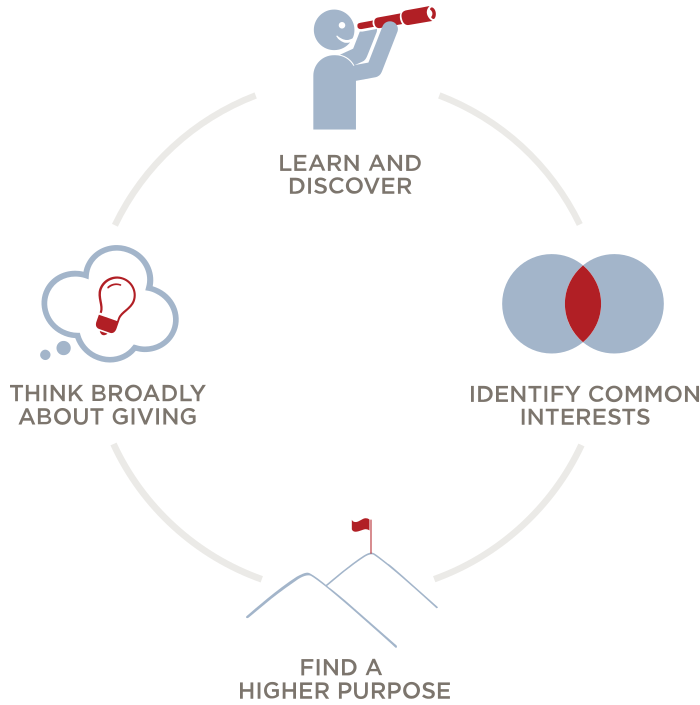
  • See developing network relationships as an opportunity for learning and discovery. Focus on the growth, advancement, and accomplishments that networking can help you achieve. And adopt an attitude of excitement and curiosity about the possibilities that could unfold.

案例

Maura is invited to a work-related social function that she feels obliged to attend. Initially, she hates the idea of attending. And she imagines having to pretend that she’s enjoying herself at the event. But then she tells herself, “Who knows? It could be interesting! I might end up talking with someone who has some great ideas I could put to use in my job.”
  • Identify common interests. Do some research on individuals you’d liked to connect with. Think about how your interests and goals might align with theirs. Such commonalities can lead to meaningful, satisfying working relationships. ​

案例

Jamal, a young entrepreneur in the media industries, has decided to launch a webzine focusing on a niche genre of music. He wants to meet Katrina, who has founded a successful music magazine. He learns everything he can about Katrina and reads her magazine, noticing what topics and bands are featured. This research convinces Jamal that he and Katrina have similar worldviews and aspirations. As a result, he feels more comfortable contacting her to suggest a meeting.
  • Find a higher purpose. Identify collective benefits you could help create by making new connections. Focusing on a higher purpose for your networking can make the activity feel more authentic to you. In fact, being an agent for others—that is, identifying how a particular networking exchange would benefit someone else—can help you get over any timidity you might feel about reaching out to new contacts.Adam Grant, “In the Company of Givers and Takers,” Harvard Business Review, April 2013.

案例

Eva understands that managing press relations is an important responsibility for managers in her company. But she feels uncomfortable about initiating conversations with journalists. She assumes that by doing so, she’ll appear self-centered or overly eager to gain visibility in the public eye. To increase her comfort level, she tells herself that any visibility she gains from forging connections with journalists will benefit her company. Equally valuable, it will help burnish the image of women in the business world in general.
  • Think broadly about what you can give. You have more to offer a new contact than you realize. It doesn’t have to be tangible, task-related forms of value—such as access to funding or connections to powerful people. Instead, it could be something as simple as gratitude and appreciation for how someone helped you. Or you could connect two people who you think would benefit from meeting each other. You might also have unique skills, insights, or knowledge that others would find useful. 

案例

Jamal has deep knowledge of the niche genre of music that his webzine will focus on. He also understands the generational and social trends fueling interest in this niche. He believes that with this knowledge, he has something to offer Katrina: expertise in an up-and-coming music genre she has less familiarity with but might want to learn about.

提升人际关系舒适度的四种策略 Learn to Love Networking

哈佛教授讲授视频逐字稿
Many of us are ambivalent about networking. We know that it's critical to our professional success, yet we find that it makes us feel uncomfortable and phony. But in today's world, working within and across networks is a necessity. Research shows that effective networks lead to more job and business opportunities, broader knowledge, and improved capacity to innovate. My colleagues and I have identified four strategies to help people change their mindset. First, focus on learning. Concentrate on the positives. For example, focus on how going to a work-related social function is going to boost your knowledge, and the activity will seem more worthwhile. Instead of telling yourself, "I hate these kinds of events, I'm going to have to put on a show and pretend to like it," think, "Who knows? It could be interesting. I may have a conversation that leads to new experiences and opportunities." Second, identify common interests. Think about how your interests and goals align with those of the people you meet. When your networking is driven by substantive, shared interest, it will feel more authentic and meaningful. It will also be more likely to lead to a relationship that has those qualities, too. Third, think broadly about what you can give. Even when you don't share an interest with someone, you can almost always find something valuable to offer him or her. According to networking experts Alan Cohen and David Bradford, people tend to think too narrowly about the resources that they have that others may value. They focus on tangible things such as money, social connection, and information, while ignoring less obvious assets such as gratitude, recognition, and specialized knowledge. When you think more about what you can give to others than what you can get from them, networking will seem less self-promotional and more worthy of your time. Finally, find a higher purpose. Another factor that affects people's interest in networking is the primary purpose that they have in mind when they do it. In a law firm we studied, we found that attorneys felt more authentic while networking when they focused on the collective benefits of making connections, such as "supporting my firm and helping my client," than on personal ones, such as "helping my career." So frame your network in those terms.

Do your homework

As with any important endeavor, preparation can go a long way toward helping you skillfully initiate networking relationships. Here are some ideas for how you can set the stage for reaching out to potential new contacts.

These tips apply whether you’re seeking to connect with people you don’t yet know either inside or outside of your organization.Dorie Clark, “The Right (and Wrong) Way to Network,” Harvard Business Review, March 2015.

  • Research possible conversation starters. Use online social networking, research tools, or quick chats with colleagues to find something you share in common with your potential new contacts. Such commonalities can serve as conversation starters when you meet them for the first time. And they could range anywhere from a shared alma mater or hobby to a shared professional interest. When you start the conversation by discussing a commonality, the other person is more likely to quickly view you as a peer. That builds trust and comfort. You can then advance to talking about more business-related matters.​
  • Develop thoughtful questions for your potential new contacts. Learn as much as you can about a prospective new contact’s business life. Use the resulting insights to formulate thoughtful, personalized questions rather than relying on clichés such as “So, what keeps you up at night?” For instance, you could ask the other person, “What initially interested you about the field of finance?”
  • Craft ideas for how you can help. Before meeting a potential new network contact, draw on what you know about the person to form a hypothesis about how you can help him or her. During the conversation, test your hypothesis with subtle questions, then ask whether your idea would actually be useful to the person. Examples include suggesting prospective clients for an entrepreneur, putting someone in touch with your professional association so he or she can gain publicity, or commenting on the person’s blog with the aim of stimulating more online discussion of his or her work.

Of course, there will be unplanned situations where you’re not able to prepare in advance – perhaps you’ve met someone unexpectedly at an event, while traveling, or while working with new people outside your organization. Even when you haven’t been able to prepare, you can still take steps to build rapport by focusing first on learning about the other person.

When Networking, First Build Rapport

When Networking, First Build Rapport Natalie, a film student, is keen to build her professional networks. She often meets new people with whom she’d like to make a connection. However, she hasn’t had much success, and wonders if she’s doing something wrong. A professional coach offers advice and helps Natalie successfully adjust her approach to making that first move.

第 4 节

People from different cultures can have markedly different ideas about how to approach initiating new contacts. For instance, cultures can have different norms about:

  • How much time people should spend getting to know one another on a personal level (such as their hobbies, interests, or family life) before talking about business.
  • How formal or informal people should be when interacting for networking purposes.
  • Whether it’s okay to initiate networking relationships with people at a higher level in the organization.
  • What social activities (such as sharing a meal or consuming alcoholic beverages) are considered appropriate during networking interactions.

So if you’re going to be attending a formal networking event, a casual meet-and-greet, or joining meetings with people from cultural backgrounds other than your own, find out as much as you can about their networking and business norms. Try to find someone familiar with the cultures in question and ask them for tips on how networking happens in those contexts. Then adapt your behaviors accordingly.

跨文化构建人际关系网络的五个步骤 Bridging Cultural Gaps

哈佛教授讲授视频逐字稿
In 2010, I moved from India to Dubai. It was a new place with a new set of colleagues, new clients, new market—zero network. And to my surprise, in all my initial assignments, I faced challenges to move things in my organization, in my team, or within clients' organizations. And soon I realized something was wrong, and it was not lack of hard work or lack of subject material knowledge. It was due to the lack of understanding the culture to interact with people. And, hence, I decided on a mission to build my network. And I used these four or five steps to build that network. First, I performed a cultural gap assessment to understand where the gaps were. Second, I understood the culture and beliefs at a deeper level. Third, I socialized with people inside and outside the organization, and that helped me build the trust. Fourth, I also understood how people were interacting and connecting with each other outside and inside my business unit. Last, but not least, once I built the network, I sustained it with a planned effort. So in my view, never underestimate the power of networking.

But take care not to overgeneralize. Large, diverse countries can have very different social and business norms in various regions. And of course, individuals differ considerably, regardless of their national or regional culture. So it’s vital to learn as much as you can about the individuals you’ll be initiating networking relationships with. Once you’ve made contact, you can test your assumptions—by simply asking them what their preferences are

结交跨文化同事的注意事项 Mentor Moment: Culture

哈佛教授讲授视频逐字稿
Many of you have colleagues that you're working with from around the world. It's a great opportunity to build relationships towards your own success and your own growth. So whether you're in a virtual team meeting that you may be doing once a month or you go there in-country, start with researching—simply going online, understanding from websites country practices, business practices. Or better than that, talk to someone that's lived there and worked there. Get firsthand information about how you really make those relationships work. For example, in some cultures, when you open a meeting, it's not about, "Here are the three items we're going to talk about." It's actually about, "How's your family?"—really getting into those great pieces of conversation. That's actually how that relationship builds towards business success. So, if you're going to be going out there and working with people around the world and building these relationships, be open-minded, be willing to adapt, and exercise curiosity.

第 5 节

There’s a good chance that at least some people you’d like to initiate networking relationships with—especially highly successful individuals or those far advanced in their careers—have overly full calendars. Understandably, they might well ignore emails or other messages requesting “a few minutes of your time to pick your brain.” 

So how can you stand out amid all that “networking noise”? Make yourself so interesting that they’ll seek you out. For example:Dorie Clark, “How Successful People Network with Each Other,” Harvard Business Review, January 2016.  

  • Be an expert. Genuine expertise attracts attention. If someone is drawn to a topic that you’re highly knowledgeable about—even if it’s not in their field—you might move to the top of their list in terms of people they seek out for interaction. To demonstrate your expertise in a particular subject area, you can create attention-getting content—such as articles, podcasts, blogs, or comments on relevant websites.​
  • Be an information forwarder.Thomas H. Davenport, “Forwarding Is the New Networking,” Harvard Business Review, September 2009.Look for opportunities to forward information—an online article, video, blog post, tweet—that you think would be intriguing or useful to prospective or current members of your networks. Forwarding shows them that you know what they’re interested in. And it demonstrates that you’re thinking of them, which could inspire them to seek you out. But any time you forward information, send it to individuals—not lists. Mass forwarding cheapens the value of your communication and thus can work against you. 

面对高端人脉,你可以回馈哪些价值? What You Can Offer Your Connections

哈佛教授讲授视频逐字稿
When it comes to building your networks, of course, it's about giving as well as getting. We all know that. But especially if you're connecting with professionals that are more senior than you, it can often be confusing to figure out what it is that you actually can give them. It may feel like you don't have anything of value to offer, but that's actually not true. One, at a very basic level, is your labor. You can volunteer to help that executive with a project that they're working on. And odds are, they're going to be quite grateful. Another area that's often overlooked is that you can oftentimes help people with publicity. These days, we live in a world where there are no gatekeepers. Anyone can start a blog or start a podcast. Many people can volunteer to, for instance, write for the company website, or blog, or publication. You can interview these senior executives, and you might ask them the exact same questions that you would if you were having coffee with them and asking them advice. But they're far more likely to say yes if they know that 50 people or 500 people will be reading that ultimate article, as opposed to them just giving advice to you. So finding ways to interview people can be very valuable. Another way that you can add value is by sharing your perspective. Of course, you don't necessarily want to do this unbidden. But if you're really connecting with senior professionals and you're on the front lines, you actually do possess information that is uniquely valuable to them. They want to know what's happening on the ground. Yet another thing that people can offer that is of genuine value to other people is specific skills. If you're an experienced social media expert, you may well run into someone who is a little unsure about how to make sure that their LinkedIn profile is looking good, or they don't understand how Twitter works. You can be very helpful there. These are all ways that you can actually give back to people—and in the process, develop and cement long-lasting professional relationships.

第 6 节

Networks—like all human relationships—function best when their participants both give to and receive from one another. If you use your networks only to take, you’ll soon gain a reputation for selfishness. But always saying “Yes” to network requests for information, meetings, phone chats, referrals, and so forth—can also come with a cost—for example, exhaustion that can hurt your on-the-job productivity and raise your stress to unhealthy levels. Plus, if you get a reputation for never saying “No,” your more demanding network members could start taking advantage of you.

Knowing when to say “No” is a critical skill in sustaining positive, productive bonds. You’ll also put healthy boundaries around how much time you spend meeting with others who are reaching out to you, helping you to collaborate more effectively and efficiently within your network.Rob Cross, Reb Rebele, Adam Grant, “Collaborative Overload,” Harvard Business Review, January-February 2016.

How to say "No"

How you say “No” to network contact request will make a big difference in the quality of the relationships you develop. With that in mind, try these tactics:Dorie Clark, “5 Ways to Say No to a Networking Request,” Harvard Business Review, September 2016. First find out if you can help. Before agreeing to a network request, ask the person to articulate why he or she wants to meet with you. For instance, send an email saying, “I’d love to see if I can be helpful to you. Can you tell me a bit more about what you’d like to discuss, and how I can be useful to you, in particular?” If you don’t get a clear answer, meeting with the person will be a waste of your time—and theirs.​ Share your resources. Point the person to resources you’ve created that may help them—such as blog posts, videos, or podcasts that contain pertinent information. Suggest that the person reach out to you again afterward if they have further questions. Invite the person to an event. Suppose there’s an event you plan to attend—an industry mixer, a professional association meeting, a networking breakfast. You think it might be of interest to someone who has asked to meet with you. Invite them to attend. It’s efficient, because you both will have opportunities to connect with multiple people at one time. Defer your acceptance. If someone asks to meet with you and you just don’t have the time, ask if they would be willing to get together at a later date. If you meet during a period when you have more flexibility, the interaction will be more enjoyable and beneficial for you both. Know when to just say “No.” If someone seems unclear about why it would be good to meet with you, or you think they may feel entitled to your time and resources or have a reputation as a taker, it’s best to decline the request quickly, courteously, and firmly. Say something like, “Thanks so much for your kind invitation to meet. Unfortunately, my schedule makes that impossible, so I’ll need to decline. I wish you all the best with your project.” How to say "No"

第 7 节

Test your understanding and reinforce what you’ve learned.

Try it Out

1. Stefan is a talented programmer, but not an outgoing person. The idea of networking with other people at the company makes him uncomfortable. He asks you what he should do to build a successful network. What is the best thing to tell him?
答案与解析

"lt's easy. All you have to do is make sure you don't miss any networking events."
Developing network relationships involves more than just attending networking events. It also involves proactively building connections.

"People will be more helpful if you ask them to join your network only when there's an actual task to accomplish and you need a favor."
Networking is an ongoing reciprocal process, not a one-time event aimed at accomplishing an immediate task.

"Go ahead and start up a network relationship even when you have nothing tangible—like resources or high-level connections—to offer."(正确)
You likely have more to offer a new contact than you realize. It doesn't have to be tangible, such as access to funding or connections to powerful people. Instead, it could be something as simple as gratitude and appreciation for support.

"Don't try to attract highly successful people to your network by forwarding information to them. It's more likely to annoy them."
Look for opportunities to forward information一to individual contacts, not in a mass emailthat you think would be intriguing or useful to prospective or current members of your networks. It shows them that you know what they're interested in.

第 8 节

Reflecting on your learning helps you apply relevant concepts to your job.

Take a Moment

1. 1. What new insights do you have that could benefit you or others in your workplace?
2. 2. What are your biggest opportunities for applying concepts from this Lesson in your workplace?

Further reading

有抱负的领导者,不要只向上社交
有抱负的领导者和高潜力的专业人士往往会把与高层领导建立关系放在优先位置,认为如果能在高层面前获得足够的曝光度,就能获得晋…
为照顾孩子腾出时间,父母正在减少职场人际交往
有孩子的员工必须有意识地权衡与谁、在何时进行交流,以便既能产出高质量的工作成果,又能为照护留出时间。研究发现,他们通常会…
你比你想象的更招人喜欢
初次交谈会对人际关系的长期发展产生巨大影响。自然而然地,人们常常会在第一次交谈结束时,纠结自己给对方留下的印象:“他们是…

Top 3 in the source platform's original order