
Build Trust Among Collaborators 查看中文版
第 1 节
Trust plays a key role in every global collaboration—whether you are negotiating with a vendor from a different culture, selling products to a market in another country, or participating in a geographically dispersed team.
In the context of such collaborations, trust can be defined as confidence in a person’s integrity, competence, reliability, and benevolence.Greenberg, Penelope Sue et al. "Creating and Sustaining Trust in Virtual Teams," Business Horizons 50 (4) July 2007.
When you trust others with whom you’re collaborating, you believe they:
-
Will be honest
-
Will do what they say they’ll do
-
Have the collaboration’s best interests at heart
-
Possess the skills needed to achieve mutually important goals
-
Genuinely care about others’ well-being
When participants trust one another, they cooperate and can surmount difficulties that arise during a global collaboration.
When trust is present, participants:Ross, Judith A. "Trust Makes the Team Go 'Round." Harvard Management Update June 2006.
-
Negotiate more effectively. Participants respect one another, assume that everyone involved wants to craft a mutually satisfying outcome, and believe that each player will honor the agreed-upon terms of the deal. So they persevere through tense moments and explore a wider range of options.
-
Overcome misunderstandings caused by language differences. For example, suppose one participant says something that seems rude on the surface. With trust, another participant attributes the misstep to cultural differences, rather than to malicious intent.
-
Resolve problems caused by physical distance. Participants work out difficulties scheduling meetings across numerous time zones.
-
Unite and align with their common purpose. Instead of fracturing along cultural or geographic lines when misunderstandings or conflicts arise, participants stay focused on the goals of the collaboration and identify with the overall team. Ross, Judith A. "Trust Makes the Team Go 'Round." Harvard Management Update June 2006.
Trust enables participants in a global collaboration to bring their unique experiences and perspectives to the effort. This diversity of contributions in turn spurs creativity, decision making, and productivity.
Try it Out
Make a Connection
第 2 节
Establishing trust when you’re working with people from different countries can be difficult. Trust grows from people’s direct knowledge of and firsthand experience with one another. During a global collaboration, it’s hard to gain such knowledge and experience. For example:
-
If you’re negotiating with people from another country, you may not be able to meet them in person first. How do you know they “play by the rules”?
-
If you’ve just outsourced a project to a vendor in another country, you probably won’t be familiar with its internal operations and any challenges its people face. How do you know they will be able to get the job done?
-
If you’re managing a geographically dispersed team, you can’t always have regular face-to-face contact with your members. How do you know they care about the project and are doing their work?
第 3 节
74%. That's the percentage of respondents who believe traveling to meet a client in person improves customer retention.
Whether you are managing an offshore operation, a recent acquisition, or a global team, trust begins with you.
Use three strategies to build trust among team members:
3 Strategies for Building Trust
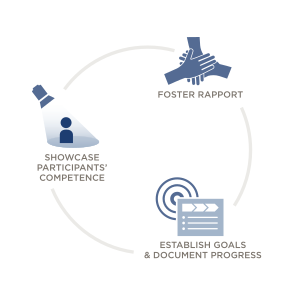
Foster rapport between participants
Rapport, or a positive personal connection between people, creates trust. To build rapport:
-
Schedule initial meetings in person, if possible. Face-to-face encounters help people get to know each other’s communication styles and backgrounds, and forge working and social relationships. If an in-person meeting isn’t possible, take advantage of technology: a blend of screen-sharing programs, instant messaging, and phone conferencing can go a long way toward team building.
-
Create an online roster for participants. Include a photo and brief paragraph about each person’s background, interests, and skills, along with their contact information. This information will give participants common ground when they are communicating virtually.
-
Foster cultural understanding. Acknowledge cultural differences that are creating tensions or misunderstandings. For instance, some participants in a global collaboration may send short emails that immediately address the task at hand. Others may view this as rude. Help people adjust to differences; for example, ask people who usually talk about business right away to use a few pleasantries at the beginning of their emails.
构建虚拟团队信任关系的四种策略 How to Build Trust on Your Virtual Team
哈佛教授讲授视频逐字稿
Establish shared goals
When participants in a global collaboration establish shared goals and document their progress, they gain confidence in one another’s reliability—a key element of trust. To make this happen:
-
Agree on goals. Together with the other participants in your collaboration, agree on what you’re trying to achieve and how you’ll all work toward those goals. Alignment and clarity on these matters make it easier for people to follow through on commitments, which further engenders trust.
-
Document project actions and status. Consider using a Web-based program to enable participants to document actions they’ve taken during the collaboration, lessons learned, and explanations for unexpected situations. For example, “We were short-staffed this week and will add another day to finish the prototype.” When people see evidence that everyone is doing their job, trust increases.
-
Provide ongoing feedback. Through emails, phone calls, and other communication, keep collaborators informed about what is going well and what is not. Providing team members with frequent feedback builds trust and helps hold everyone accountable to shared goals.
Showcase participants’ competence
For a collaboration to work, team members must have confidence in their teammates. Collaborators want to know that other participants have the competencies and skills needed to be successful. Support your team by helping members understand each other’s strengths. By showcasing each collaborator’s achievements and expertise, you’ll help participants gain confidence in one another’s ability to get the job done.
Form for Sharing Participants' Expertise and Interests
第 4 节
Test your understanding and reinforce what you’ve learned.
Try it Out
答案与解析
A. Make everyone accountable by using a web-based program to document production workflow and problems.(正确)
Consider using a web-based program to enable participants to document actions they’ve taken during the collaboration, lessons learned, and explanations for unexpected situations. When people see evidence that everyone is doing his or her job, trust increases.
B. Make future interactions easier by holding your initial team meeting as an online chat session.
It is better to schedule initial meetings in person, if possible. Face-to-face encounters help people get to know each other’s communication styles and backgrounds. They also help forge productive working and social relationships.
C. Avoid circulating emails that praise individual team members to other members of the team to prevent jealousy.
It is better to praise individuals to the whole team wherever possible. By showcasing each collaborator’s achievements and expertise, you’ll help participants gain confidence in one another’s ability to get the job done.
D. Leave team members’ photos out of team information packages to protect their privacy.
It is better to include a photo and brief paragraph about each person’s background, interests, and skills, along with his or her contact information. This information will give participants common ground when they are communicating virtually.
第 5 节
Reflecting on your learning helps you apply relevant concepts to your job.