
How to Shape Your Culture 查看中文版
第 1 节
First you must identify culture targets. The best ones have some attributes in common: They align with the company’s strategic direction; they’re important to execute; and they reflect the demands of the external business environment. A good target should be both specific and achievable. For example, “We value our customers” can create ambiguity and lead to inconsistent choices regarding hiring, developing leaders, and running the company. A better version might be “We build genuine and positive relationships with customers; we serve our customers with humility; and we act as ambassadors for our rich brand heritage.”
第 2 节
To Set a Culture Target
Understand the current culture.
Examine your culture—the company’s founding and heritage, its espoused values, subcultures, leadership style, and team dynamics. (Use the assessment in “ What’s Your Organization’s Cultural Profile? ” to start the conversation.)
Identify your culture’s strengths and examine its impact on your organization today. Interview key stakeholders and influential members of the organization as needed.
Consider strategy and the environment.
Assess current and future external conditions and strategic choices and determine which cultural styles will need to be strengthened or diminished in response.
Formulate a culture target according to which styles will support future changes.
Frame the aspiration in business realities.
Translate the target into organizational change priorities. It should be framed not as a culture change initiative but in terms of real-world problems to be solved and solutions that create value.
Focus on leadership alignment, organizational conversations, and organizational design as the levers to guide the culture’s evolution.
第 3 节
One Company’s Experience
One large company used its search for a new director as an opportunity to bridge a problematic gap between the company’s culture and the board’s culture. To accomplish this, the leadership first diagnosed the two cultures along with its aspirations for the new director.
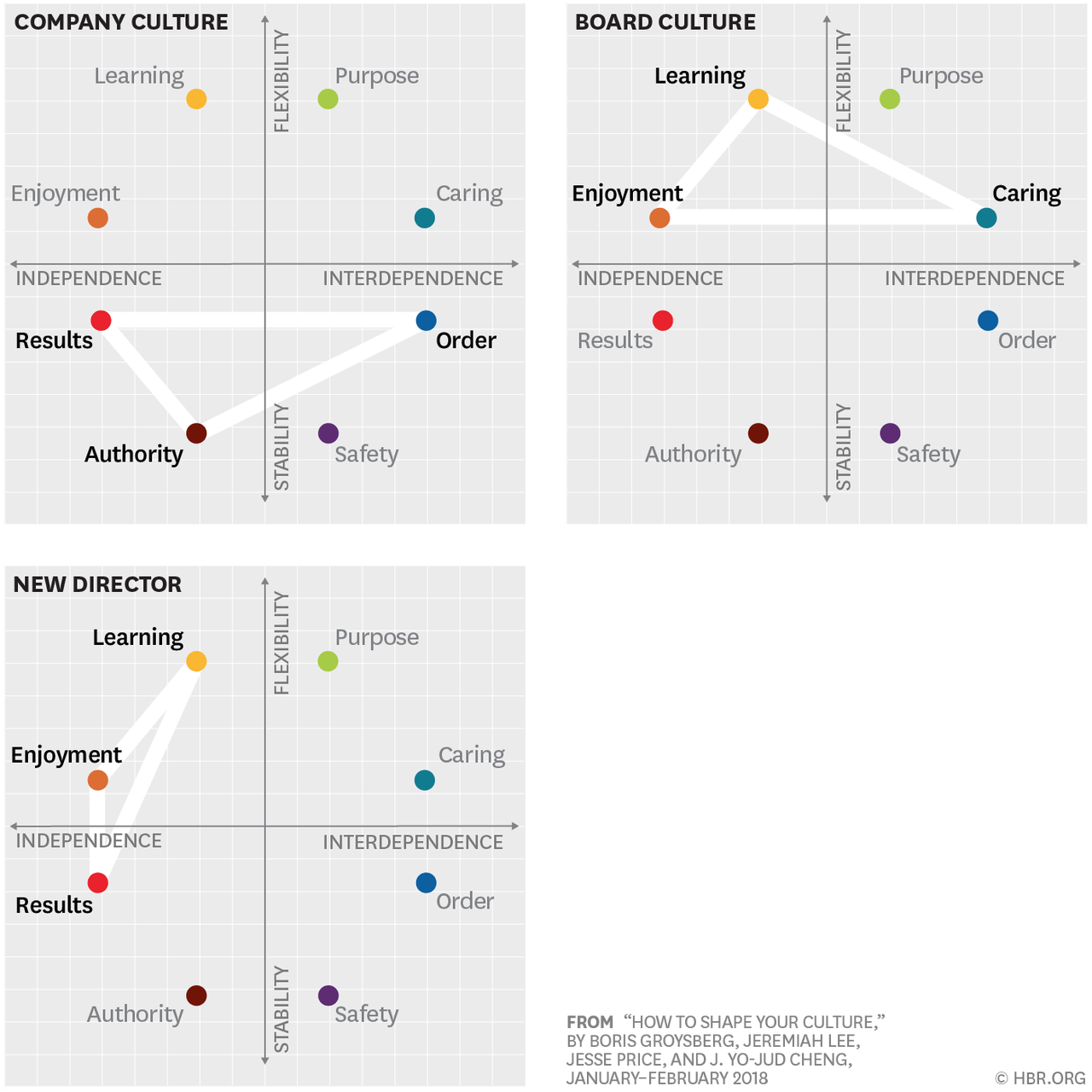
Whereas the company was highly results oriented and focused on order, discipline, and execution, the board was far more learning oriented, exploratory, inquisitive, and focused on enjoyment. A director who was results driven and curious would help bridge the two cultures. Two years after an individual with the desired style was brought in, the board and the management team reported more-effective strategic planning activities and improved company performance.